
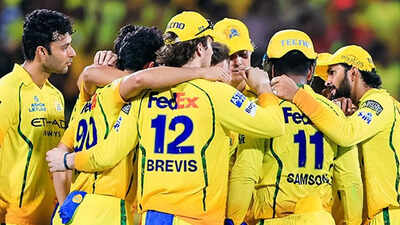
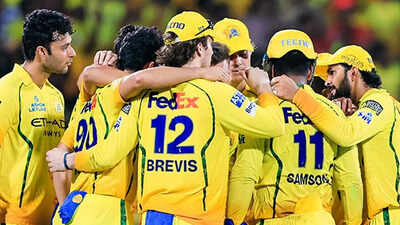
Five-time champions Chennai Super Kings are in uncharted territory after missing the playoffs for the third successive season. For a franchise that was once looked upon as a regular Top 4 side, the decline has been steep and uncomfortable.Despite an erratic campaign, CSK stayed mathematically alive till their final league game against Gujarat Titans. They needed a win to keep their slim playoff hopes alive, but instead suffered the biggest defeat in their IPL history — an 89-run hammering in Ahmedabad. The loss not only ended their season but also summed it up: fragile bowling, inconsistent batting and a side that never truly settled.From making 10 successive playoffs, CSK have now missed qualification five times in the last seven seasons. The only silver lining is that the two times they did qualify during this phase, they went on to win the title. But that statistic alone cannot hide the larger concern — the franchise that once defined consistency is now searching for direction. CSK in IPL 2026: Six wins from 14 gamesSeven wins is generally viewed as the minimum requirement for an IPL playoff spot, and CSK fell short of that mark. They finished with just six victories and 12 points from 14 matches.Their home form, once their biggest strength, failed to rescue them, while their away form never really took shape. Four wins at Chepauk and only two away victories were never going to be enough in a tightly packed season. Their crushing defeat to Gujarat Titans in the final league game only highlighted how far they have drifted from the side that lifted the trophy in 2023.
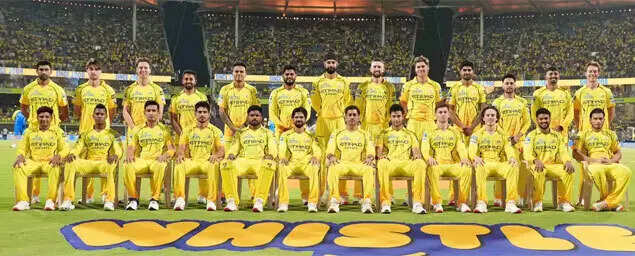
Chennai Super Kings’ Class of 2026 (Pic credit: CSK)
MAIN REASONS BEHIND CSK’S STRUGGLES IN IPL 2026
1. Injuries derailed the seasonInjuries were the biggest reason behind CSK’s downfall. Almost every phase of the season was disrupted by fitness setbacks, forcing constant changes to the playing XI and preventing any momentum from building.MS Dhoni missed the entire season due to a calf strain, depriving the side of both experience and leadership during pressure moments. Jamie Overton, arguably CSK’s best overseas player this season, suffered a thigh injury during the business end and returned to the UK. Young opener Ayush Mhatre, one of the breakout performers of the campaign, also suffered a hamstring tear after just six matches.The problems did not stop there. Ramakrishna Ghosh was ruled out after one match with a foot fracture, Khaleel Ahmed suffered a quadriceps tear early in the tournament, while Nathan Ellis missed the season with a recurring hamstring issue.The result was a constantly changing side with little stability. CSK were forced to rely heavily on inexperienced players and temporary combinations, something that rarely allows teams to survive across a long IPL season.2. Overseas core never clickedCSK’s overseas combination also failed to deliver consistently. Apart from Jamie Overton and, to some extent, Noor Ahmad, the overseas unit never managed to stamp authority on the tournament.Overton was one of the few positives of the season, contributing 14 wickets and valuable lower-order runs before injury cut short his campaign. Noor Ahmad picked up 13 wickets, but lacked sustained dominance during crucial phases.The bigger problem was the failure of the remaining overseas investments. Dewald Brevis struggled badly despite extended backing, Matt Short never fully settled, while Spencer Johnson failed to provide the impact expected after replacing Nathan Ellis.CSK kept shuffling overseas combinations throughout the tournament. But the constant changes only reflected a larger issue — there was no settled overseas core around which the side could build.3. A season without rhythmNothing summed up CSK’s season better than the timing of their defeats. They began the campaign with three losses in a row and ended it with another three consecutive defeats.There was a brief revival in the middle of the season when CSK won three matches on the trot and briefly revived their playoff hopes. But every time momentum appeared within reach, another setback followed. Injuries, inconsistent performances and unsettled combinations repeatedly pushed them backwards.Unlike the peak CSK years, where the side rarely looked rattled, the 2026 version constantly appeared to be reacting rather than controlling situations.
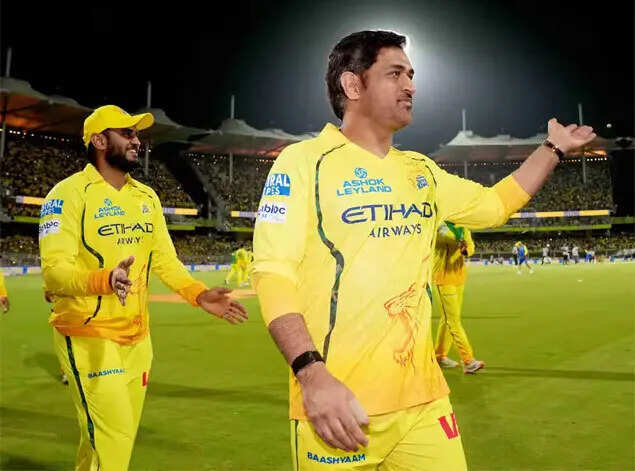
MS Dhoni during CSK’s final home game of IPL 2026 at Chepauk. (Pic credit: CSK)
IPL 2026: CSK REPORT CARD
1. Top performersDespite the disappointing campaign, a few players gave CSK genuine reasons for optimism.Sanju Samson, in his first season with the franchise, became the batting pillar of the side. He scored 477 runs at a strike rate above 165 and smashed two centuries, often carrying the batting lineup during difficult periods.Youngsters Kartik Sharma and Ayush Mhatre also impressed. Mhatre, in particular, stood out with fearless strokeplay and a strike rate touching 178 in limited opportunities.With the ball, Anshul Kamboj emerged as CSK’s most reliable wicket-taking pacer, claiming 21 wickets in a difficult season for bowlers. Although he faded slightly towards the end, the youngster showed enough promise to become a long-term asset.Jamie Overton’s contribution before injury was equally valuable. His ability to contribute with both bat and ball gave CSK the balance they lacked for most of the season.Top Batters:
| Matches | Runs | Ave. | SR | 100s/50s | |
| Sanju Samson | 14 | 477 | 43.36 | 165.62 | 2/1 |
| Kartik Sharma | 11 | 295 | 32.78 | 136.57 | 0/2 |
| Ayush Mhatre | 6 | 201 | 33.50 | 177.87 | 0/2 |
Top Bowlers:
| Matches | Wickets | Ave. | Econ. | Best | |
| Anshul Kamboj | 14 | 21 | 25.23 | 10.52 | 3/22 |
| Jamie Overton | 10 | 14 | 17.78 | 8.89 | 4/18 |
2. Inconsistent performersCSK’s campaign was largely defined by players who showed flashes of brilliance but failed to sustain impact.Captain Ruturaj Gaikwad endured a difficult season. He finished with 337 runs but never looked fully in control at the top of the order. His strike rate of 123.44 reflected CSK’s larger batting issue — a lack of urgency during pressure situations.Shivam Dube (270 runs from 13 games) played several aggressive cameos and maintained a healthy strike rate (158.82), but the absence of defining match-winning innings hurt the team.Among the bowlers, Noor Ahmad (13 wickets from 14 games) and Akeal Hosein (8 wickets from 7 games) produced occasional strong spells but could not dominate consistently on surfaces where CSK traditionally relied heavily on spin. Hosein’s mid-season omission further disrupted the balance of the side.Mukesh Choudhary (8 wickets from 8 games) also had moments with the new ball, but inconsistency prevented him from becoming a dependable option.3. Total failuresSeveral players failed to justify either their opportunities or the roles assigned to them, exposing flaws in squad construction and backup planning.Gurjapneet Singh (4 wickets from 8 games), Khaleel Ahmed (2 wickets from 5 games) and Spencer Johnson (2 wickets from 3 games) struggled badly with both wickets and economy rates, leaving CSK without a dependable pace attack for most of the season. The batting disappointments were equally damaging. Dewald Brevis (151 runs from 11 games) never found rhythm despite extended backing, averaging below 19. Sarfaraz Khan (161 runs from 8 games) and Urvil Patel (129 runs from 7 games) produced isolated cameos but failed to convert starts into impactful innings.While Urvil scored at a strike rate above 200, his inconsistency made him unreliable in pressure situations. Prashant Veer (90 runs from 6 games) also failed to establish himself in limited opportunities.
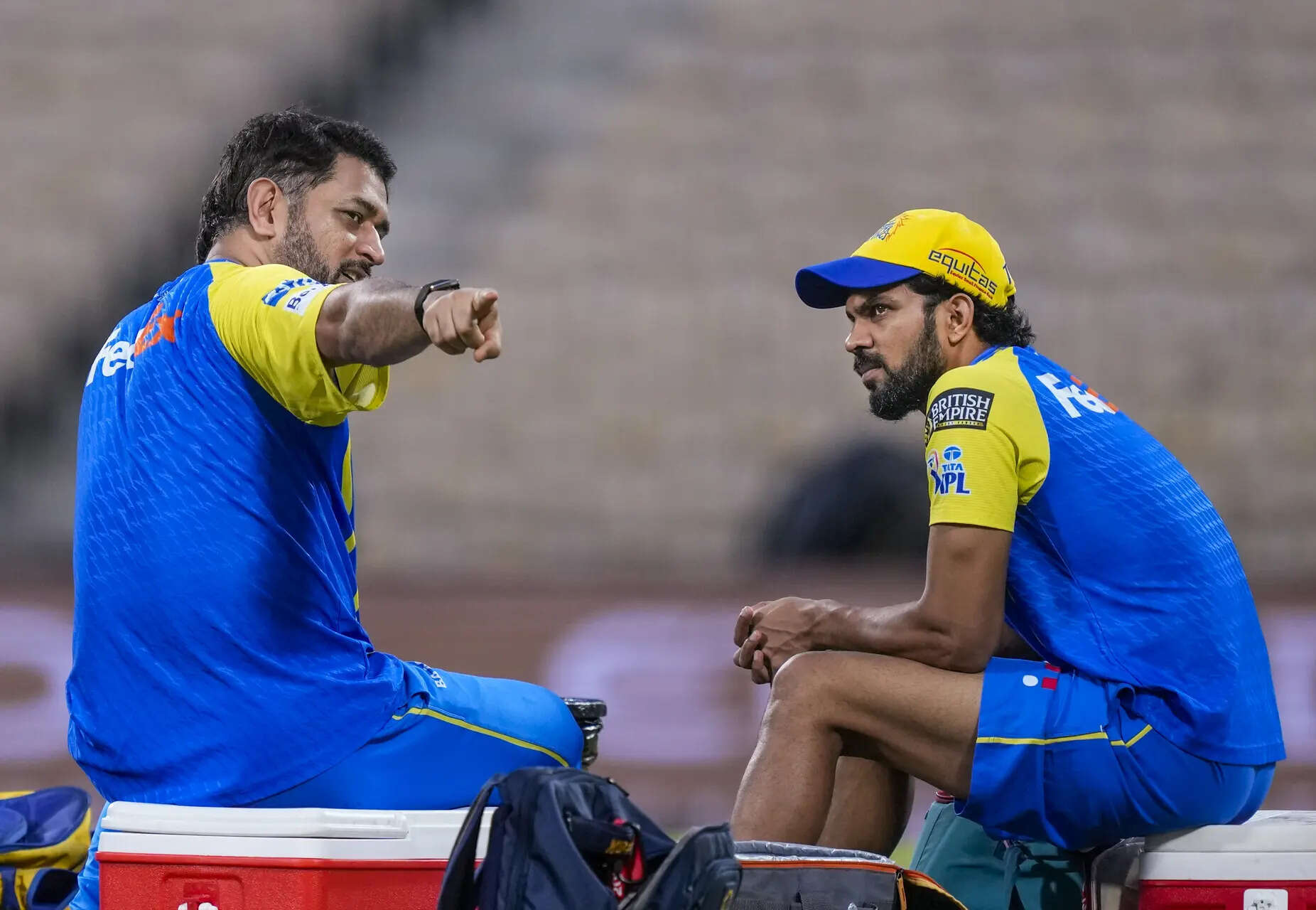
CSK captain Ruturaj Gaikwad, right, and MS Dhoni during a training session. (PTI Photo)
WHAT NEXT FOR CSK?
- Does CSK need a tactical reset?
After three successive league-stage exits, CSK clearly need a tactical rethink ahead of IPL 2027.For years, the franchise built its success around stability, experienced players and maximising Chepauk conditions. But in 2026, that formula stopped working consistently. Their spin-heavy approach no longer guaranteed control at home, while constant changes due to injuries prevented rhythm from developing.Modern IPL teams are increasingly built around aggressive batting depth and adaptable pace attacks — two areas where CSK appeared behind the curve. Outside Anshul Kamboj, they lacked a reliable wicket-taking fast bowler, while the batting often struggled to accelerate under pressure.The franchise now faces an important choice: continue trusting the old formula or embrace a younger, more flexible approach.
- Can Gaikwad lead the next era?
Ruturaj Gaikwad’s third season as captain was far from smooth as he failed to take the team to playoffs in all three. Injuries, Dhoni’s absence and constant reshuffling made leadership extremely difficult.Questions also remain around his tactical flexibility and batting intent. A return of 337 runs at a strike rate of 123.44 lacked the authority expected from a modern IPL captain.CSK though look to continue to view Gaikwad as the face of their transition into the post-Dhoni era. The bigger challenge will be whether he can evolve into a more proactive leader capable of building a fresh identity for the side.The emergence of young players like Ayush Mhatre, Kartik Sharma and Anshul Kamboj at least gives CSK a foundation to build around.
- How can CSK become contenders again?
For CSK to become genuine contenders again before the 2028 mega auction, IPL 2027 must be approached with long-term clarity rather than short-term fixes.Their biggest priority should be rebuilding the pace attack around Anshul Kamboj and finding durable overseas fast bowlers after repeated injury setbacks to Nathan Ellis and Jamie Overton. They also need more middle-order firepower and reliable finishers, as too much responsibility fell on Sanju Samson this season.The positives from 2026 provide a starting point. Mhatre, Kartik Sharma and Kamboj showed that the next generation already exists within the squad. The challenge now is building a stable core around them instead of relying heavily on ageing experience.