
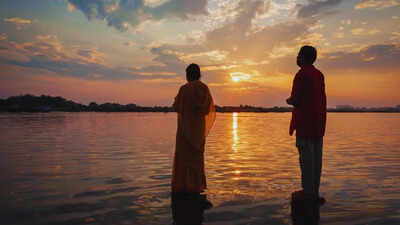
At some point during its 2,500-km journey across northern India, the Ganges stops behaving like a river. It becomes a memory.By the time it reaches Gangasagar in southern West Bengal, the river has already crossed glaciers, ancient cities, cremation ghats, industrial towns, fishing villages, and fertile plains that feed millions. Here, at the edge of Sagar Island, the Ganges finally dissolves into the Bay of Bengal — not dramatically, but quietly.And that is precisely what makes Gangasagar so fascinating.The Ganga flows into the Bay of Bengal via the expansive and ever-changing delta region of eastern India. And Gangasagar feels special because this is one of the last spiritually significant points where pilgrims can stand at the symbolic end of the river before it merges with the sea.The area certainly does not offer the expected backdrop for such an important river in India.
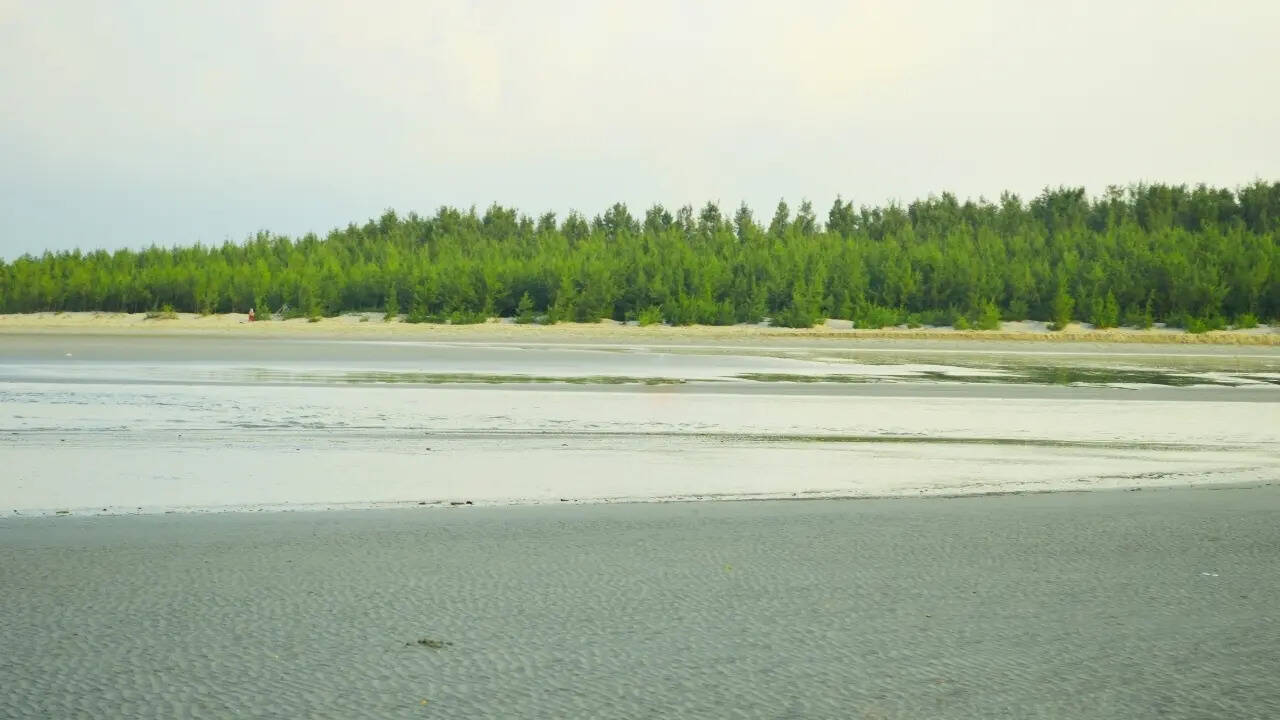
Gangasagar in West Bengal
There are no mountains. There are no waterfalls. There are no marble ghats bathed in lights. Here, in Gangasagar, everything is flat, windy, muddy, tidal, and ever-changing. The colour of the ocean depends on the time of day. Even the shoreline keeps shifting. Mangroves grow at the boundaries of the terrain. It feels less like a tourist destination and more like geography in motion.Yet, every year, thousands make this journey.The most popular reason for this is undoubtedly the Gangasagar Mela. This annual pilgrimage festival is considered one of the largest in India and is attended by pilgrims every year during Makar Sankranti in January. They come to take a holy dip in the waters of the river and the sea and pay homage at the nearby Kapil Muni Temple.There is an old saying often repeated in Bengal:“Sab tirath baar baar, Gangasagar ek baar.”It loosely translates to: “Other pilgrimages can be visited many times, but Gangasagar is enough once.”Not because it is easy, but because reaching it still feels like a journey.
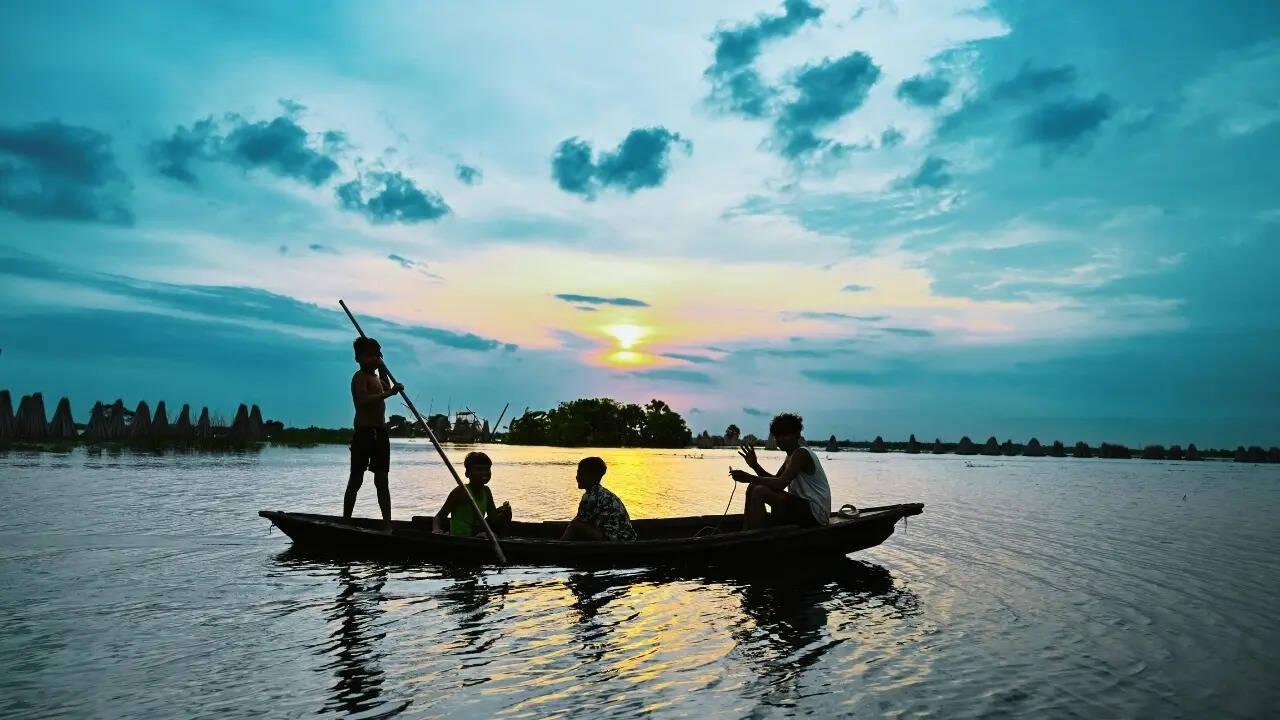
Beautiful sunset scene
Getting there is part of the experienceEven today, Gangasagar does not feel entirely connected to mainland India.Travellers travel to Harwood Point from Kolkata by road, take a ferry across the Muriganga River, and then proceed further towards Sagar Island. However, the journey takes much more time than expected depending on tides, weather, and crowds.You join a queue of pilgrims, who bring the sacred water of Ganga with them. You get aboard ferries with monks, families, tea-sellers, and backpacking travellers. Salt in the air, the smell of diesel fuel, smoke from burning incense sticks, and wet mud – everything mixes together in the air.A place where river and sea meet dailyThe village of Gangasagar is located in the sensitive ecosystem of the Ganges delta, close to the Sundarbans, the largest mangrove forest in the world. In this place, land and water constantly change their borders. Regular cyclones change coastline shape. Movement depends on tides. Farming is affected by salinity levels. Land can be flooded with water. Local people are aware that here the sea is not a scenery but an active part of the environment.This sensitivity gives a different atmosphere to Gangasagar that differs from other pilgrimage sites, which tend to have a certain spirituality. Everything seems to be temporary here. Moreover,Why travellers remember Gangasagar differentlyFamous destinations on India’s rivers usually focus on their most loudest celebrations of the Ganges River. Varanasi focuses on rituals, Haridwar on spirituality, Rishikesh on the mountains, and Gangasagar focuses on endings.There seems to be something quite profound about being at a location where one of the most culturally significant rivers in the world finally loses its identity to the sea. After thousands of kilometres of being worshipped, named, prayed to, polluted, depended upon, and mythologised, the river simply becomes ocean. That is why Gangasagar remains so special even after visiting. It is not because it is extraordinary in any obvious sense, but rather because there are few locations where you can witness such a sacred thing become part of something even greater.