
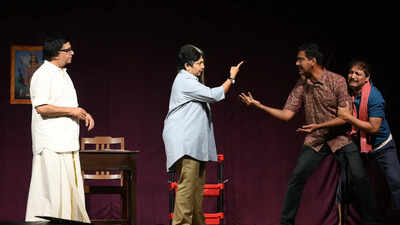
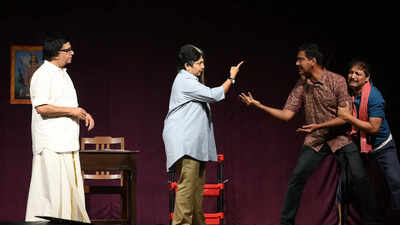
Cast: Y Gee Mahendra, Madhuvanthi, Sureshwar, Karthik, Prasanna, Ganesh, Hussain, Sudha Mahendra Director: Y Gee MahendraDuration: 100 minLanguage: TamilRating: 2½ starsReview: Y Gee Mahendra’s latest play is a time capsule in two ways. It serves as a sequel to the nearly 50-year-old drama Paritchaikku Neramachu (1978), which was adapted for the screen in 1982 with Sivaji Ganesan in the lead — clips from that film are deftly used as ‘flashbacks’ here. But in terms of content and dramatisation, it has the sensibilities of the family tearjerkers of the ’60s and ’70s, where melodrama and messaging were enough to hold the stage.Written by G Radhakrishnan from an idea by Sureshwar, the sequel centres on a family from an underprivileged background. Meenakshi (Madhuvanthi), an ageing police constable, dreams of seeing her academically weak son Devaram become a sub-inspector. How the late Varadu Kutty enters the young man’s life and the events that follow shape the narrative.Unlike the original’s emotional heft, Varadu Kutty largely unfolds as a dramedy, mostly playing out like a genial fantasy comedy populated by good-hearted simpletons, good-for-nothing drunkards and do-gooder ghosts. The performances are solid, with Sureshwar having fun playing a drunkard and Madhuvanthi nailing an emotional monologue on “Edhu kashtam”. With this being election season, the script is peppered with political one-liners, some sharp, a few belaboured — “Pathinanje varushathula whistle oodhikine nee arasiyalvaadhi aagidalam,” “Idhu Periyar bhoomi da… saamiya thaan nambakoodadhu, aaviya nambalaam”. These draw laughs, though the ideological leaning is fairly evident.That slant becomes more pronounced in the climax, where the play wades into the debate around reservation. Lines like “Reserved venum… aana deserved-ku dhaan venum” appear designed to suggest balance. Yet others — “Poatti podama vaangara mudhal parisa vida poatti pottu vangara aarudhal parisu evvalavo mel” and “Rendae jaathikku dhaan odhukeedu tharanum — onnu varamaikku, inonnu theramaikku” — reveal a perspective rooted in privilege, one that overlooks the fact that it would take more than a few decades to correct centuries of communal ostracisation. Should you watch it? If you lean ‘right’, you will instantly connect with this play.