
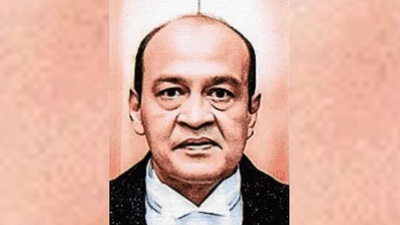
NEW DELHI: With his resignation on Friday, former Allahabad high court judge Justice Yashwant Varma saved himself from the embarrassment of being the first judge to be “removed” through a motion adopted in Parliament.Lok Sabha had admitted the motion to initiate proceedings against him in Aug last year. The law for removal of a judge of a constitutional court requires a motion for removal to be endorsed by 100 MPs in Lok Sabha if it is to be adopted. The required number is 50 in the case of Rajya Sabha. Before Justice Varma, there have been five judges of constitutional courts against whom a removal motion was adopted in Parliament — the first was from Supreme Court, Justice V Ramaswami, in 1991.However, he escaped “removal” as the motion failed to secure the required twothirds majority in LS. In 2011, Justice Soumitra Sen of Calcutta high court was the first judge against whom Rajya Sabha had voted with the required majority on aremoval motion.But the judge resigned before the motion was voted on in Lok Sabha.The same year, Justice PD Dinakaran, the then chief justice of Sikkim high court, resigned before removal proceedings were initiated against him in Rajya Sabha.In 2015, a motion was moved in Rajya Sabha against Justice JB Pardiwala of Gujarat high court — who has since been elevated to Supreme Court.However, the judge later removed a controversial statement from the judgment which had invited the action and escaped the proceedings. That same year, another motion for removal was moved in Rajya Sabha against Justice SK Gangele of Madhya Pradesh HC. However, an inquiry committee absolved the judge of sexual harassment charges.In the case of Justice Varma, the Lok Sabha speaker had admitted a motion for his removal on Aug 12, 2025. A committee of inquiry was constituted, whose legality was upheld by SC.Article 124(4) of the Constitution provides for removal of a judge of SC or HC only “by an order of the President passed after an address by each House of Parliament, supported by a majority of the total membership of that House and by a majority of not less than two-thirds of the members of that House present and voting” on grounds of “proved misbehaviour or incapacity”.The Judges (Inquiry) Act guides the removal proceedings; it provides for a threemember committee, under Section 3(2) of the Act, comprising the chief justice of India or a judge of Supreme Court, a chief justice of a high court and a noted jurist to probe on the basis of evidence if the judge was indeed guilty of “misbehaviour or incapacity”.