
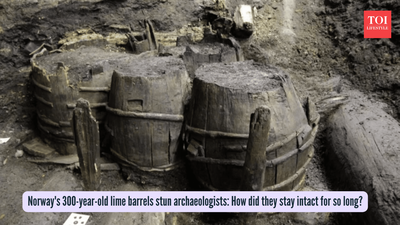
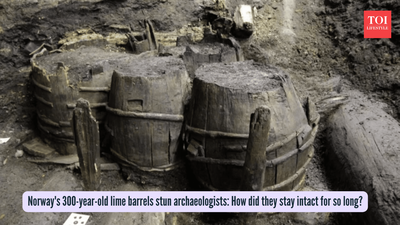
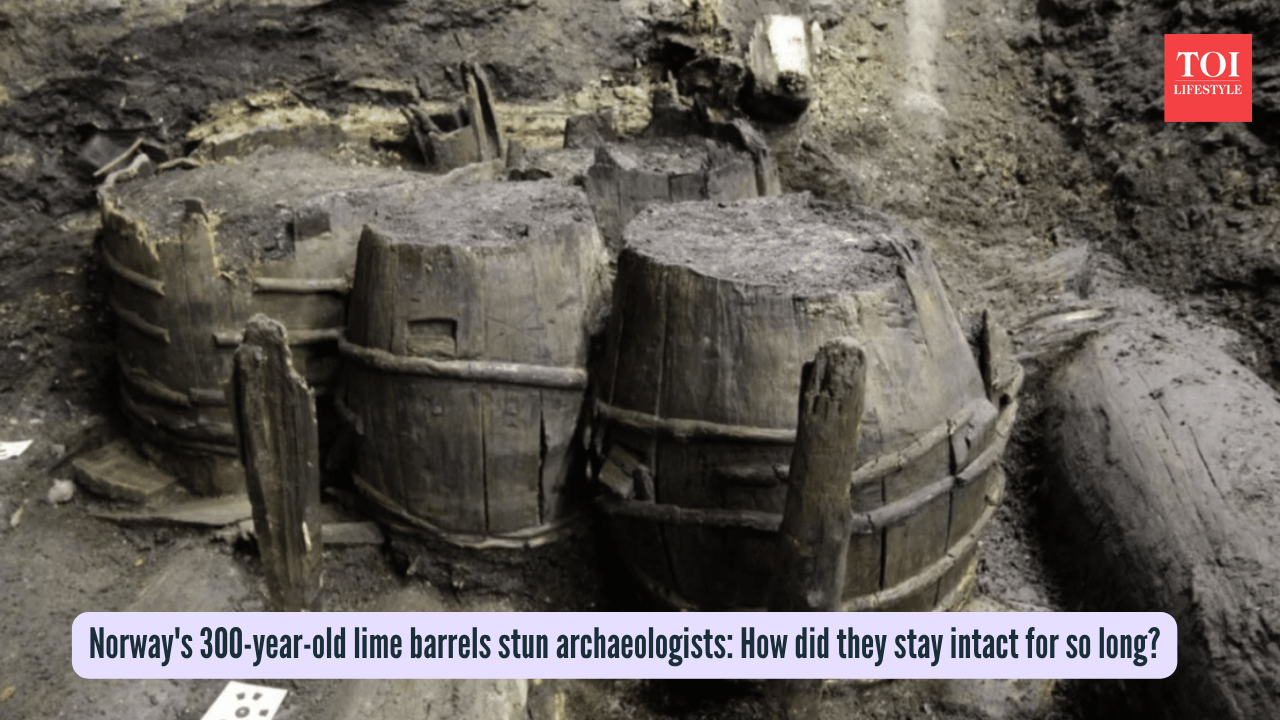
Norway’s 300-year-old lime barrels (Photo: NIKU)
Buried treasures don’t always sparkle, sometimes they’re just simple, sturdy oak barrels holding centuries-old lime for building homes. These quiet artifacts tell stories of smart builders battling harsh winters, storing materials underground to keep them workable.In Scandinavia’s rugged past, such practical tricks helped design bustling towns amid trade booms and fires. Today’s digs blend science with detective work, revealing how ordinary people engineered urban life long before modern tools. From Viking roots to 17th-century finds, each treasure links eras, showing cities as living puzzles.Norway’s recent haul in Skien brings this history alive.
Timeless lime ‘barrels’ are Norway’s new treasure
Archaeologists hit gold during Torggata water upgrades, with three intact 17th-century oak barrels, nearly perfect after ages underground. The Norwegian Institute for Cultural Heritage Research (NIKU) calls it a standout for early urban building insights, per Heritage Daily report.Found alongside a large wooden rammer in dense lime layers, these barrels once stored slaked lime—essential for mortar used in masonry and construction finishes—and were buried deep within substantial lime deposits.
Lime storage secrets revealed
Builders buried them on purpose to shield the lime from freezing Norwegian chills, keeping its chemical punch alive for mixing with sand and water. Compacted lime at the bases and debris at the top hint at reuse cycles following fires that razed Skien. NIKU’s stratigraphic reports date barrels to the 1600s, but lower layers could be as old as 9th-century trade hubs for Eidsborg whetstones
But how did these barrels stay preserved for so long?
The lime’s oxygen-free, alkaline environment prevented wood decay, which is like a rare preservation success. Experts are now exploring conservation options to display these artifacts as museum pieces. These discoveries highlight the clever ways early modern Scandinavians adapted to their challenging environment.Skien’s rich harbor history comes alive through Viking-era layers below, proving its important role in regional trade. Devastating fires drove rebuilding efforts, and these barrels were likely part of that vital recovery work.