
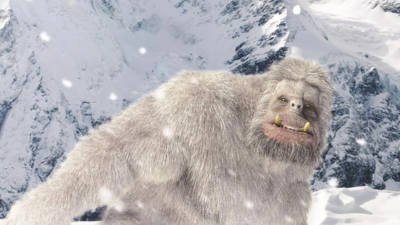
High in the Himalayas, local people have long spoken of a creature that wanders snowy passes, while in the forests of North America, many believe a huge, hairy figure walks upright and leaves enormous footprints in the mud. The Yeti and Bigfoot live thousands of kilometres apart, yet both are pictured as shy beings that hide in wild places where ordinary people almost never go. They are also far from the only examples, since Central Asia has the Almas and Australia has the Yowie, and both are wild figures that resemble humans. Science has not confirmed that any of these beings exist, so it is worth asking what keeps their stories alive across so many generations and so many different societies.
The Yeti: A legend far bigger than its footprints
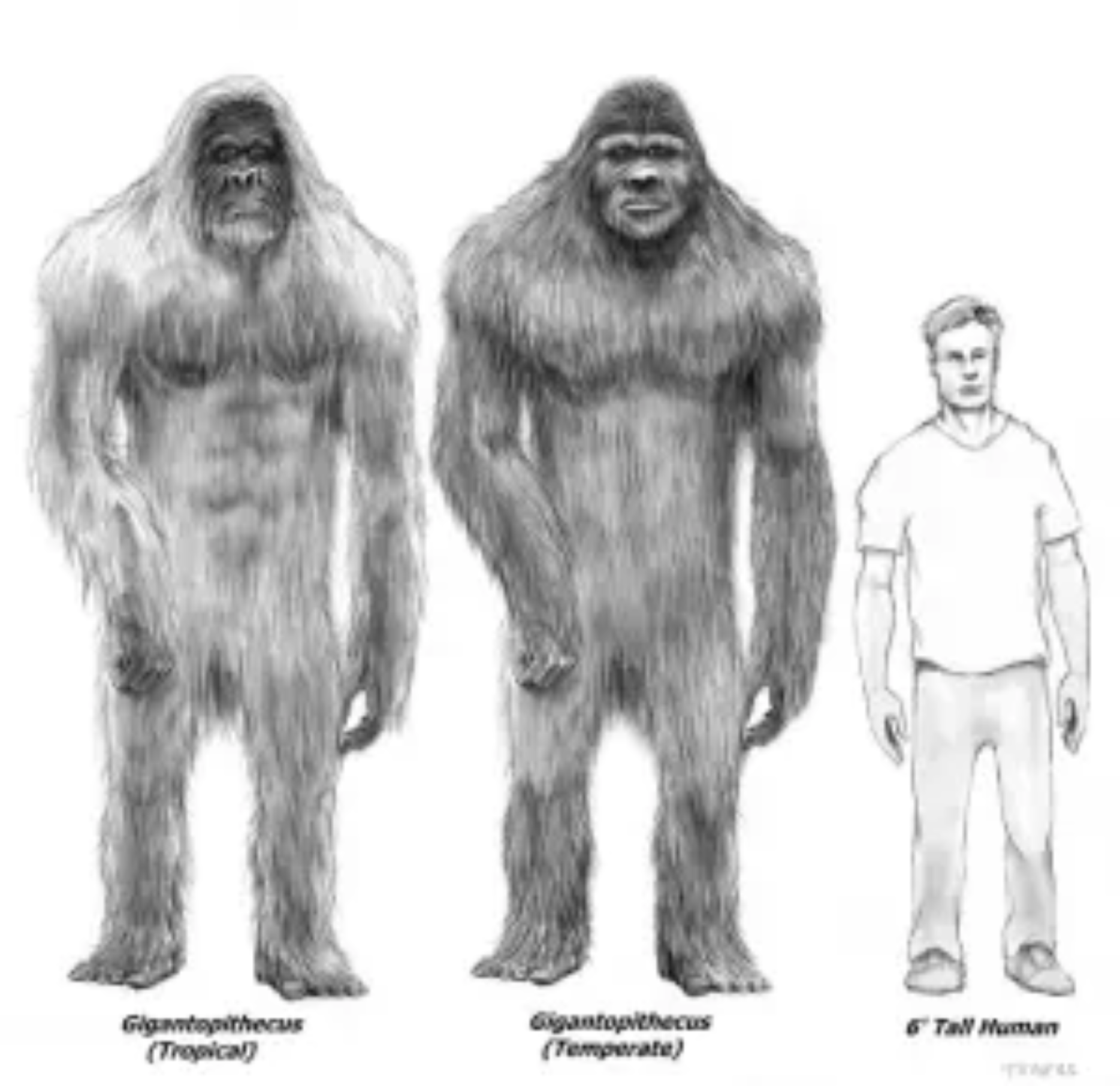
Yeti or Meh-Teh of the Himalayan region of Nepal and TibetImage credits: Mandy Eve Barnett/ Blog
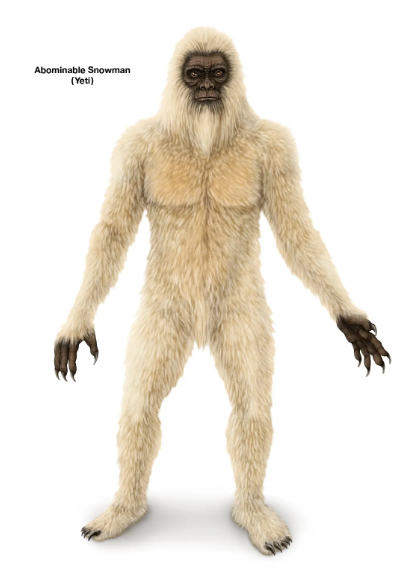
Communities in the Himalayas have passed down tales of a creature tied to remote mountains and forests for many generations, and most outsiders know it as the Yeti or the Abominable Snowman. Popular culture usually shows it as a towering, ape-like animal covered in hair and able to survive in freezing conditions, but the traditional beliefs behind it are more varied than that image suggests. Descriptions and cultural meanings differ from place to place, and the stories form one part of the broader folklore of the Himalayan region rather than a single fixed legend. Interest from the wider world grew during the twentieth century, when mountaineers reported strange footprints and expeditions set out to look for physical proof that the animal was real.
What the DNA revealed about the “Abominable Snowman”?
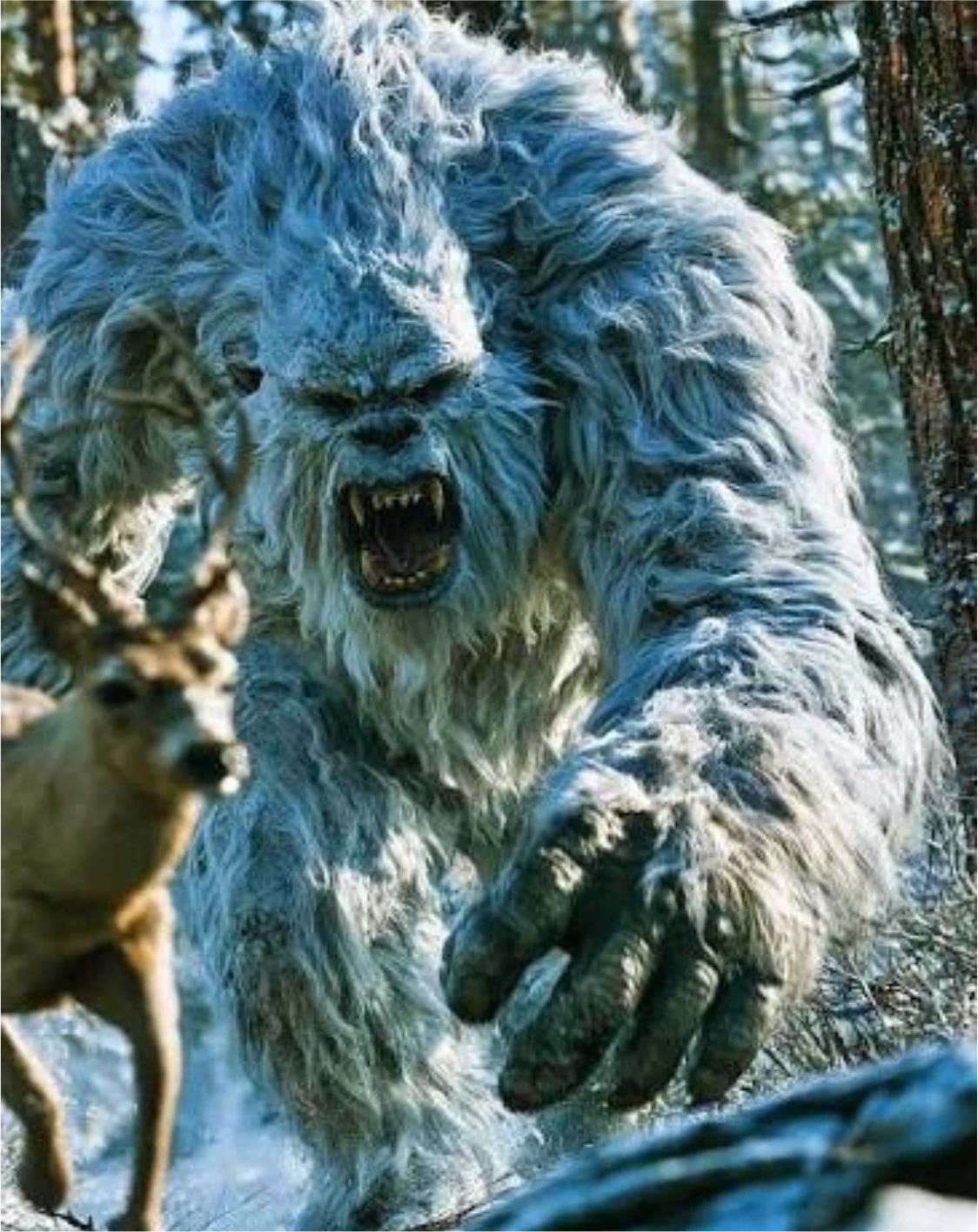
Bigfoot, also called Sasquatchyahayuta_clone
Genetic research has since offered a plausible explanation for at least some of these claims, based on a 2017 study in Proceedings of the Royal Society B that analysed samples attributed to the Yeti. The researchers tested nine specimens, including hair, bone, teeth and skin, and found that eight came from Asian bears while the remaining one came from a dog. These results cannot account for every story or sighting, but they show how meeting ordinary wildlife in difficult mountain terrain could easily grow into accounts of a mysterious creature. This section draws on the 2017 paper Evolutionary History of Enigmatic Bears in the Tibetan Plateau–Himalaya Region and the Identity of the Yeti, which appeared in Proceedings of the Royal Society B.
Bigfoot: The forest giant made famous by headlines
Yowie, legendary creatureImage credits: Britannica.com
The forests of North America have their own famous figure in Bigfoot, also called Sasquatch, who is usually described as a tall, muscular, hair-covered being that walks on two legs. Reported sightings, alleged footprints and blurry photographs have fed decades of speculation about whether an unknown primate might be living quietly in remote woodland. Indigenous traditions across North America are diverse, and their stories about powerful or mysterious beings should not automatically be treated as the same thing as the modern Bigfoot legend. Those traditions carry their own meanings and histories, whereas the Bigfoot of today has been shaped heavily by newspapers, television, documentaries and a steady stream of alleged encounters. After decades of reports, no independently verified body or other conclusive scientific evidence has shown Bigfoot to be an unknown primate species. This section is based on the 2024 article The Shape of Bigfoot: Transmuting Absences into Credible Knowledge Claims, written by Jamie Lewis and Andrew Bartlett and first published online that year.
One wildman, many names: from the almas to the yowie
The Yeti and Bigfoot are joined by the Almas, a wild and human-like being said to live in remote parts of Central Asia, and by the Yowie, a creature linked with Australian forests and wilderness. Their descriptions, origins and cultural roles all differ, yet they share a pattern in which a human-like being lives outside ordinary society, occupies a remote landscape and is seldom met face to face. Anthropologists have studied why such figures turn up in so many places, and Edward Simon explored the appeal of Sasquatch, the Yeti, the Almas and the Yowie in a 2017 article in Anthropology of Consciousness. He suggested that these stories give people a way to think about humanity, nature and our imagined origins, which may explain some of their lasting pull.
Why a good story is not proof?
One common explanation is that people sometimes meet animals they cannot identify straight away, and poor visibility, distance, fear and unfamiliar tracks can make an ordinary encounter feel extraordinary. Studies show why DNA analysis is so useful when claims about unknown animals need to be tested against something more solid than a story or a photograph. Other proposed explanations include the influence of fossil discoveries, encounters with unfamiliar wildlife and the retelling of older stories, though the evidence behind each one varies and no single answer covers every legend. A legend existing does not prove that the creature in it is real, and establishing a new species would require reliable physical evidence that scientists can examine and test independently. This section draws on the 2014 peer-reviewed study Genetic Analysis of Hair Samples Attributed to Yeti, Bigfoot and Other Anomalous Primates, which analysed the hair samples using DNA methods.Part of the appeal may be the idea that the world still holds something beyond our understanding, since mountains, forests and unexplored landscapes make a fitting home for beings that stay just out of reach. Uncertainty adds to the draw, because a footprint with no identifiable source or a shape glimpsed through distant trees leaves room for imagination, especially when an established legend supplies a ready explanation. Technology has changed how these stories travel, since social media, films and documentaries can put alleged sightings in front of millions of people long before anyone has verified the claims.For now, neither the Yeti nor Bigfoot has been established as a real, unknown species, but their stories remain useful material for researchers who study folklore, imagination and how people relate to the natural world. Whether every mysterious giant exists matters less to these researchers than the reason humans keep imagining that something remarkable could be waiting just beyond the edge of what we already know.