
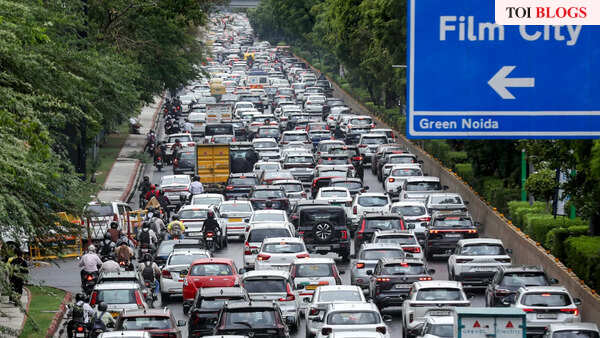
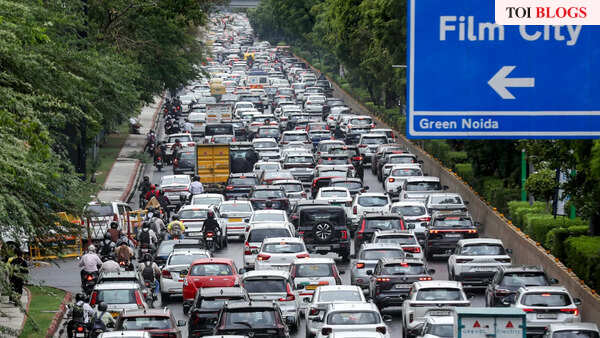
Delhi-NCR can stretch its limits for a while by borrowing from its groundwater, its rivers and its people’s lungs. The bill is now arriving.Ask anyone in Delhi-NCR whether the region is coping, and you won’t get an answer about one thing. You’ll hear about everything at once: the air you breathe, the water you drink, the roads you crawl along, the food you buy, the summer you endure and the winter you dread. There is a queue for a parking spot, a metro seat, a park bench, an airport gate.Ecologists have a term for this, an overshoot, when a place demands more than its land, water and air can supply. Residents just call it daily life. The data suggests their instincts are right.
The season everyone dreads
Every year, the winter smog arrives around Diwali, and this year (2026) was no exception. Delhi’s AQI hit 350 on 3 November, its worst reading in 287 days, and 376 on Diwali night, the highest festival-day figure since 2021. Emergency GRAP restrictions followed, and non-BS-VI vehicles from outside Delhi are barred until 31 January.Each year, “parali” (stubble burning) takes the blame. But on 3 November, transport contributed 15.8% of Delhi’s fine particles and stubble burning 15.3%. The smoke is seasonal, but the smog is a year-round, homegrown product.IQAir has ranked Delhi the world’s most polluted capital for the eighth year running. Its 2025 list places Loni in Ghaziabad first globally, with Noida, Greater Noida and Gurgaon all in the top 25. A Lancet study in July 2024 links about 12,000 Delhi deaths a year to polluted air.The air pollution burden is not shared equally. Leafy Lutyens’ Delhi enjoys far more clean-air days than Anand Vihar, which recorded none in 2023. Those who can afford air purifiers, bigger homes or a move out are using them. One survey of 4,000 NCR residents found nearly 80% weighing whether to leave, though critics note it leaned towards higher-income respondents. Clean air is turning into a luxury good.
Thirst beneath the city
Water is the region’s second borrowed resource. There is good news: Delhi’s groundwater extraction has fallen from about 120% of recharge in 2017-18 to 92% in 2024-25. But 10 of its 34 assessment units are still over-exploited and 11 more are critical, and parts of south-west Delhi are reported to be sinking by metres each year.In Noida, the problem shows up at the tap. Groundwater has tested at 500 mg/L of dissolved solids in places and up to 2,500 mg/L in others, which is why a purifier or a stack of mineral water bottles sits in nearly every kitchen. The city survives on a blend of groundwater and diluted Ganga water carried from Haridwar. Other NCR cities share the same story.Then there is the Yamuna, which enters Delhi within safe limits at Palla and leaves as an open sewer. In January 2026, faecal coliform at Asgarpur measured 350,000 MPN per 100 ml against a CPCB permissible 2,500. Thirteen of 35 sewage plants tested were missing their standards.
The road that never empties
Delhi has about 87.6 lakh registered vehicles, more than half a vehicle for every resident, and roughly 11 lakh more cross its borders every day. Traffic police have flagged 134 congested stretches.When the monsoon arrives, that density turns rain into a shutdown. In July, a road caved in on NH-48 at Gurugram, and offices were told to work from home. In August, flights were diverted from Delhi airport. Nearly eight in ten NCR residents surveyed rated their administration’s waterlogging preparedness as poor.The obvious fix has been to spread people out, and planners have tried it twice. The 2001 NCR Regional Plan expected Meerut and Panipat to hold 49 lakh people; the Census counted 28 lakhs. Under the 2021 plan, the inner ring of Noida, Ghaziabad, Gurugram and Faridabad overshot its target instead. The lesson is simple: homes follow jobs, not plans.That lesson matters, because the NCR is projected to grow from 7.86 crore to 14.73 crore people by 2041. Four new “Namo Cities” and the new RRTS line to Meerut are about to face the same test.
What we eat, and what we throw away
On health, the numbers look better than feared but are harder to trust. This year, MCD counted 695 dengue cases by 3 October with no deaths, yet the health minister cited 2,200 cases in August. The gap remains unexplained.On food, about 18% of samples tested nationally failed standards in 2026, yet only 1,918 convictions followed. Delhi seized roughly 7,000 kg of suspect paneer and khoya just before Diwali, and the story repeats across NCR cities.Waste follows the same pattern: progress that never quite catches up. Delhi produces about 11,500 tonnes a day. Even with bio-mining running at 20,000 tonnes a day, 68.6 lakh tonnes of old garbage still sit at Ghazipur alone.
Too hot, then too foggy
The seasons have turned extreme at both ends. Delhi touched 42.8°C in April, 5.1 degrees above normal, and crossed 45°C at several stations in May as peak power demand passed 7,700 MW. In winter, the air thickens into fog. On 15 December 2025, over 60 flights were cancelled at Delhi airport and more than 250 delayed.Big events pile on top. Political demonstrations, the BRICS summit, the Noida airport inauguration and the Auto Expo, with their VIP movements and security restrictions, bring parts of the region to a standstill. Residents are always the first to feel it.
The verdict
“Carrying capacity” has no single official number, but the pattern is plain. We have been living beyond our means, borrowing from the aquifer, the river and our own lungs. The repayments come as purifiers, borewells, hospital visits and, for those who can afford it, a move elsewhere. The people who cannot leave pay the most.Yet there is real reason for hope. Groundwater extraction and dengue deaths both improved when governments acted. This problem is not unfixable. It is under-managed.
Five ways back within limits
- Treat air as one region. Give the Commission for Air Quality Management real enforcement power across NCR, fund crop-residue alternatives and publish source data daily.
- Move jobs, not just homes. Tie Namo City incentives to offices, hospitals and colleges, not just construction.
- Cut vehicle dependence. Expand metro, RRTS and buses, price parking and congestion, and electrify two-wheelers and fleets.
- Protect water. Cut pipe leakage, meter borewells, mandate recharge in new projects and fix sewage plants before asking the river to cope.
- Build for the climate we have. Desilt drains before monsoons, add shade and cool roofs, spread greenery fairly across wards, and close the loops on waste and year-round food testing.
Sustainability is not an abstract ideal for Delhi-NCR. It is the difference between a region that lives within its means and one that keeps passing the bill to those least able to pay.
Disclaimer: Views expressed above are the author’s own.