
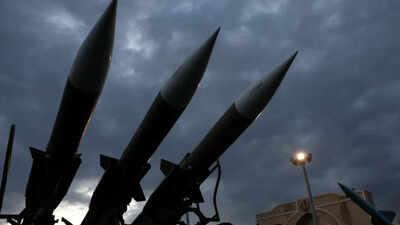
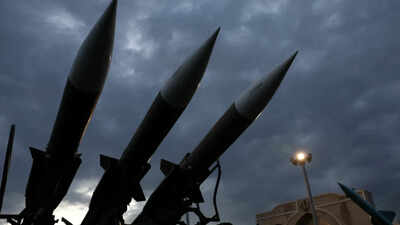
Iran may have between 1,500 and 2,500 missiles left in its arsenal, according to a US intelligence assessment. That suggests Tehran still has substantial capacity to strike American and allied forces if full-scale war resumes.US officials told the Wall Street Journal the estimate carries uncertainty, since it is hard to track how many missiles are launch-ready and how many sit in storage. Even so, they said Iran retains a formidable stockpile.Although US and Israeli strikes damaged Iran’s missile-production facilities, Tehran has continued rebuilding its arsenal, largely using stockpiled components. However, the process has been slower than before the war, officials said.Iran also retains a large number of drones and short-range missiles.According to WSJ, the assessment contrasts with statements by US administration officials, including President Donald Trump, that Iran’s military capabilities had been decimated. It has also featured in internal discussions within the Trump administration about whether to resume strikes alongside Israel, US officials said.Israeli military officials similarly estimate that Iran has more than 1,500 ballistic missiles, although assessments vary across the region because of the difficulty of determining the exact size of its stockpile.Simone Ledeen, who served as deputy assistant secretary of defence for the Middle East during Trump’s first term, told WSJ that even the lower estimate of 1,500 missiles would mean Iran had replenished more than half of its estimated pre-war stockpile. She said Tehran had fully rebuilt its arsenal between the 12-day war in June 2025 and the start of the current conflict in February.
Smarter tactics, wider reach
Iran has continued using ballistic missiles, drones and improved tactics to inflict damage on US military installations, radar systems and early-warning facilities across the Middle East. As a result, several US military assets have been moved to Israel, which is considered safer, Israeli and US officials said.Iran has reportedly also improved the effectiveness of its attacks by upgrading intelligence and targeting data, including with assistance from allies such as Russia, and combining missiles and drones in its operations.“It’s not just the size of that arsenal. It’s how Iran uses it, and its commanders have learned a few tricks to be more effective,” said Bilal Saab, senior managing director of Washington-based geopolitical-risk firm Trends US.Jim Lamson, a visiting research fellow at King’s College London and former CIA analyst specialising in the Iranian military, said estimating the size of Iran’s arsenal was difficult because of Tehran’s secrecy, the number of missile producers it relies on and uncertainty over how many missiles could be assembled from finished components stored underground.Pre-war estimates of Iran’s stockpile were also unclear, he said.“Having done this work for the government, I know it can be extremely low confidence even with all the classified information,” Lamson said.In April, the WSJ reported that Iran retained thousands of short- and medium-range ballistic missiles that could be recovered from underground facilities. US and Israeli strikes had collapsed the entrances to some of these sites, but satellite imagery later showed Iran had regained access to several by digging them out. An Israeli official said missiles stored underground had likely survived intact.In September, the Journal reported that Iran had resumed ballistic missile production using finished components held in stockpiles.An Israeli military official said that despite suffering heavy damage, Iran was rebuilding its arsenal and preparing for another major round of fighting.