
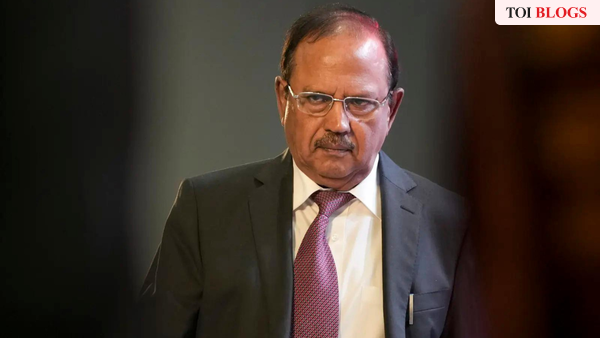
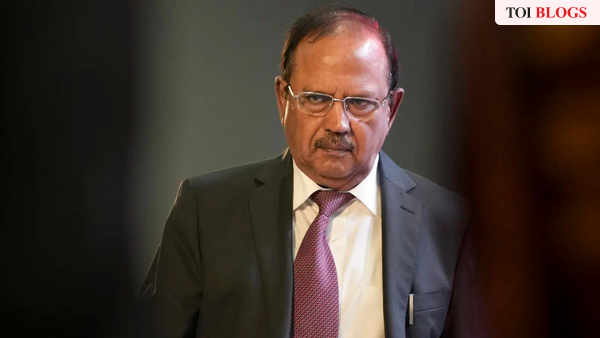
Indian National Security Advisor (NSA) Ajit Doval’s visit to Vietnam on 1–2 November 2026 marked an important milestone in strengthening the India-Vietnam Enhanced Comprehensive Strategic Partnership. Its significance lay not merely in the high-level meetings he held with Vietnam’s top leadership, but also in the effort to translate the political understandings reached between the two countries into concrete steps for strategic, defence and security cooperation.Following the elevation of ties between India and Vietnam during the visit of the President and General Secretary of the VCP To Lam to an Enhanced Comprehensive Strategic Partnership in May 2026, both countries have made several steps to implement the understandings reached. It provided a broader and integrated framework for bilateral cooperation. Among the important initiatives were establishment of a Strategic Diplomacy-Defence Dialogue (2+2), and enhancement of cooperation in trade and emerging areas, making the partnership broader, multidimensional, resilient and future-oriented.Subsequently, before the visit of Doval, three important developments took place to further enhance the India-Vietnam cooperation. First, on 12th September 2026, during the BRICS meeting, PM Modi met Vietnam’s PM Hung and welcomed Vietnam’s participation as a BRICS Partner Country and observed that its participation contributed to enhancing the stature of the 18th BRICS Summit. The Vietnamese side affirmed its readiness to work with India in advancing BRICS initiatives in areas such as innovation, digital transformation, clean energy and sustainable development, constituting another driver for joint action. Modi reiterated that Vietnam was an important pillar of India’s Act East Policy and a pivotal partner in India’s broader engagement with Southeast Asia.Second, the 19th India-Vietnam Joint Commission Meeting on Trade, Economic, Scientific and Technological Cooperation on 14th September. They identified steps for deepening defence co-production, increasing the supply of “Made-in-India” defence equipment, expansion of trade and strengthening supply chains.Third, the Fourth India-Vietnam Security Dialogue (16 October) between the Vietnamese Ministry of Public Security and the Indian National Security Council Secretariat. The discussions covered critical security challenges, including cybersecurity, counterterrorism, combating online fraud, economic security, emerging technologies, and technology applications in safeguarding national security, alongside other regional and international issues of mutual concern. They agreed to step up expert-level delegation exchanges and law enforcement capacity-building training, particularly in areas where India possesses considerable expertise.These developments took place against an increasingly uncertain and challenging regional environment. China’s persistent efforts to expand its military and strategic footprint continued. The Chinese aggressive activities in the South China Sea (SCS)/East Sea (ES) entered a new phase. Besides creating an artificial island near Vietnam (Antelope Reef) and developing a mobile floating research platform, it established a joint military training facility (air domain) in Laos. These developments can significantly enhance China’s capacity for surveillance, logistical support, military access and coercion in the SCS/ES and the Indo-Pacific. These developments not only concern Vietnam, but also India as its 55% trade passes through the wider Indo-Pacific. Thus, both have compelling reasons to strengthen maritime domain awareness, exchange information promptly and enhance their capacity to respond to emerging security challenges.It was against this backdrop that NSA Ajit Doval visited Hanoi on 1–2 November and met with Vietnamese top leaders. In his meeting with General Luong Tam Quang, Politburo Member and Minister of Public Security, the focus was on security and intelligence cooperation, including law enforcement, cyber, maritime, and economic security. While timely intelligence sharing received focused attention, they also agreed to strengthen capacity-building cooperation in all these fields.Doval also met Vietnam’s Deputy PM and Minister of National Defence, General Phan Van Giang. They agreed to further strengthen engagement in defence sector. Defence remains the central pillar of the partnership under the Joint Vision Statement on India-Vietnam Defence Partnership towards 2030. Discussions covered indigenous defence technology and systems, including the BrahMos cruise missile.He held discussions with Vietnam’s Foreign Affairs Minister Le Hoai Trung. Both sides discussed ways to commemorate the 55th anniversary of diplomatic relations in 2027 in the spirit of the India-Vietnam Enhanced Comprehensive Strategic Partnership.Doval also called on Vietnamese President To Lam and thanked him for his steadfast support in strengthening the India-Vietnam Enhanced Comprehensive Strategic Partnership, while conveying greetings from Indian PM Modi. Recalling the latter’s landmark visit in May 2026, Doval expressed appreciation for his crucial role in deepening bilateral relations.Doval’s visit was not only to review the ongoing bilateralarrangements but also to work out concrete plans for better coordination to deal with the increasing challenges in the SCS/ES and in the wider Indo-Pacific region. There is a considerable convergence on these issues between the two countries. While India is pursuing implementation of UNCLOS and the MAHASGAR vision, Vietnam’s President at the Shangri-La conference emphasised an open and inclusive regional architecture with ASEAN centrality and implementation of international law in the region (UNCLOS). The two countries follow a multilateral approach and have close ties with all stakeholders in the region, including ASEAN countries, Australia, New Zealand and Japan. This ensures support from the regional nations in their endeavour. However, their efforts are not aimed at creating an anti-China alliance.Overall, the visit has a great strategic significance as it signalled increasing cooperation across defence, maritime security, trade and regional and global affairs. The frequency of high-level exchanges following the May 2026 elevation of bilateral relations demonstrates that both countries regard each other as trusted partners whose complementary strengths can be harnessed for mutual benefit. For India, Vietnam is not merely an important pillar of the Act East Policy but also a key partner in shaping a stable, peaceful, and inclusive Indo-Pacific. For Vietnam, India offers a reliable partner with growing capabilities in defence production, technology, intelligence cooperation and regional diplomacy.The larger significance of the partnership goes beyond bilateral relations. At a time when strategic competition is intensifying and unilateral attempts to alter the regional status quo are creating uncertainty, India and Vietnam are demonstrating that cooperation among like-minded countries can strengthen regional stability without creating exclusive blocs or military confrontation. Their partnership rests on mutual respect, strategic autonomy, adherence to international law and a shared priority to peace and prosperity in the region.
Disclaimer: Views expressed above are the author’s own.