
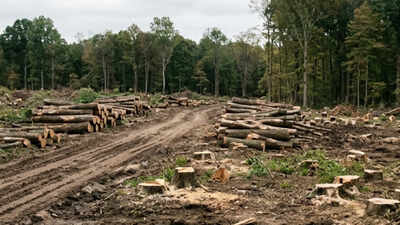
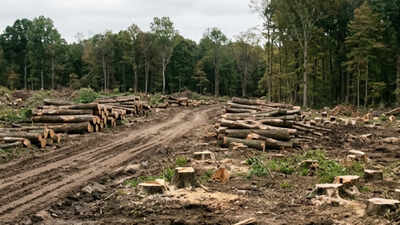
A dispute over the removal of around 250 trees from a forest near a former coal-fired power plant in Ohio has reached a federal court. Residents of Pierce Township are seeking $3.3 million in damages from the property’s new owner, alleging that it violated an agreement requiring the forest to remain largely undisturbed. The trial began on November 9 in Cincinnati, with a jury set to decide whether the company breached the agreement by cutting down trees and creating logging roads.According to WCPO 9’s report, the forest is part of a greenbelt near the former William C. Beckjord coal plant along the Ohio River. Residents say the greenbelt was meant to act as a natural barrier between their community and the buried coal ash at the site. They are concerned that removing mature trees has damaged this protective area, which they wanted to preserve.The lawsuit was filed in 2019 by Neighbors Opposed to Pit Expansion (NOPE), a group of Pierce Township residents. The case names Commercial Liability Partners (CLP), a Missouri-based company that bought the 1,443-acre former power plant property from Duke Energy in February 2018. Although CLP owns the land, NOPE controls the easement governing the greenbelt.The disagreement centres on a 1986 agreement that required the greenbelt to remain in a “substantially undisturbed” condition. Residents argue that cutting down hundreds of trees and creating roads through the forest violated this condition. However, the company’s lawyer has argued that the agreement does not specifically mention mature forests or trees.
Residents say tree removal changed the forest
According to the lawsuit, CLP removed roughly 250 trees from the greenbelt in 2019. The trees included walnut, maple, cherry and pine varieties. Some had grown to around 50 feet tall. The company also cut logging roads through the forest.Allen Freeman, chairman of the Pierce Township Board of Trustees, said the residents noticed the damage while walking through the property. He told WCPO that the company had started selling valuable materials from the land after taking ownership.“In 2019 CLP had full title to the property, and they started basically on a process of selling anything that they could make money off of, and that included selling the hardwood trees,” Freeman said, as quoted by WCPO9.He also described how the tree line had been cut down. “We were walking the site, and you could just literally see how the tree line was just shaved off. The backs of trees that were just cut straight down,” he said.The residents say the damage was not limited to the loss of large trees. They are also expected to testify about the disappearance of tree cover, small flowers and vegetation on the forest floor. They have raised concerns about the loss of wildlife habitat, including areas used by wild turkeys, and the spread of invasive plants such as honeysuckle.The residents’ lawyer, Dave Altman, said in his opening statement: “We wanted it to be left alone.”CLP’s lawyer Gregory DeGulis, however, said the wording of the 1986 agreement was central to the dispute. “Substantially undisturbed state is the main term we’re arguing about,” he said. He also pointed out that the agreement did not use the terms “mature forest” or “trees”.
Why the greenbelt matters to residents
The agreement dates back to 1986, when Cincinnati Gas & Electric, the former owner of the power plant, began purchasing residential and farmland properties to expand its coal ash pits. The move prompted opposition from local residents and township officials, who threatened legal action.The two sides eventually reached an agreement that included preserving the greenbelt. Christopher Knoop, a former Pierce Township trustee and member of NOPE’s steering committee, was the first witness in the trial. He said the residents’ group was formed in 1985.Knoop told the court that the community had agreed to keep the property undisturbed because it was an important part of the township’s character. He also described the forest before the tree removal as having a mature canopy, with seedlings and young trees growing beneath it. The forest floor was clean and did not have invasive plants, he said.Freeman said the trees and their roots were important to the area. He explained that the root systems helped hold the hillsides around the coal ash pits. The forest also provided a natural screen that blocked the view of the exposed ash areas.
Coal ash ponds raise concerns about drinking water
The dispute over the greenbelt is linked to wider concerns about the former power plant’s environmental condition. Built in the 1950s, the Beckjord plant supplied electricity to hundreds of thousands of homes and businesses across southwest Ohio for decades. Duke Energy closed the facility in 2014.After its closure, more than five million tons of coal ash remained buried in artificial, unlined ponds along the Ohio River.Coal ash is the waste left behind when coal is burned to produce electricity. It can contain toxic heavy metals that pose risks to groundwater, soil and rivers. The ponds at the former Beckjord site are located beside the Ohio River, which supplies drinking water to more than five million people in Greater Cincinnati and Northern Kentucky.The ash ponds are also close to Clermont County’s public drinking-water wells. Some are around 1,000 feet from the county’s primary wells, which serve approximately 145,000 residents.Residents have raised concerns about the possibility of contamination reaching the water supply. In July 2020, people living nearby complained about clouds of coal fly ash blowing from the site. Fly ash is another by-product of burning coal and may contain contaminants such as mercury, cadmium and arsenic, as well as low levels of radioactivity.In February 2021, the plant’s main smokestack fell into the Ohio River during demolition. The submerged debris took months to clear.
Separate lawsuits seek action over coal ash
The current federal trial deals only with the greenbelt dispute. A separate part of the residents’ case, which will be heard by another jury at a later date, concerns allegations that CLP failed to disclose information about digging up and moving coal ash around the property. Residents have also accused the company of using an underfunded corporate shell, New Richmond Development Corp., to limit its liability.Clermont County has filed a separate lawsuit against CLP, Duke Energy and another property owner. Filed on September 24, the case seeks to force the companies to clean up the coal ash before it contaminates the region’s drinking-water supply.The county also wants stronger groundwater monitoring, updated emergency safety plans, regular preparedness exercises and a court-ordered plan to prevent contaminants from reaching public water supplies.The Ohio Environmental Protection Agency inspected the facility in May and found significant noncompliance involving two ash ponds. It issued a notice of violation in June.The greenbelt trial is expected to last a week. Meanwhile, residents say the dispute is about more than the trees already removed. They want the site to be managed in a way that prevents further environmental problems for the community.Freeman said the two lawsuits offered an opportunity to address problems left behind by the former power plant. He said the community needed to consider the effects of decisions made today on people living in the area 30, 40 or 50 years from now.