
Nature has mysterious ways of sustaining itself without any human interference. Due to our increasing demand, we have evolved mechanisms such as fertilisers, pesticides and even modifications in seeds to improve yields and get a better harvest. However, time and again, we find that nature also keeps evolving as per its requirements, which can make the lives of farmers who depend on it easier. In Peru’s Amazon region, researchers have found that wildlife on farms, such as bats and birds, could be worth thousands of dollars to cacao growers.A study of 28 organic cacao agroforests in the northern Peruvian Amazon found that birds and bats help control crop-damaging pests, contributing to almost twice the cacao yield in landscapes rich in trees. The researchers estimated that this natural pest-control service could add around US$1,640 per hectare annually in production value. Research titled ‘Integrating local and landscape management promotes biodiversity, multifunctionality and yields in tropical agroforests’ challenges the assumption that farmers must choose between protecting wildlife and producing more crops.
Nature’s pest-control squad
Cacao, the tropical tree whose seeds eventually become chocolate, often suffers damage from various pests. Insects and other small arthropods can damage its flowers and pods, threatening the harvest before the beans ever reach a chocolate maker.Enter the birds and bats. These animals feed on arthropods which pose these threats to the cacao plant. This helps keep some of the crop-damaging populations in check. Unlike chemical-heavy pest-control products, they do not require farmers to spend money on pesticides or put in additional labour. Rather, these animals just go about their day, benefiting the farmers while they find their food.To understand how much this natural service matters, an international team led by the University of Vienna studied 28 organic cacao farms. Researchers surveyed wildlife and arthropods, monitored cacao yields and examined factors such as pollination, pest and disease damage, soil fertility and the farm’s microclimate. They also used drone imagery and remote-sensing data to assess tree cover and the arrangement of vegetation.The team investigated the contribution of birds and bats by comparing cacao trees accessible to these animals with trees protected by enclosures that kept the winged visitors out while allowing arthropods to enter.
The difference a tree-rich landscape makes
In heavily deforested landscapes, cacao yields averaged around 265 kilograms per hectare annually. On the other hand, in landscapes with moderate forest cover and additional tree crops, such as orchards and agroforests, yields reached approximately 1,000 kilograms per hectare per year.
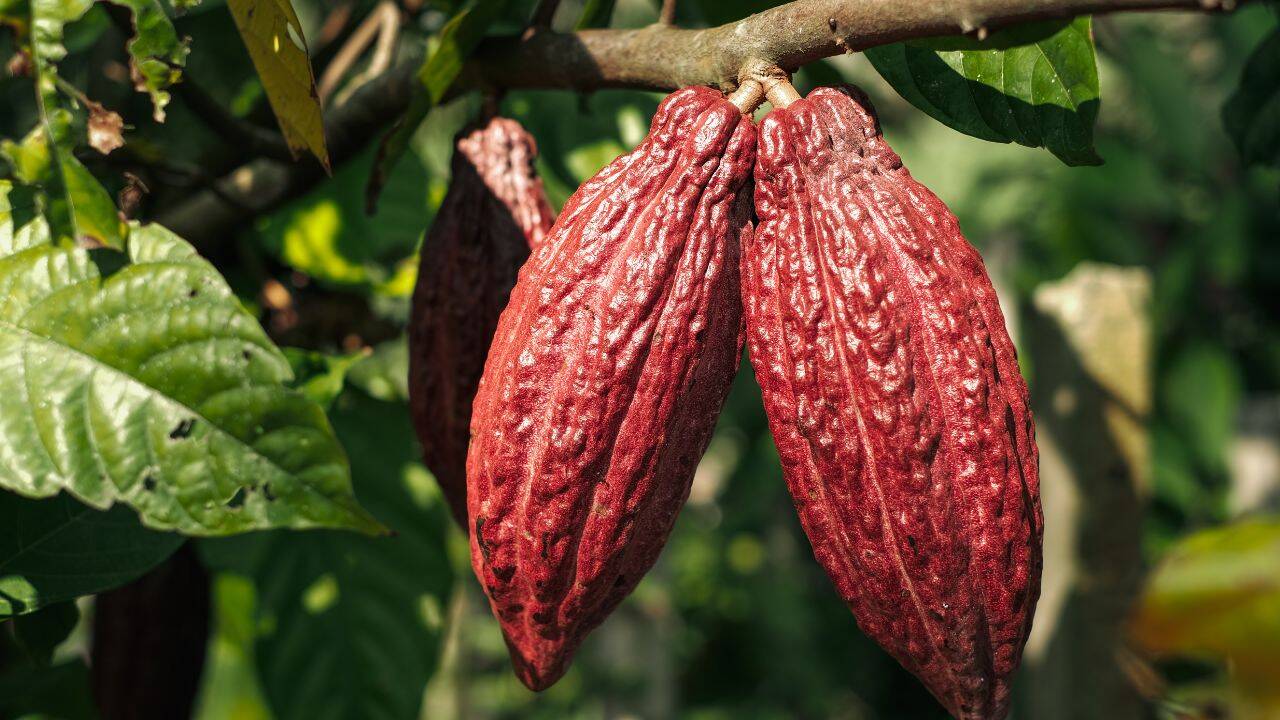
(Image Credit: Canva)
The researchers found that birds and bats played a significant role in this productivity advantage through natural pest control. Their contribution nearly doubled yields in tree-rich landscapes, with an estimated additional production value of US$1,640 per hectare each year.Forest patches and other tree-covered areas provide habitat, food and shelter for wildlife. When these habitats disappear, birds and bats may have fewer places to live and forage, weakening the natural services they provide to nearby crops. As senior author Bea Maas of the University of Vienna explains in the research announcement, these animals are valuable allies only when the surrounding landscape offers enough habitat. In other words, planting cacao trees is only part of the equation. Protecting the wider green neighbourhood matters, too.
More shade isn’t always better
However, simply filling a farm with as many trees as possible is not necessarily the answer. Shade trees offer plenty of benefits. They provide wildlife habitat, help moderate temperatures and can support soil health. But when their canopy becomes excessively dense, less sunlight reaches cacao trees, and yields can thus fall.The researchers found that a more varied arrangement of trees offered a promising compromise. Farms with a mixture of tall and short shade trees, clusters of vegetation and open patches could support biodiversity and also produce higher yields. Different tree heights and gaps create a variety of habitats while allowing sufficient light to reach the cacao crop.The lesson is that good agroforestry is not simply about how many trees a farm contains. It is also about where those trees grow, how tall they are and how they fit into the surrounding landscape.