
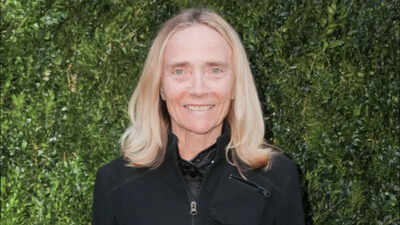
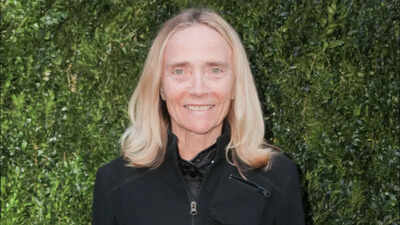
Mortality is an absolute, the director Mary Lambert says, and that is exactly why Dracula will not die.“Maybe science will one day overcome aging and mortality, but so far, we haven’t,” Mary Lambert told us in a conversation “But we’re obsessed with it. We’re totally obsessed with it as a society.”Her audio drama of Bram Stoker’s “Dracula” for Audible features Jonathan Bailey, Ella Purnell, Aimee Lou Wood and a large ensemble cast. The story follows Mina, who goes looking for her fiancé after he disappears in Transylvania. She follows a trail of letters, diaries and chilling testimony, but she is not the only one hunting. Dracula is already closing in. With a full cast voicing every encounter, the production bets on a monster who never has to appear in front of the listener to make his presence felt.She sees the novel as a warning about the wish to live and stay young forever, a wish she said is still a cultural obsession. She pointed to the lengths people go to in order to look younger and doubted they are happier for it. “They’re not actually going to be younger,” she said, of people who spend years and fortunes on surgery.Asked what keeps Dracula relevant, she called it “a myth for the modern age.” In her reading, the character stands for evil that is intrinsic to society and cannot be eradicated, and once someone is infected, it is hard to be normal again. “We are all Dracula,” she said.‘Sometimes the horror of daily existence is just overwhelming for people’That view grows out of a larger belief about what horror is for. Ms. Lambert says the genre is as old as civilization, because people have always needed a story to explain why terrible things happen.“Sometimes the horror of daily existence is just overwhelming for people,” she said. That can mean wars and famines, or a private anxiety with no obvious source. “The story may be unreal, but the fear is real and the emotions are real.”She believes young people are drawn to horror in particular, because they are just beginning to understand their own fears. “Sometimes you never do understand, but you keep looking for answers, and you keep looking for comfort,” she said. The same impulse explains why horror keeps returning in new forms, much as myths and legends do across cultures. India, she noted, has no shortage of stories about supernatural beings, gods and goddesses.‘You have to stay true to the universe that you created’The craft of horror, she argued, is not so different from any other kind of storytelling. A filmmaker must build characters people care about, or even hate, but recognize themselves in. Then the story needs rules, and it must obey them.The rules can be as fantastical as the writer likes. A vampire’s bite turns its victim into a vampire. A cure might require eating a lotus flower at midnight. Either way, the author is bound by what has been established. “You have to stay true to the universe that you created,” she said.She said she prefers emotional fears to physical ones, because they run deeper. Jump scares work only when they serve the story and land with the right timing. “It’s kind of musical, or rhythmical, like dance,” she said. “If you’re not hitting the beat, it’s just uncoordinated movement.”Context matters, too. All the doors in her old house creak, she said, and none of them frighten her, “unless I’m alone in the house at night, and I hear a door creak downstairs.”Making silence audibleThat sensibility shaped her approach to the Audible production. She said she had long wanted to direct a version of the novel and wrote the script so that it would be faithful to the book without simply reading it aloud. There are no descriptive passages. Everything the listener learns comes through dialogue and sound design.Silence is a central tool, she said, but it comes with a paradox. “You can’t hear silence,” she said. To make a room feel quiet, you need a faint sound inside it, like a bit of wind, a distant tinkle or a cat crossing a floor. “You don’t know how quiet it is until you hear a sound within that silence.”She praised the cast, singling out Mr. Bailey, whose delivery, she said, is “amazing” and is supported by the sound design and music.The biggest challenge was physical. Her actors, like her, were used to film, where an audience can see a character climbing a castle staircase. In a recording booth, they had to make listeners believe it. That meant moving their arms and bodies, and breathing as if they were really climbing, while keeping their feet quiet enough not to rattle the microphones.She compared it to an isometric exercise, pushing as hard as you can against a wall that isn’t there. “It’s actually very difficult,” she said. “You’re exerting energy against invisible forces.” Some actors took to it naturally, she said, and others needed encouragement.