
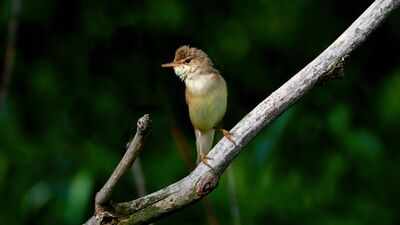
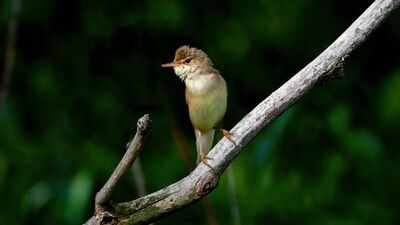
In the Scottish Highlands, a small brown bird has now made history after a pair successfully raised their young, marking the first confirmed breeding of its kind in the United Kingdom. The bird, Blyth’s reed warbler, is usually associated with breeding grounds further east and north, particularly across Scandinavia and Russia.According to Inside Ecology, in a report dated November 4, 2026, the pair raised chicks at a site in Highland in 2024. The development has been confirmed in the latest report from the Rare Breeding Birds Panel (RBBP), an independent body responsible for monitoring some of the UK’s rarest breeding birds. While the species has been recorded in Britain before, the discovery is fascinating given that the bird is not traditionally part of the UK’s breeding birdlife, with its natural breeding range historically extending across parts of Scandinavia and Russia.
A bird whose breeding range has been moving westwards
Blyth’s reed warbler is a scarce bird in the UK, and its presence has not come entirely without warning. The species typically breeds in Scandinavia and Russia, but its breeding range has gradually shifted westwards across Sweden and Norway over recent decades. This has made its eventual arrival as a breeding bird in Britain something that those monitoring changes in bird populations had already anticipated.Singing male Blyth’s reed warblers have been reported in the UK since 2000. However, the presence of an individual bird does not necessarily mean that a species has established a breeding population in a new location. A bird may arrive, remain for some time and even display behaviour associated with attracting a mate without successfully reproducing.
Another addition to Britain’s rare breeding birds
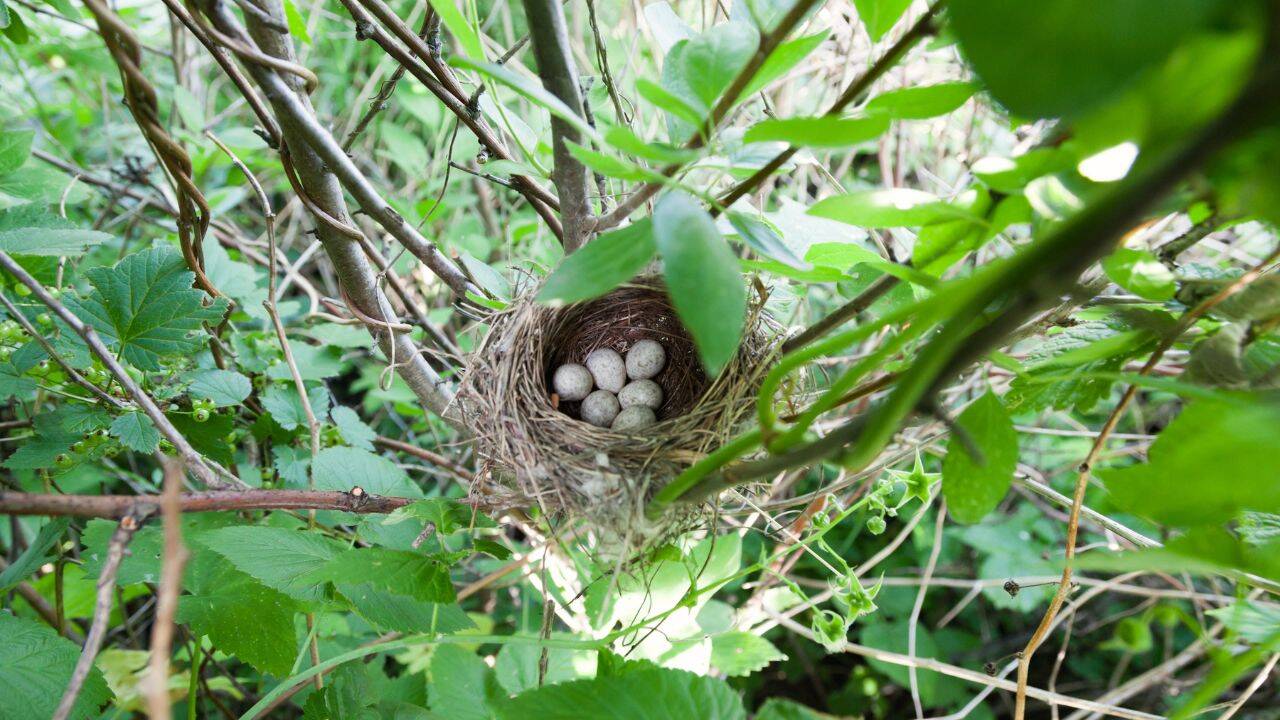
This successful breeding makes this species the fourth new confirmed breeding species reported by the RBBP in the last ten years.The other additions include the Iberian chiffchaff in 2015, the black-crowned night heron in 2017 and the glossy ibis in 2022. Each of these records adds to the picture of how Britain’s breeding birdlife can change over time, with species appearing and establishing breeding records beyond areas where they were traditionally expected.
(Image credit: Canva)
The report also features the red-breasted flycatcher for the first time. Two male birds were reported holding territories during 2024, one in woodland in north-east Scotland and another in Upper Forth. However, neither managed to attract a mate, meaning that these records do not suggest successful breeding.
A wider picture of encouraging conservation results
Beyond the new species records, the report also offers some encouraging findings about rare breeding birds across the UK. Several populations recorded particularly strong numbers in 2024, including wetland birds such as the Eurasian spoonbill, Eurasian bittern, western cattle egret, great white egret and little egret. All reached record totals.According to the report, these increases reflect a combination of conservation measures, particularly the management and creation of wetland habitats, alongside the effects of climate change in some cases.However, there has also been encouraging news for Montagu’s harriers, with two pairs breeding in Suffolk and Wiltshire. These were the first breeding records for the species in the UK since 2020, although neither pair succeeded in raising their young.Scotland also recorded positive developments among several wader species, generally associated with northern Europe. Red-necked phalaropes and wood sandpipers were recorded in high numbers, while three confirmed breeding pairs of purple sandpipers represented the highest total since 2003. Temminck’s stint chicks were also recorded in the UK for the first time since 1993.There was further encouraging news following two years in which highly pathogenic avian influenza (HPAI) H5N1 had affected several rare breeding bird species. With very few cases reported in 2024, there were signs that a recovery was underway.
Why monitoring rare birds remains important
Dr Mark Eaton, Secretary of the Rare Breeding Birds Panel, pointed out that although much of the UK’s wildlife continues to struggle, appropriate conservation efforts can help reverse declining trends.The report has also credited birdwatchers and local recorders for helping to keep track of these changes. Most of the records submitted to the RBBP come from birders who document their observations, including evidence of breeding, and share them through county bird recorders. Once these records are received, they are compiled and passed on to the panel for monitoring.For Blyth’s reed warbler, the successful breeding record in the Highlands is an important milestone, although one breeding event does not establish that the species has permanently expanded its range into Britain. Further observations will be needed to understand whether it returns and breeds again.