
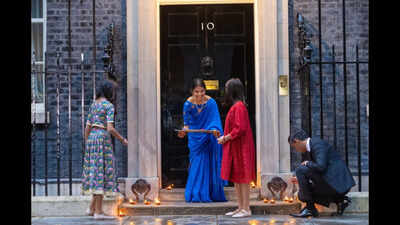
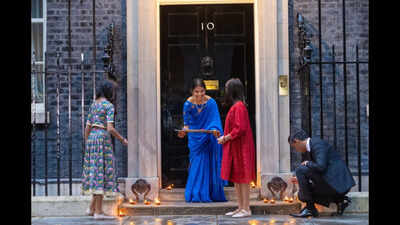
Whether you’re lighting clay diyas under the crisp evening air of Karnataka or shivering outside a London doorway wrapped in a heavy winter coat, Diwali has a funny way of tethering you right back to where you started. For Akshata Murty, the festival has never really been about the sheer spectacle of it all – the rows of flickering lights, the endless trays of sweet mithai, or the loud crackle of fireworks in the street. Instead, it’s always been about the quiet thread of tradition that runs beneath it, keeping her grounded no matter how drastically her address has changed over the decades.Reflecting on her roots in a recent LinkedIn post, the businesswoman and wife of former British Prime Minister Rishi Sunak took a fond step back into her childhood in Bengaluru. She talked about the simple, electric magic of those early years: the eager anticipation of sparklers, the unmistakable aroma of festive food wafting through the house, and the general buzz that fills every corner of India during festival season. But more than the sensory rush, what truly stuck with her were the timeless tales handed down year after year.As a child, she listened intently to the grand epics – Lord Rama and Sita’s triumphant return to Ayodhya after years of exile, Lord Krishna’s defeat of the demon Narakasura, and the gentle, welcoming prayers offered to Goddess Lakshmi for blessings and prosperity. Those narratives weren’t just bedtime stories; they formed the moral blueprint of how she came to understand the true spirit of Diwali.Life, of course, eventually took her across oceans and time zones. Yet, as her surroundings shifted, the heart of her tradition stayed remarkably intact, even if the logistics required a bit of tweaking.During her years in California, celebrating Diwali meant frantically calculating time differences just to catch a quick, comforting phone call with family back home in India. Later, living in the rolling hills of North Yorkshire, she found herself passing the baton down to her own daughters – braving the chill to light sparklers in the garden before retreating inside for a plate of traditional sweets. Moving to London brought yet another rhythm: setting out glowing earthen lamps on a cold city doorstep, balancing ancient customs with the harsh reality of British weather.Then came the Downing Street years, which added a historic layer to her personal relationship with the festival. When Rishi Sunak took office as the UK’s first Hindu prime minister, No. 10 Downing Street opened its famous black door to host official Diwali gatherings. For Murty, watching a tradition born in the quiet neighborhood streets of Bengaluru take center stage at the very heart of British political life was a surreal full-circle moment. It wasn’t just a personal celebration anymore; it was a quiet sign of how seamlessly cultures can weave into one another.That cultural bridge extends far beyond official prime ministerial receptions, though. Across the United Kingdom, Diwali has quietly carved out a vibrant home of its own. You can see it everywhere – from the dazzling light displays along Leicester’s Belgrave Road to primary school classrooms in Scotland where kids craft colourful rangoli patterns on the floor, to quiet neighborhoods in Wales where families share plates of homemade sweets with the people living next door.Looking back over the journey, Murty noted that while the weather, the food, and the locations have constantly shifted, the core message of the festival hasn’t budged an inch. At its heart, Diwali remains a quiet promise that light will always find a way to pierce through the dark, regardless of where on the map you happen to land.And maybe that’s the real magic of it. No matter how far across the globe Akshata Murty travels, every autumn when the first diya is struck, a little piece of Bengaluru finds its way right back home.