
A suspected Iran-backed terror plot targeting a British airbase used by the US military was allegedly being coordinated, in part, from a New York prison, where an accused operative used coded messages to communicate with associates, according to an indictment unsealed on Tuesday.The accused, Mohammad Baqer Saad Dawood al-Saadi, a dual Iranian-Iraqi national, allegedly used calls with his mother and sister to relay instructions to operatives outside prison.US prosecutors claim the messages were intended to keep plans for an attack on RAF Fairford in western England alive.The indictment, reported by the Associated Press, provides fresh details about the suspected plot that came to light on September 27, when three suspicious vans were spotted heading towards the air base. Several men were subsequently detained on suspicion of explosives and terrorism offences.Al-Saadi was already behind bars at New York’s Metropolitan Detention Center in Brooklyn when the alleged communications took place. He had been arrested in the spring.Prosecutors have also charged two alleged associates, Iranian national Mohsen Mohajeri and Iraqi national Mohammad Ali al-Hassani. They accuse the three of working with Iran-backed operatives to plan nearly 20 attacks against Jewish communities in Europe and the US. Neither Mohajeri nor al-Hassani is in American custody.
US alleges Iran-backed network plotted multiple attacks
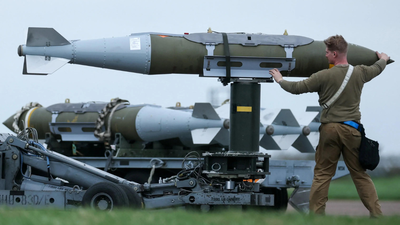
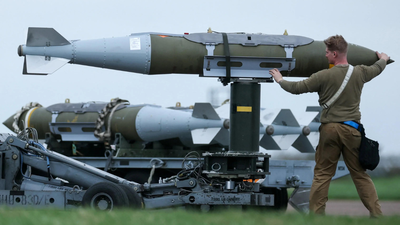
Manhattan US attorney Jamie McDonald said the accused were involved in planning attacks on Jewish communities as well as the British base, which houses American military personnel.“These defendants helped orchestrate a campaign of terror on behalf of terrorist organizations affiliated with Iran that targeted Jewish communities in Europe and the United States, and the British military base, RAF Fairford, housing American service members,” McDonald said.“The threat presented by Iran and Iran-backed terrorist groups to America and our allies is not hypothetical – it is very real.”Attorney General Todd Blanche warned that those targeting American military installations would face prosecution.“Anyone who plans a terrorist plot on a military base housing American service members will be prosecuted by the United States government.”The suspected Fairford plot had triggered a security response in Britain. Seven men arrested in connection with the incident were initially released on bail. Two were later arrested again on suspicion of assisting Iran’s intelligence service and charged under Britain’s National Security Act.Tehran denied involvement after British authorities linked the incident to Iran. The US subsequently pulled its bombers out of RAF Fairford and sent them back to the United States.The base, located around 160 kilometres west of London, has been used by American bombers during several military operations in the Middle East.
How prison calls became a channel for instructions
Despite being in custody, al-Saadi allegedly remained in contact with associates through monitored calls with his family. Prosecutors said he used the word “work” as a code for terrorist activity and asked his mother and sister to pass messages to Mohajeri.During a July 30 conversation, he asked his sister: “What are they doing about all our old work?”He wanted to know whether the planned activities had been abandoned or merely suspended. His sister allegedly assured him that “it isn’t cancelled,” according to the indictment.In another conversation on September 24, al-Saadi asked about al-Hassani, who had reportedly been moved to the “International Section”. He then told his family to “give him money so we can do it,” prosecutors alleged.Al-Saadi has been held in solitary confinement since his May arrest. The Justice Department has described him as dangerous, citing his alleged willingness to target American and Israeli interests.
FBI monitored calls amid concerns over coded language
The alleged communications have also become part of a legal dispute over al-Saadi’s access to his family.Although he was permitted to make phone and video calls from prison, the FBI monitored and recorded the conversations, according to court documents.His lawyer complained in September that several calls had been interrupted or abruptly disconnected. Prosecutors subsequently sought to restrict his access to one hourlong call a month, arguing that he might be using coded expressions such as “work” and “a job” to discuss attacks.Court filings show that al-Saadi made nine phone or video calls between June and September. In one conversation, his mother reportedly cautioned him against discussing a particular subject, saying “they may end the call”. The FBI then terminated the conversation, according to prosecutors.The indictment also details alleged attacks carried out by the network in London. In mid-April, al-Saadi, al-Hassani and Mohajeri allegedly instructed an associate to set fire to a Jewish charity organisation while watching the operation through a video projected from a laptop onto a large screen.A day later, the group allegedly directed another attack on a synagogue in London. Al-Hassani reportedly told the operative to “light it up like a Christmas tree,” the indictment said.Al-Saadi pleaded not guilty in June to allegations that he had plotted at least 18 attacks across Europe in retaliation for the US and Israel’s war with Iran. During the proceedings, he described himself as a “prisoner of war”. He has been denied bail and remains in custody.The US has designated both Kata’ib Hizballah and Iran’s Islamic Revolutionary Guard Corps as foreign terrorist organisations. Prosecutors allege that al-Saadi was a commander of Kata’ib Hizballah.