
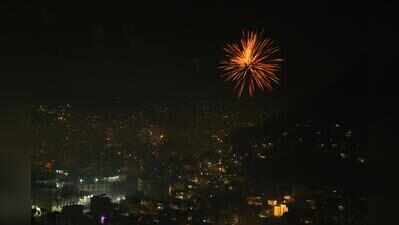
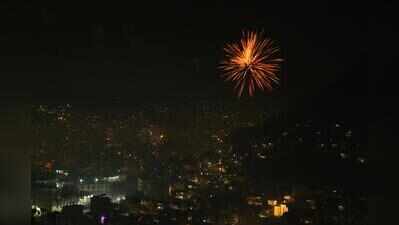
Vijayawada: Despite appeals for a cracker-free Diwali and govt directions for strict enforcement of green-cracker regulations, Andhra Pradesh witnessed a sharp rise in particulate pollution during the festival, with Rajamahendravaram recording a peak PM10 level of 931 micrograms per cubic metre (µg/m³). The deterioration persisted after the celebrations, with air quality remaining in the poor category in Rajamahendravaram and moderate in 15 other monitored locations, according to Andhra Pradesh Pollution Control Board (APPCB) data.Rajamahendravaram recorded the highest PM10 peak among the continuous monitoring stations covered in the APPCB assessment. Its 24-hour average PM10 concentration increased from 139 µg/m³ to 185 µg/m³ compared with last year, while PM2.5 levels rose from 69 µg/m³ to 98 µg/m³.Several other locations also recorded significant increases in particulate pollution. In Pydibheemavaram, PM2.5 levels rose from 35 µg/m³ to 134 µg/m³, while Nellore witnessed an increase from 24 µg/m³ to 62 µg/m³.The impact of the festivities extended beyond Diwali day. According to the APPCB’s Nov 9 air-quality bulletin, Rajamahendravaram recorded an Air Quality Index (AQI) of 220, placing it in the ‘poor’ category. The remaining 15 of the 17 monitored cities were classified under the ‘moderate’ category.Among them, Tirupati recorded an AQI of 191, followed by Nellore at 175 and Srikakulam at 170. Vijayawada, Amaravati, Guntur and Anantapur also slipped from the satisfactory category to moderate air quality.Vijayawada reported increases in both major particulate pollutants compared with last Diwali. Its 24-hour average PM10 concentration rose from 130 µg/m³ to 147 µg/m³, while PM2.5 increased from 64 µg/m³ to 72 µg/m³, both exceeding national standards. Continuous monitoring stations recorded peak levels of 753 µg/m³ for PM10 and 400 µg/m³ for PM2.5. The city’s AQI stood at 135 on Nov 9.The impact was not limited to air pollution. At the Satyanarayanapuram Municipal Office in Vijayawada, the average noise level between 6 pm and midnight was 77 dB(A), while the peak touched 112 dB(A) against the prescribed night-time standard of 55 dB(A). Vizianagaram recorded the highest peak noise level among the 25 monitoring locations at 122 dB(A).Experts said elevated levels of fine particulate matter can aggravate asthma and other respiratory and cardiovascular ailments, particularly among children, senior citizens, pregnant women and people with pre-existing heart or lung conditions.The APPCB monitored air quality through 72 manual stations, 20 continuous monitoring stations and 25 real-time noise monitoring stations across the state during the festival period.