
A dispute over a single parking space in an Orange County condominium complex has ended with a clear legal winner and an unusually expensive lesson. WCST Enterprises, the owner of Unit 38, successfully proved that it owned garage space 38G-a, the half of a two-car garage that its neighbour Berit Ling had used for roughly two decades. Yet the California Court of Appeal affirmed a ruling that WCST could not recover the $292,544 in attorney fees it sought after winning the case, reported Laws.com and Justia U.S. Law.The decision, issued on September 28, 2026, in WCST Enterprises, LLC v. Ling, is about far more than one inconveniently numbered garage bay. It explains that winning a property dispute does not automatically make the losing neighbour responsible for the winner’s legal costs. In California, a party must still identify a statute or contract that authorises a fee award, and the court found that WCST had not done so.The case began with documents recorded in the 1960s and grew into three appeals, two trials and a fight that consumed nearly ten years. By the end, WCST had secured legal ownership of the space but was left to pay its own lawyers. Read more about it here, as per the reports:
One space, two neighbours
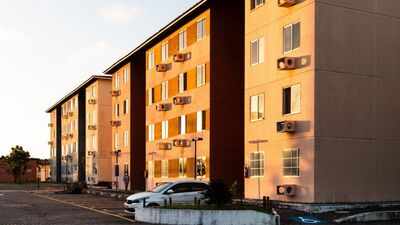
The dispute involved adjoining Units 38 and 39 in a condominium complex developed by Huntington Harbor Corporation in the 1960s. WCST, an entity owned by Maury Loomis, bought Unit 38 in 2018. Ling had owned neighbouring Unit 39 since 1998 and had used both halves of the nearby two-car garage, spaces 38G-a and 39G-a, after purchasing her home.The problem was that the recorded documents did not line up neatly with the way residents had used the garages. Ling’s deed referred simply to “39G,” a designation the court found did not actually exist on the complex map. By contrast, WCST’s deed expressly identified garage spaces 38G-a and 38G-b as belonging with Unit 38.WCST knew about the disagreement before it bought the property. The court record states that the sale disclosures told WCST that Unit 39 had been using the entire two-car garage and that litigation to quiet title to space 38G-a might be necessary. Even so, WCST went ahead with the purchase and filed suit against Ling in January 2019.
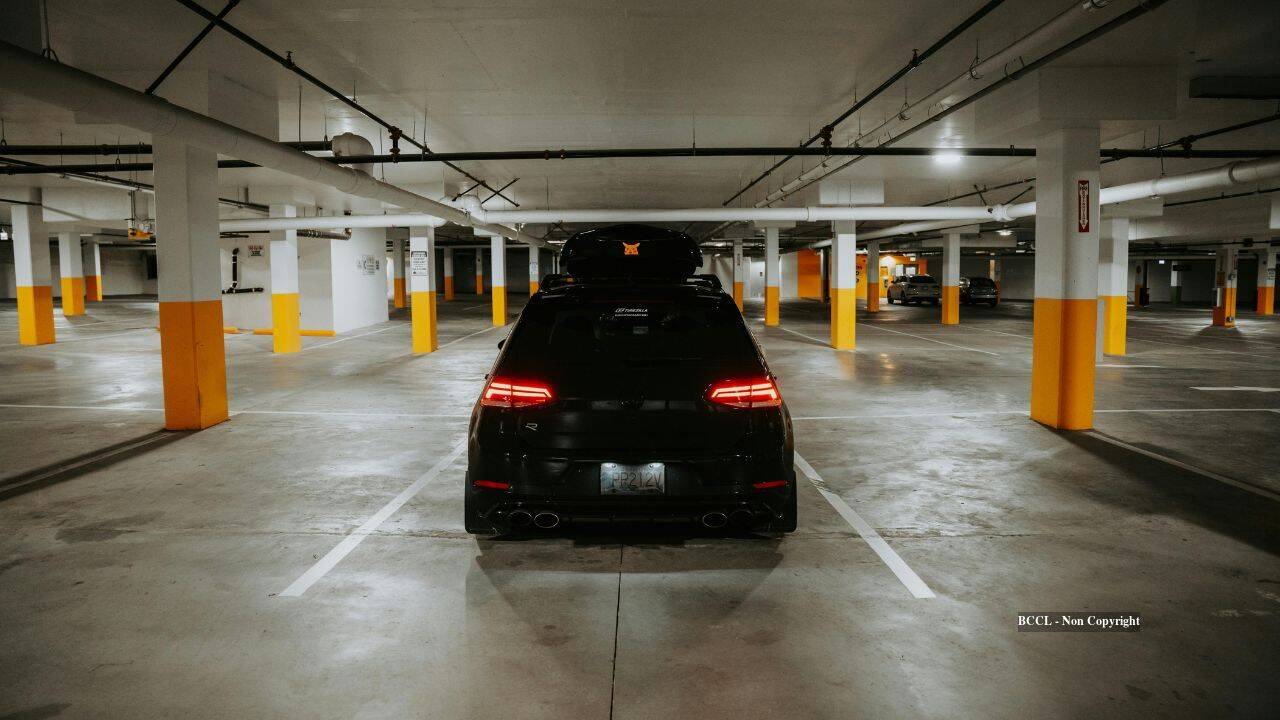
Representative image of car parkingPhoto: Canva
A case that took three appeals
WCST initially sued for ejectment, quiet title, violation of the condominium’s covenants, conditions and restrictions, and trespass. After the first trial in 2020, the trial court ruled for Ling. The Court of Appeal reversed that result because the earlier judge’s decision did not adequately explain why Ling had superior rights to the disputed space.The case then went to a new judge for a fresh trial. This time, the court focused first on the quiet title claim and concluded that the garage spaces were privately owned property rather than common areas. It found that WCST’s grant deed clearly conveyed spaces 38G-a and 38G-b with Unit 38, while Ling’s deed referred to a garage designation that could not be located on the plan.After winning on title, WCST waived its remaining claims, including its claim that Ling had violated the CC&Rs. The trial court entered judgment in WCST’s favour, declared it the prevailing party and said attorney fees could be sought by motion. That wording later became central to the fee fight.
Why the fee request failed
WCST asked for $292,544 in attorney fees under two theories. It relied on Civil Code section 5975, part of California’s Davis-Stirling Common Interest Development Act, and on a fee provision in the complex’s CC&Rs. Both routes require more than simply winning a case involving condominium property.Section 5975 allows a prevailing party to recover reasonable attorney fees and costs in an action to enforce governing documents, such as CC&Rs, bylaws, operating rules and articles of incorporation. The appellate court held that WCST’s lawsuit did not qualify because its core purpose was to enforce rights created by its grant deed, not rights created by the CC&Rs or another governing document.The court explained that it was not enough for a lawsuit to relate to the governing documents. The essential nature of the case had to be enforcement of a specific right those documents provide. Although WCST placed the CC&Rs, the recorded plan and the map into evidence, the court said that merely using documents as exhibits did not transform a deed-based title case into a CC&R enforcement case.
“Prevailing party” is not a magic phrase
WCST argued that the judgment itself settled the fee question because it called WCST the prevailing party and stated that fees could be recovered through an appropriate motion. The appellate court rejected that argument in plain terms. It said the phrase “prevailing party” is not a “magic incantation” that allows a winner to bypass California’s general rule that each side pays its own attorney fees unless a statute or contract says otherwise.The court also noted that WCST had waived its separate CC&R claim after prevailing on quiet title. The two CC&R provisions WCST later pointed to, involving compliance with covenants and nuisance activity, were part of the claim it abandoned. The court found no evidence that those provisions were actually litigated or that they formed the basis of the quiet title victory.That distinction mattered because other parking disputes have supported fee awards when they involved a specific CC&R provision. The opinion cited Crestmar Owners Assn. v. Stapakis, which concerned a CC&R rule on parking-space transfers, as an example of a case that did qualify for fees under the statute.
A costly victory
The outcome leaves WCST with legal ownership of garage space 38G-a but no reimbursement for the enormous cost of obtaining it. Ling, meanwhile, lost the space she had used for many years, but avoided being ordered to pay WCST’s legal fees. The appellate court also awarded Ling her costs on appeal.For condominium owners, the case is a reminder that property boundaries, deed descriptions and parking assignments can create disputes that last far longer than anyone expects. It also shows why the way a lawsuit is framed can matter as much as the underlying facts. A claim based on a deed may succeed on ownership but offer no route to legal fees, while a properly pleaded claim to enforce a specific CC&R provision may carry fee consequences for either side.In the end, the court’s message was straightforward. WCST proved it owned the space. But proving ownership was not the same as proving that its opponent had to fund the decade-long legal campaign used to establish it.