
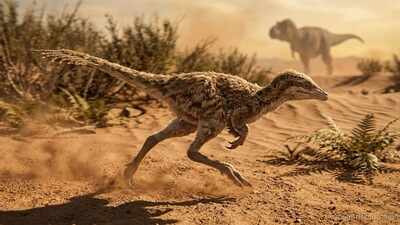
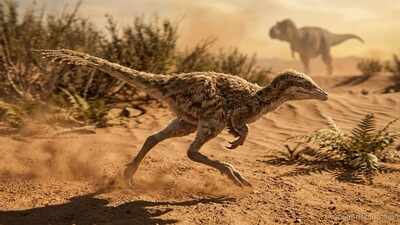
Say “dinosaur” and most people picture a towering Tyrannosaurus or a long-necked giant stretching over the treetops. But the dinosaur family also had members the size of a cat or even smaller, creatures that would have darted through the undergrowth. Some were feathered, some had wings, and some were fast little runners no longer than a kitten. Here are five things to know about the smallest dinosaurs, and why these pint-sized creatures matter as much as the giants.
Not every dinosaur was a giant
Dinosaurs lived for well over 150 million years and came in an enormous range of sizes. Alongside the huge plant-eaters and fierce predators were many small species that hunted insects, lizards and other tiny animals, or nibbled on plants. When palaeontologists talk about the smallest dinosaurs, they usually mean non-avian dinosaurs, which are all dinosaurs except birds. Living birds are also technically dinosaurs, and the smallest of them, the bee hummingbird, would otherwise win every contest.
Parvicursor: The tiny runner
Parvicursor remotus, whose name means “small runner”, lived in what is now Mongolia during the Late Cretaceous. It is one of the strongest candidates for the smallest non-avian dinosaur, at around 39 centimetres long and with an estimated weight of roughly 160 grams, far lighter than a cat. Its long, thin legs suggest it was a speedy runner, probably chasing insects. Our knowledge of it rests on an incomplete skeleton, mainly a pelvis and hind legs, so its size is an estimate.
Microraptor : The four-winged glider
The microraptor is perhaps the most famous small dinosaur. Found in China in rocks about 125 million years old, it measured roughly 2.5 feet (about 75 centimetres) in length and weighed around 2 pounds, which puts it in the range of a small cat or a crow. Its body was covered in feathers, and it had long feathers on both its arms and its legs, forming four wings. Scientists think it could glide or flap between trees. Hundreds of fossils have been found, which suggests it was common in its time.
Compsognathus : The “elegant jaw”
For many years, Compsognathus was thought to be the smallest dinosaur. This Late Jurassic hunter, found in Germany and France, was about one metre long and weighed roughly 2.5 kilograms. It is often compared with a chicken or a turkey, although a cat-sized animal is a fair picture too. The remains of small lizards found inside its fossils show what it ate. Since then, even smaller species have been discovered, which is why it lost the title.
Why tiny dinosaurs matter
Small dinosaurs are more than curiosities. Many of them were feathered and bird-like, and they help scientists understand how feathers, flight and warm-blooded lifestyles developed, and how dinosaurs gave rise to the birds we see today. They also remind us that the age of dinosaurs was not only about giants. Every ecosystem had its small hunters, scavengers and climbers, filling roles much like those of modern lizards, cats and birds. A closer look at them gives a fuller picture of prehistoric life.
Disclaimer:
This article is intended for general informational and educational purposes only. The sizes and weights of dinosaurs are estimates based on fossils, many of which are incomplete, and scientific understanding changes as new discoveries are made. Comparisons with modern animals are approximate.