
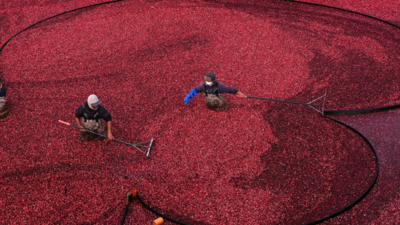
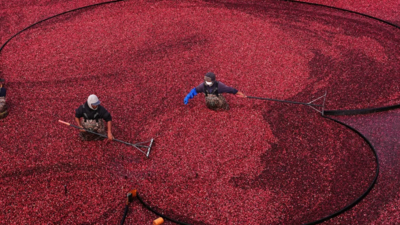
Two cranberry bogs in Massachusetts that had stopped making money have returned to active farming after solar panels were installed ten feet above the crops. According to reporting by Electrek, the project uses a method called agrivoltaics, which allows farmers to grow crops and generate solar power on the same land. The arrangement gives farmers a steady income from leasing their land for solar energy without having to sell it or stop growing cranberries. This guaranteed income helped cover high running costs, improve soil health, and restart berry harvests that had become too costly for years. The approach combines farming with solar power generation. It also addresses concerns among farming communities that solar projects take up valuable farmland and reduce food production.
Dual land use restores historic bogs
Growing cranberries in Massachusetts requires major spending on pest control, irrigation, sanding, and harvesting equipment. In recent years, falling crop prices and rising costs have forced several family-owned farms across New England to leave their bogs unused or consider selling their land to property developers. The two Massachusetts sites chosen for the agrivoltaics project had stopped commercial farming because the cost of maintaining the bogs was higher than the market value of the cranberries they produced. To bring the land back into use, developers built steel support structures that raised the solar panels ten feet above the bogs. This height allows traditional farming equipment, including tractors, harvesters, and irrigation systems, to work underneath the panels without getting in the way. The design also leaves wide gaps between rows of panels so enough sunlight can reach the cranberry vines below. Early farming assessments found that the partial shade helped keep soil temperatures lower during heatwaves, reduced water loss through evaporation, and protected the delicate vines from too much heat.
Financial stability through solar leasing
The financial model depends on long-term land lease agreements between farm owners and solar energy developers. Under these agreements, solar developers pay landowners fixed annual fees for the right to produce electricity and send it to the local power grid. As reported by Electrek, this predictable income helps farmers manage changes in cranberry prices. The lease payments provided the money needed to restore the unused bogs. Farmers removed weeds, repaired irrigation channels, and planted new cranberry vines beneath the solar panels. By earning money from both solar leases and cranberry sales, the farms created two sources of income. This approach also helps protect farmland from being sold for industrial or residential development.
State policy supports agricultural solar
The success of these cranberry bogs fits with wider state programmes that encourage solar power projects on working farmland. Massachusetts created specific incentives through its Solar Massachusetts Renewable Target (SMART) programme to support agrivoltaic projects. The scheme offers extra payments for each kilowatt-hour of electricity produced by solar arrays that allow farming to continue underneath. It also sets strict rules for panel height and the amount of light that must reach crops, helping ensure that agricultural production can continue. University researchers, including teams from the University of Massachusetts Amherst, have been studying crop yields, soil moisture, and light levels at elevated solar test sites across the region. Their ongoing research looks at how different crops respond to partial shade and how changing the angle of solar panels can balance electricity production with farming needs. Data collected from working farms in Plymouth and Barnstable counties shows that some cranberry varieties maintain steady yields under partial shade. The findings also indicate that irrigation needs can fall because less water evaporates from the ground.
Expanding agrivoltaics across New England
Combining solar panels with cranberry bogs reflects a wider trend across the northeastern United States. High land prices and limited capacity in electricity networks have increased competition between renewable energy developers and farmers for available land. Agrivoltaic systems are also being tested on other types of farmland in the region, including livestock pastures, vegetable fields, and berry farms. Generating electricity for local power networks while continuing to grow food allows rural communities to meet clean energy targets without reducing local food production. For Massachusetts’ cranberry industry, one of the oldest commercial farming industries in the United States, elevated solar panels offer a practical way to preserve historic farmland while producing clean electricity for nearby communities.