
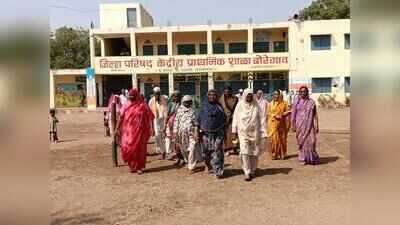
Chhatrapati Sambhajinagar/Kolhapur/Nashik: A grandson taught his grandmother her first letters. Another proudly accompanied his grandfather to an exam. On Sunday, together, they turned a literacy test into a celebration of second chances.Sixty-five-year-old Mangal Baban Mane of Kolhapur once dreamt of becoming a govt officer. Life had other plans. Poverty and circumstances cut short her education. On Sunday, decades later, she took her seat for Foundational Literacy and Numeracy Assessment Test (FLNAT), carrying with her lessons taught not by a teacher, but by her grandson.“My grandson is in Class V. He taught me Marathi letters and helped me learn words. He also taught me counting from one to 100,” Mane said. “Now I can do basic addition and subtraction. Most importantly, I can write my own name.”
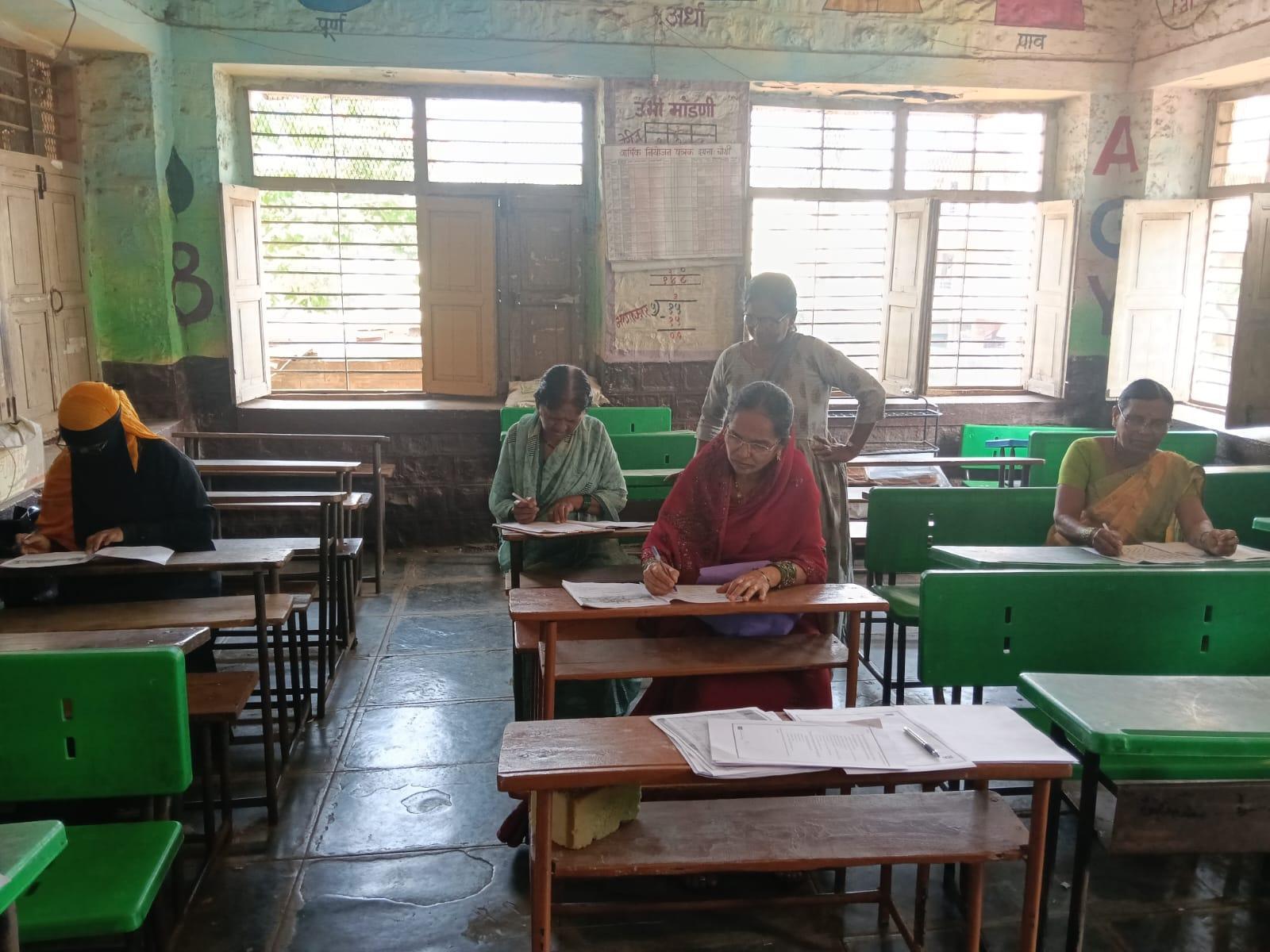
Mangal Baban Mane, in yellow sari, writes the exam in one of the exam centres in Kolhapur
Hundreds of kilometres away in Nashik, science graduate Shashank Borse proudly escorted his 68-year-old grandfather to another examination centre.The older man had spent his life in the fields so that future generations could study. On Sunday, it was his turn to become the student.Together, their stories captured the spirit of a remarkable statewide exercise that saw nearly seven lakh elderly learners appear for FLNAT under the ULLAS (Understanding of Lifelong Learning for All in Society) programme of New India Literacy Programme (NILP).For Vimal Kanu, 60, from Satara’s Man taluka, the examination marked another milestone in a journey of self-belief. She had appeared last year but did not clear the test. This time, she walked into the classroom with confidence.“The change in my life is visible,” she said. “Earlier, I used a thumb impression. Now I sign my name. I can read small words and understand what is written. I can even check whether a shopkeeper has returned the correct balance,” she added.
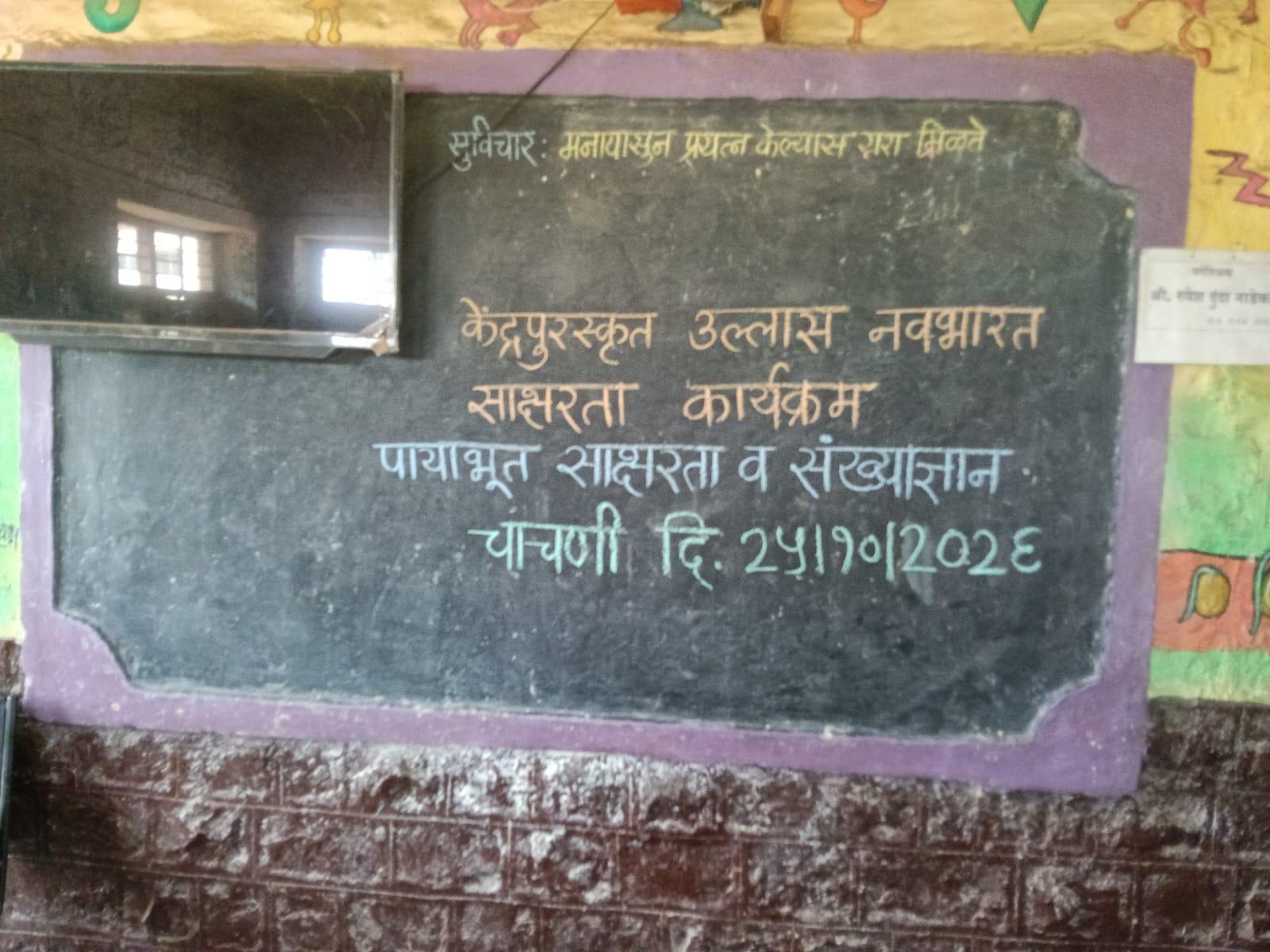
One of the exam centres in Kolhapur
Across Maharashtra, elderly men and women who had missed out on schooling decades ago returned to classrooms, many writing their first formal examination. The test, conducted in nine languages, including Marathi, Hindi, English and Urdu, is part of govt’s effort to bring non-literate adults into the education system.“Around seven lakh learners registered on the ULLAS app appeared for the examination. Those who qualify can continue their education through standards three, five, eight, 10 and 12 equivalents,” said education director (planning) Krishnakumar Patil.“He spent his youth working on the farm so the generations after him could study,” Borse said of his grandfather. “Because of his sacrifices, my father became a teacher and I found a job in Nashik. Taking him to this exam was one of the proudest moments of our lives. He is the only one among seven siblings who dared to take the test. I hope others now follow him,” Borse said.The response was especially strong in Chhatrapati Sambhajinagar, where more than 41,000 candidates appeared at 2,698 centres. Against a target of 47,368 learners, 43,700 had registered for the programme.Officials said the initiative extends beyond literacy.“Through FLNAT, we aim to build financial, legal and digital literacy, along with health awareness and other life skills that help improve quality of life,” Patil said.The scale of the literacy drive came alive at the Dhoregaon cluster, where 198 neo-literates turned up to write the test at Zilla Parishad Central Primary School and its satellite centres. Guided by centre head Sachin Damale, in-charge headmaster Rajesh Hiwale and a team of teachers, the centres transformed into classrooms of second chances as elderly learners, many writing an examination for the first time in their lives, took their seats with quiet determination. “They were welcomed with flowers before the exam,” said Hiwale. “The welcome eased their fears and boosted their confidence. The most memorable sight was seeing elderly learners arrive with their grandchildren, who watched with pride as their grandparents read, wrote and solved questions on their own.”The examination carried 150 marks and required a minimum score of 33%.For many candidates, however, the day’s biggest achievement was not the result that will arrive later. It was simply walking into a classroom, taking a seat and writing the test.