
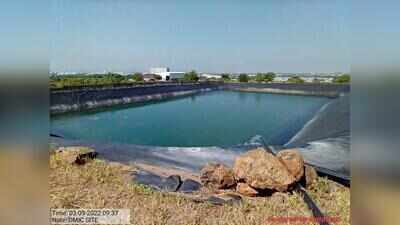
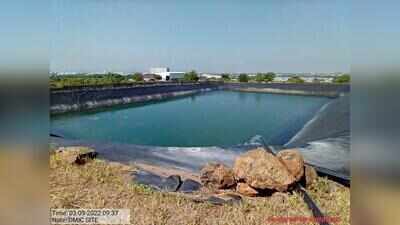
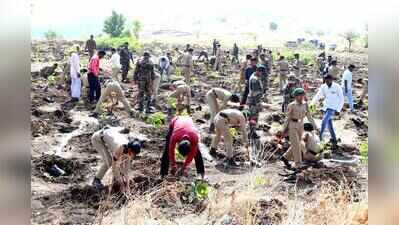
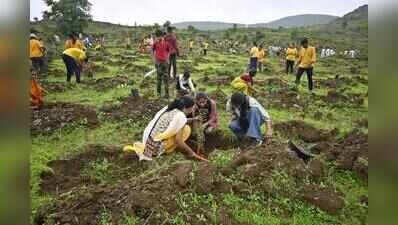
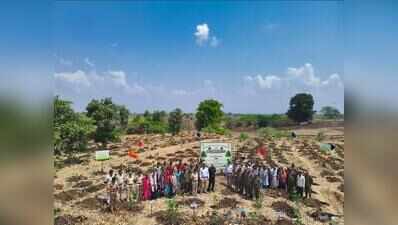
Pune: With Marathwada reeling from a severe rainfall deficit, depleted reservoirs and widespread damage to kharif crops, the Territorial Army’s ecological battalion is stepping up efforts to strengthen the region’s water security through rainwater harvesting, afforestation and land restoration.The 136 Infantry Battalion (Territorial Army) Eco Mahar, also known as the Marathwada Eco Warriors, has developed 19 water reservoirs with an estimated combined storage capacity of 14.7 crore litres, planted more than 29 lakh saplings and restored approximately 2,190 hectares of degraded land, according to information shared by the battalion.“The overall moisture level in the surrounding areas is better than the other villages in the region. These water reservoirs are in the forest pockets in Chhatrapati Sambhajinagar, Beed and Hingoli district,” a senior army officer said.The initiative assumes significance as the drought-prone region faces another difficult agricultural season, with prolonged dry spells leaving farmers struggling to save standing crops and raising concerns over water availability for drinking, livestock and the upcoming rabi season.Marathwada received only 65.35% of its average seasonal rainfall, according to a presentation made by divisional commissioner G Shreekant to a central drought assessment team during its recent visit to the region. Reservoir storage had fallen to 30.7% of capacity, while groundwater levels in Jalna, Dharashiv and Latur were 4 to 5 metres below the five-year average.Against this backdrop, the battalion’s conservation work aims to retain rainwater that would otherwise flow away, encourage groundwater recharge and restore vegetation in degraded landscapes. “The reservoirs are intended to capture and store rainwater for use during dry periods, while the plantation and land-restoration programme seeks to improve the ecological health of the region. Vegetation helps bind soil, reduce erosion and improve moisture retention, potentially creating favourable conditions for rainwater to percolate into the ground,” added the officer.The battalion’s approach extends beyond planting trees or constructing water-storage structures. It combines water conservation, afforestation and soil and moisture conservation to improve the resilience of landscapes facing recurring droughts.However, the scale of the current crisis also underlines the limitations of isolated interventions. Water-storage structures can make a meaningful contribution, but their effectiveness depends on rainfall, catchment conditions, maintenance and the extent to which conservation measures are implemented across entire watersheds. “Currently, we are not facing an issue but the increasing day temperatures results in a high evaporation rate. Therefore, we can’t predict the situation in the coming months,” added the officer.This year, prolonged dry spells have severely affected soybean, cotton, sugarcane and horticultural crops across the region. Farmers in several districts have reported withered crops, drying wells and mounting cultivation costs. The consequences extend beyond agriculture, affecting rural employment, livestock and household incomes.The battalion’s work is therefore relevant not only as an ecological restoration initiative but also as part of the region’s longer-term response to recurring water stress.“Increasing local water retention, restoring vegetation and protecting soil can help communities manage rainfall variability, although these measures cannot substitute for adequate rainfall or comprehensive water-resource planning,” a senior officer from the TA group headquarters, Southern Command, told TOI.A water conservation expert, who has worked in Marathwada region, told TOI, “Water conservation through scientific work is the only long term solution to the recurring water crisis in the region. The TA’s work is the testimony to it. It could save lakhs of trees only because of their water conservation work. A similar approach the forest department needs to consider.”“If they create/ do such water reservoirs in the grassland zone, they can grow fodder which can be supplied to farmers during the crisis time. There are several hillocks and hilly terrains in the Marathwada region. These pockets can be converted into fodder zones in the future,” added another expert.