
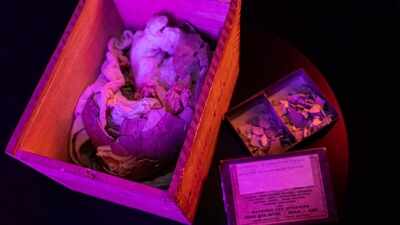
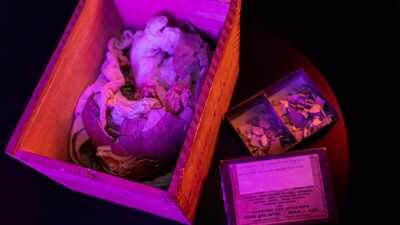
Picture this: a rare egg belonging to an extinct bird being found in one country; somehow landing in a private collection in an entirely different place, now finally returning to its homeland.That’s what’s happening to a rare egg belonging to the extinct giant moa bird. After nearly six decades living a quiet existence in an American collection, that rare egg from New Zealand’s extinct giant moa bird is finally on its way home. This egg isn’t just another fossil; it’s one of the rarest avian relics in the world, with fewer than 40 relatively complete eggs known anywhere. First dug up in New Zealand in January 1966, it bounced around private hands before turning up at a Colorado auction in 2026, where the biotech firm Colossal Biosciences bought it for roughly US $10,500.Now, after years in limbo, Colossal is returning the egg to New Zealand, with Māori cultural leaders and researchers from Ngāi Tahu overseeing its restoration and future study. The egg will become part of Aotearoa’s heritage again, both a scientific artifact and a taonga, which is something sacred and deeply meaningful to Māori communities whose ancestors once shared the land with these towering birds.
Why is this egg such a big deal?
Besides the drama of its journey, nearly intact moa eggs are incredibly hard to find. Moa eggshell was surprisingly thin relative to the birds’ size (the biggest species reached up to three and a half meters tall and weighed over 200 kilograms), so the odds of any surviving in one piece are slim. This specimen, measuring about 22 by 17 centimeters, is made up of many fragments painstakingly reassembled, with a few small pieces still waiting for expert hands.The egg’s backstory adds layers of intrigue.Auction records suggest it may have come from a burial site nearly 700 years old, which is part of a time when Māori communities lived alongside the last wild moa. There’s still a lot to uncover about its precise origins and which moa species produced it.
Why is the egg coming back to New Zealand?
Returning the egg to New Zealand is more than just a logistical task. Colossal Biosciences, along with Ngāi Tahu, Canterbury Museum, and filmmaker Sir Peter Jackson, is interested in the egg’s scientific potential. There’s a longstanding dream of “de-extinction,” which means using modern genetic engineering to try to revive extinct species, moa included. Fragments of DNA can sometimes survive inside old eggshell. If viable material is found, the egg could provide vital clues. But it’s a huge challenge, as ancient DNA is usually fragmented or degraded, and no one’s close to resurrecting a moa just yet.Regardless, the return is a moment for celebration and reflection. Māori protocol (tikanga) will guide decisions about restoration, study, and public display. Importantly, the repatriation is voluntary, since the egg left the country before current heritage laws; Colossal isn’t legally required to send it back, but chose to do so in partnership with local communities.
What’s next?
The egg will return, receive more careful conservation, and be studied under Māori guidance. Maybe it’ll shed light on ancient moa biology or ecology. Maybe, just maybe, it’ll help future efforts to bring this remarkable bird’s story full circle. But for now, it’s enough to welcome home something so rare: a tangible piece of New Zealand’s natural and cultural legacy, restored to the land that shaped it.