
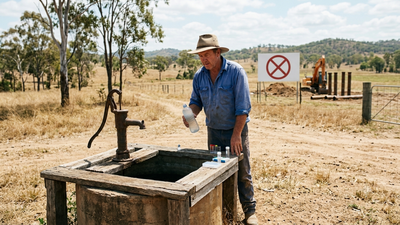
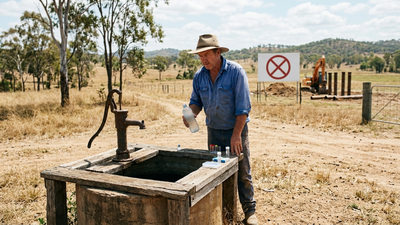
For generations, a Queensland farming family relied on a well that had supplied water for around 140 years. But in 2019, farmer Keogh says the water turned muddy and cloudy after a neighbouring property began test-pumping groundwater. Now, plans for a commercial bottling and processing facility near Warwick have intensified concerns among local farmers, as an existing licence permits the site to extract up to 96 million litres of groundwater a year. More than a dozen farmers are opposing the proposed expansion, fearing it could threaten water supplies and worsen drought conditions. The developer, however, has previously argued that extraction would not affect nearby properties.
A 140-year-old family well raises concerns over changing water quality
Keogh’s well had supplied water for around 140 years, spanning several generations of his family on the Queensland property. He described its water as clear before the change he reported in 2019. Since then, he has stopped drinking from it, saying the water became muddy, milky and cloudy after pumping tests were carried out on neighbouring land.The farmer believes the change may be connected to the activity next door, although the reported sequence of events does not by itself establish that test pumping caused the deterioration. The well took months to recover, according to Keogh, and he said good rainfall was needed before it recharged.For a farming family, the condition of a well is about more than drinking water. Reliable groundwater can help sustain livestock, crops and the day-to-day demands of running a property. Keogh fears the proposed development could put further pressure on the spring-fed wells he depends on.
PC: ABC News
Groundwater licence increased from 25 million to 96 million litres a year
The neighbouring property is home to Cherrabah Resort, near Warwick, about 180 kilometres south-west of Brisbane. Its owner, Joyful View Garden Real Estate Development Resort Co Pty Ltd, holds a commercial groundwater licence granted by the Queensland government in the late 2000s.As reported by ABC News, the original allocation was 25 million litres a year. It was later increased to 96 million litres under the former Labor government, allowing the company to extract water for a range of purposes, including use at the resort. The licence covers the water extraction itself, but a separate planning process has become the focus of the current dispute.Southern Downs Regional Council approved an application in 2019 for water extraction and purification facilities at Cherrabah. The decision came during a severe drought, prompting objections from residents concerned about the prospect of large volumes of groundwater being taken from an already dry region.Despite the existing approvals, commercial extraction had not begun at the site as of the ABC report published on 24 February 2026. The company is now seeking a change to its development approval that would allow it to add facilities for making, storing and exporting bottles.
More than a dozen farmers raise concerns over groundwater supplies
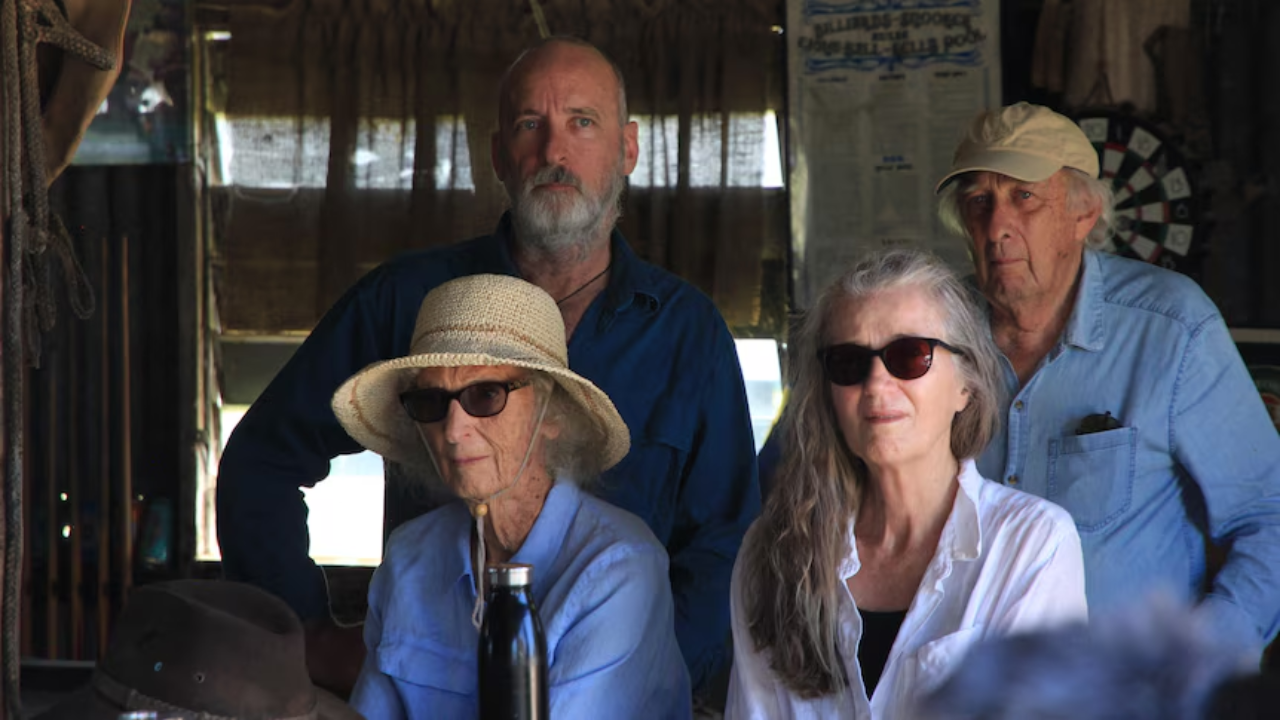
The proposal has drawn together more than a dozen farmers, who began meeting regularly towards the end of 2025 to discuss their concerns and seek political intervention. Their objections centre on the possible effects of sustained groundwater extraction, particularly if rainfall is poor and underground water supplies take longer to recover.Andrew O’Dea, another farmer in the area, fears, “I can see us going into drought a year before we would normally go into drought, and I can see us not coming out of drought a year later because it would take so much longer for our spring water to recharge.”The proposed facility would also bring an industrial operation into a rural landscape. O’Dea has questioned the scale of the planned buildings and the expected truck movements, arguing that the development would be difficult for nearby residents to ignore.For farmers in Elbow Valley, the concern is not confined to the volume written into a licence. They also want to know how groundwater levels and recharge rates would be affected over time, particularly when several properties rely on local water sources.
Earlier hydrology report offers a different view of groundwater risks
A hydrology report submitted by the company to the council in 2019 offered a different assessment. It said,”The groundwater associated with the fractured rock aquifer of the Stanthorpe granites is not connected to the overlying alluvial and perched water tables that are accessed by local rural industries.”On that basis, the report concluded that extracting water from the licensed source would not affect surrounding users. That assessment sits at the centre of the disagreement: farmers are concerned about the security of their own supplies, while the developer’s earlier report argued that the groundwater systems were not connected in a way that would cause such effects.The report did not establish that the proposed extraction had already damaged neighbouring wells, and commercial extraction at the site had not yet started. Keogh’s account concerns the earlier test-pumping activity and the subsequent change he observed in his well.
Council faces a decision on the expanded facility
The latest application, lodged in September 2025, seeks permission to add bottle manufacturing, storage and export operations to the existing development. The change would shift the site’s planning designation from rural use to a high-impact industrial zone.Southern Downs Regional Council is responsible for considering the development application, while the Queensland government oversees commercial groundwater licences.Local member James Lister said, “The original increase to Cherrabah’s water licence from 25ML to 96ML was a bad decision, but Labor approved it, and it’s now a matter for the council to deal with the application before the.”Mayor Melissa Hamilton also pointed, “I hope all of the concerns being raised by the residents, including as to the recharge rate of the aquifer, are being properly considered by the department.”
Is 96 million litres a large amount of water
Not everyone considers the licensed volume unusually high. Matt Donovan, a water consultant and lawyer who runs Queensland Water Consultancy, described 96 million litres a year as a relatively small amount in the context of Queensland’s commercial water use.He compared the volume with agricultural irrigation, estimating that it could supply a crop covering roughly 20 hectares. Donovan also pointed out that the company had legal authority to extract water under its existing licence.The effect of groundwater extraction depends on the source, local geology, the relationship between aquifers and the rate at which water is replenished. The farmers’ concerns focus on those local conditions and the prospect of reduced availability during drought.
Council rejects Cherrabah bottling plan but groundwater licence remains in place
A day after farmers raised concerns about a proposed groundwater extraction and bottling facility in Queensland’s Southern Downs region, the local council rejected the development application, citing concerns about the rural landscape and a lack of updated technical evidence on potential groundwater impacts.On 25 February 2026, Southern Downs Regional Council opposed plans by Cherrabah Resort’s owner, Joyful View Garden Real Estate Development Resort Co Pty Ltd, to establish a large-scale water-bottling and export operation.However, the decision did not cancel the company’s existing state-issued licence to extract up to 96 million litres of groundwater annually.