
Nüshu is not just any language. It is a generations-old language created in a small region of China by women. It was a writing system that allowed women to communicate their thoughts and record their experiences. It also helped them build bonds with one another in a society where access to education was limited during the time.Let’s find out more about this interesting language:What does Nüshu mean?Nüshu in Chinese means “women’s writing”. It is described as the world’s only known writing system developed and traditionally used exclusively by women. According to UNESCO, it emerged among rural women living in the Xiao River valley in Jiangyong County, in Hunan province, southern China.The distinctive script became a powerful means of expression for women who often had few opportunities to make their voices heard. The language was passed down among women through families, friendships and community gatherings. They would often use it to write letters, autobiographies, poems, songs and encouraging messages. It was more of self-expression and was largely inaccessible to men.Does it exist today?

Chinese woman reading (Canva)
The answer is yes. However, the centuries-old language had come dangerously close to disappearing. But the good thing is that it is attracting renewed interest. Young women, researchers and artists are finding ways to learn Nüshu, ensuring that a remarkable part of women’s cultural history continues to reach new generations and the generations to come.How is it written?Nüshu is not like regular Chinese. It is a syllabic script adapted to the local Chengguan Tuhua dialect and the characters are derived from Chinese forms. They have been stylised into slender, elongated shapes, often described as rhomboid or thread-like.The script was traditionally written vertically and could appear on paper, fans, handkerchiefs, embroidered textiles and other personal objects. Its delicate appearance earned it descriptions such as “long-legged writing” and “ant writing”.However, the precise origins remain uncertain.The language of sisterhood
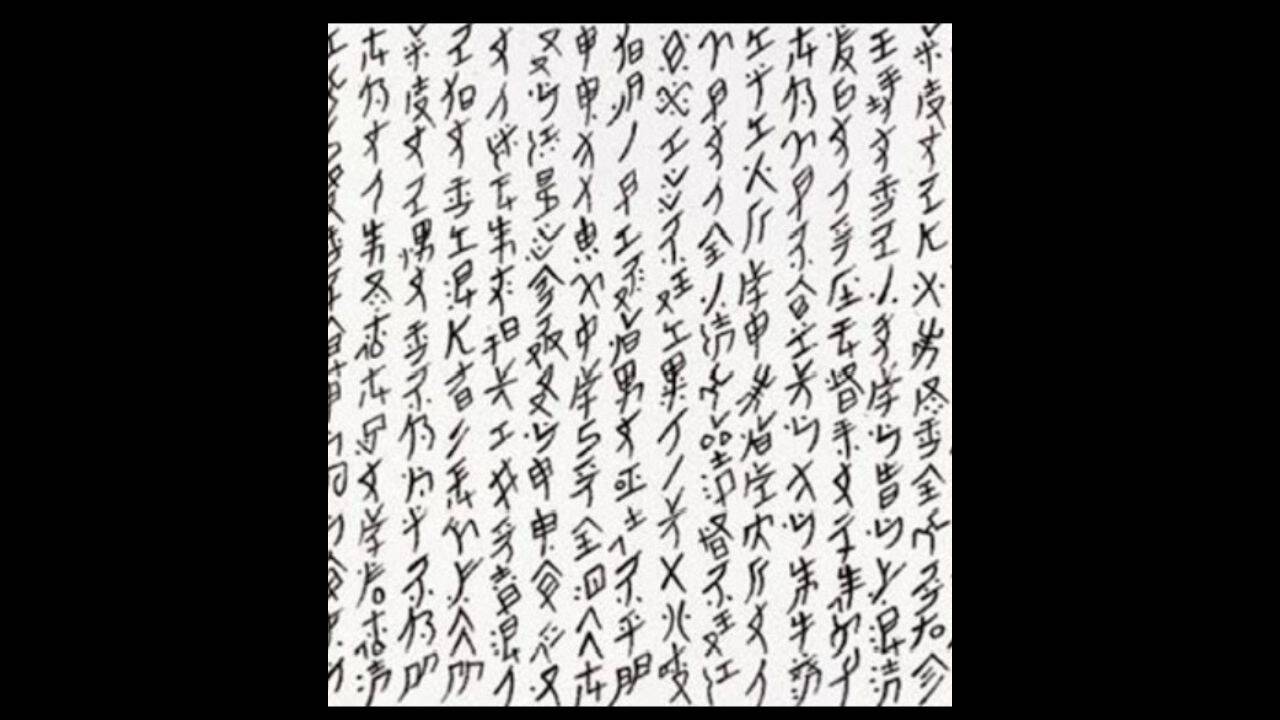
Nushu (Wiki)
Nüshu was developed in a society where women, particularly those in rural communities, had limited access to formal education. In those times, men were more likely to learn Chinese literacy. So women found their own ways to communicate through a script that reflected their own language, experiences and relationships.Mothers taught daughters, while sisters and close friends shared the writing. Women also gathered to sew, sing and exchange stories, creating spaces where Nüshu could be practised and passed on. It soon became the language of sisterhood.One of its most distinctive traditions was the sanzhaoshu, or “third-day letter”. These were messages traditionally given to a newly married woman by her female relatives and friends on the third day after her wedding. It could contain blessings or advice.Why did Nüshu come close to disappearing?According to UNESCO, some women traditionally asked their families to burn or bury their Nüshu writings after their deaths. Others had their works placed in their coffins. As education and social conditions changed, fewer young women learned the script and everyday role of the language gradually diminished.The death of Yang Huanyi on September 20, 2004, marked an important turning point. She was among the best-known remaining women of traditional Nüshu knowledge, and her death highlighted the urgency of preserving the language.How China is keeping the centuries-old script alive

Teaching (Canva)
In an effort to keep the language alive and relevant, Nüshu was added to China’s National Register of Documentary Heritage in 2002. In 2006, it was recognised as a national intangible cultural heritage, and a dedicated Nüshu museum opened on Puwei Island in Jiangyong County in 2007.Later in 2015, 397 Nüshu characters were admitted by the International Organization for Standardization, and China’s proposal to include Nüshu characters in the Universal Coded Character Set was approved in March 2017.Centuries later, young female artists are bringing those stories into new spaces. Their work cannot recreate the original social world in which Nüshu flourished, but it can help preserve the tradition’s meaning for future generations.