
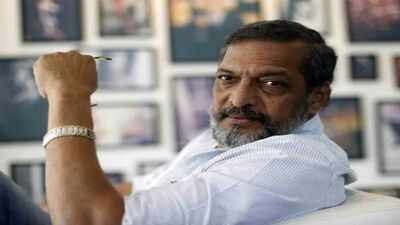
The year was 1989. The movie was Parinda, directed by Vidhu Vinod Chopra. In those days, when a movie broke boundaries of any sort, it used to go ‘viral’ through word of mouth. Mostly, from friends in school. Neighbours, because those were days when we used to know our neighbours far better than we do now. Also, those were the days when movie song cassettes would flood the market and make the movie somewhat a hit even before its release. All of those things happened when Parinda was released on November 9, 1989.And then there was Nana Patekar. Anna was his character’s name. He was an underworld don. Seems run of the mill today. But not in the late 1980s in Bollywood. Ram Gopal Varma would bring his brand of the underworld in the coming decade. The precedent was set by Chopra. But more than the director, it’s the villain who audiences went to watch. Most, more than once. Some, more than twice.Even before the famous boat scene towards the end of the movie, when audiences watched Marathi stage and film actor Nana Patekar’s performance as the don—a character so complicated that he kept the audience on edge every minute of the film—they knew this experience was new. They hadn’t seen any villain portray his craft with such unhinged precision. If that sounds like an oxymoron, it is.Anna changed Bollywood for the better. There were many more such performances that would follow. But one thing was certain. Bollywood was jolted out of its lazy writing and portrayal of comical villains. One performance had changed how movies were made after Parinda.So when the news of his sudden death Thursday morning (October 8, 2026) hit, it was again a hark back to the times when a movie wasn’t content. Audience wasn’t sheep. And Bollywood could understand where the wind is blowing, and how they should write, way better than they do now.For decades, mainstream Hindi cinema was built around a fairly simple idea of the hero. He had to look like a hero, behave like a hero and, preferably, have the entire machinery of the film built around him. The romantic lead got the songs, the love story, the action sequences and, most importantly, the attention. The actors around him had their roles clearly defined: The love interest, the villain, the comic relief, the loyal friend, the father, and some more character actors who would make an impression and then step aside.Nana Patekar wasn’t stepping aside. He had arrived. The audience couldn’t have enough of him. And from then he dominated the Indian screen for the next 37 years. He arrived from Marathi theatre and parallel cinema without the conventional looks of a Hindi film hero and without the kind of studio machinery that could turn an actor into a star overnight.But the thing is once he entered a frame, one couldn’t look anywhere else. He gave his characters so much life, unpredictability and emotional weight, that the distinction between the hero and the character actor blurred in Bollywood. For the first time.That is his most important legacy. Across a career spanning nearly five decades, from early roles in Muzaffar Ali’s Gaman (1978) and Mira Nair’s Salaam Bombay! (1988) to Parinda (1989), Krantiveer (1994), Ab Tak Chhappan (2004), Natsamrat (2016) and his final screen appearance in Vishal Bhardwaj’s O’Romeo (2026), Patekar kept doing what he began with Parinda. He made the character the main event.
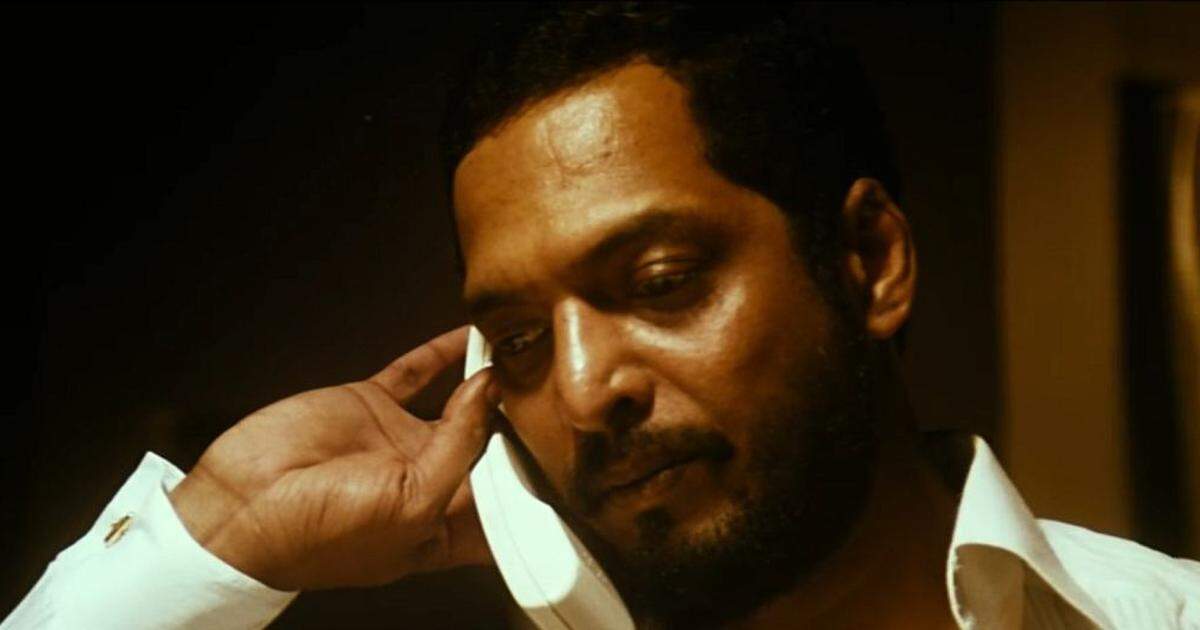
Anna from Parinda changed what it meant to be a villain
The hero became the sidekick when Patekar was on screen
For a long time, commercial Hindi cinema had very little room for actors who did not fit the conventional leading-man mold. Character actors were important, sometimes hugely talented and often unforgettable, but they were still expected to remain characters. The hero was the centre of gravity.Patekar simply didn’t care for that arrangement. The 1980s mostly belonged to Subhash Ghai, the ‘Showman’, who delivered massive multi-starrers and consecutive box-office champions, like Karz (1980), Hero (1983), Vidhaata (1982), and Ram Lakhan (1989). The decade also belonged to N Chandra, who revolutionized action and gritty realism in Indian cinema with high-octane commercial blockbusters like Ankus (1986), Tezaab (1988), and Hukumat (1987). Then there was Raj Sippy, directing high-grossing, star-studded action and masala potboilers including Satte Pe Satta (1982) and Inquilaab (1984).Heroes, heroes everywhere, not a character to see. Heroes who were larger-than-life action stars. But Patekar was having none of that. And that’s how he chose his movies. He made sure his characters were always hard to define. The audience could never presume to know when Nana Patekar was on screen, as to what his character would do. They could be violent and vulnerable, idealistic and frightening, funny and deeply lonely. They could change within a scene, sometimes without warning.The reason for his character’s improvisations and impromptu change on the set is actually quite funny. Those days, the only fleshed out characters in terms of writing would be for the hero (still is, but things have changed for the better too). So Patekar would do “weird things” according to his co-stars – most of the time so compelling that everyone from the director to the hero to the spot boys to the crew would be flabbergasted. And then came that God-gifted and theatre-trained voice (we will come to it shortly). Patekar became a force to reckon with.
Patekar defined complicated, unpredictable men in the 1990s. OTT was just following his footsteps
Long before OTT platforms made morally grey, psychologically fractured men fashionable, Patekar was playing them in mainstream Indian cinema.Anna Seth on paper was the villain, the underworld don. But Patekar made him terrifying, but he was also damaged, paranoid but deeply human in ways that made his violence even more disturbing. One moment he could be quietly feeding his pigeons; the next, he could explode into terrifying violence. At a time when potboilers had predictable stories and predictable climaxes, Patekar flipped the script and made the undefined, the contradiction and the complex the main character.That’s because deep down he understood that the most frightening characters were rarely frightening all the time. He brought the same instinct to different roles. In Prahaar: The Final Attack (1991), he played Major Pratap Chauhan, an uncompromising commando whose rigid discipline runs into the corruption around him. Patekar underwent formal military training with the Indian Army’s Maratha Light Infantry for the role. This was what brought an unusual physical realism to the character.In Agni Sakshi (1996), he played an abusive and obsessive husband. Again, he did not turn the character into a cardboard villain. The menace came from his trauma of becoming a self-made man, who had to rise through dirt; and understood only violence as every form of emotion. So love became obsession. And marriage became entitlement.In Ab Tak Chhappan (2004), he played Inspector Sadhu Agashe, an encounter specialist. Here, he stripped the familiar cop hero of much of his usual melodrama. Agashe was cold, clinical and almost bureaucratic in the way he dealt with violence.None of these characters were conventional heroes. Yet they were so compelling that people wanted more and more of him.
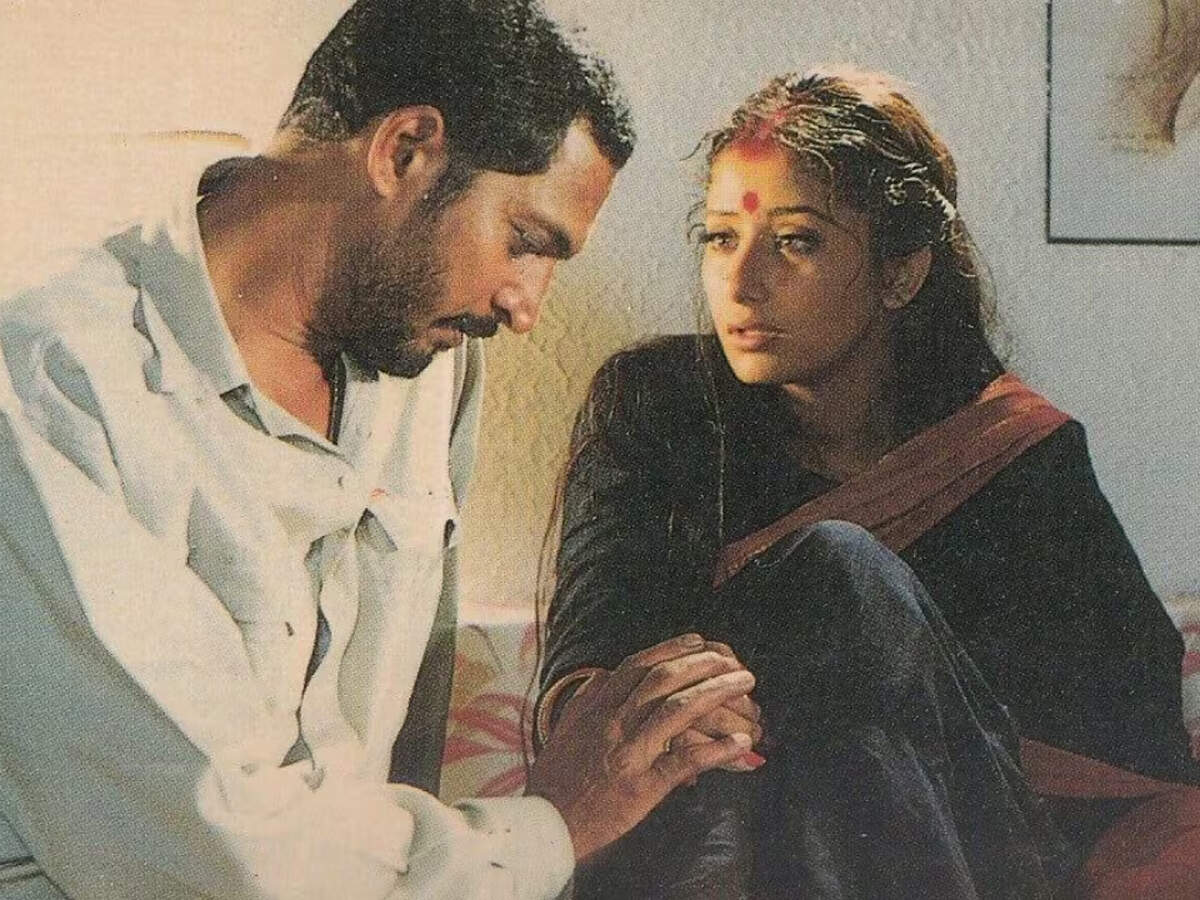
Nana Patekar in Agni Sakshi
Then there was that voice
There are actors whose voices become familiar. Nana Patekar’s voice became part of the character.At a time when Hindi film dialogue was often delivered in a grand, theatrical (almost comical) manner, Patekar spoke quietly. He would pause for what seemed like an uncomfortable length of time, mutter almost to himself and then suddenly erupt.His pauses were as important as his outbursts. And his silences were more threatening than his anger. He made dialogue sound more like a thought that had just escaped.That is why so many of his monologues have stayed in public memory. That is also possibly why Gen X & Gen Alpha know Nana Patekar as a meme, almost to the extent Leonardo di Caprio is known for in Hollywood. This is not to be taken lightly. Or, as a joke. Patekar became of meme of this generation—and our times—because for the past 40 odd years he had so many unforgettable scenes that one could throw any trending social media issue, and there would be a Nana Patekar scene that could me meme-ed to convey the idea in the most effective way this generation gets its entertainment or news. Memes and Reels.Take for example Krantiveer (1994), where Patekar’s character Pratap Narayan Tilak delivers that extraordinary anti-establishment monologue during a communal riot to challenge a mob. The combination of bitterness, irony, laughter and rage became one of the defining moments of his career.Will anyone ever forget his “Ek machhhar aadmi ko…” line from Yeshwant (1997)? It entered popular vocabulary in the 1990s and is still relevant and will be in times to come. Because it speaks of moral courage of human beings in a world gone mad.
He could go mute, but you’d still be engrossed by his performance
In Sanjay Leela Bhansali’s Khamoshi: The Musical (1996), Patekar played Joseph Braganza, a deaf-mute father. Without dialogue—his greatest strength—he relied on his face, his body and the smallest physical gestures. It was a reminder that the intensity audiences associated with Patekar was not simply about his famous voice. It came from the emotional force he brought to a character.Then came Natsamrat (2016). As Ganpatrao Belwalkar, an aging theatre actor devastated by family betrayal and artistic loneliness, Patekar’s delivery of “Kuni ghar deta ka ghar?” (Will someone give me a home?) was the devastation audiences were not prepared for. Despite knowing the power of Patekar.Late actor Irrfan Khan, Manoj Bajpayee, Nawazuddin Siddiqui, Kay Kay Menon and Pankaj Tripathi, who later went on to build on the same space created by Patekar have spoken about his immense talent – and the fact that Patekar was first among equals.Bajpayee pointed out that non-hero performers were once treated almost like second-class citizens till Patekar changed that perception by sheer screen presence and an auteur.
That comic timing, that range
The audience trained to watch Patekar in serious unpredictable oles got a jolt in 2007 when Welcome released. He was Uday Shetty, a ruthless mafia don who wants to become a respectable man while trying to find a respectable husband for his sister. This was a comedy. And on really bad days people rewatch this movie still to to not just laugh but to see the immense range of Patekar that made the movie a cult classic.“Control, Uday, Control” became a cultural catchphrase, while the absurd fruit-selling sequence — “Aloo le lo, kanda le lo” — found an entirely new life through memes and younger audiences.The absurd was the genius here.
The original G.O.A.T.
Ptekar redefined the Angry Man – young or old. He played the terrifying villain and the comical one, and both would engross the viewer with the same power. He made you cry and rage at every social ill in Indian society, depending on which movie you were watching. And off-screen, he believed in directness.Here too, Patekar was uncompromising. Director Prakash Jha once said that Patekar belonged to an earlier tradition of actors who had a direct, personal relationship with their directors, rather than the heavily managed celebrity culture that increasingly surrounds stars in our times. Vidhu Vinod Chopra said that during the shooting of Parinda, Patekar and he had come to blows and he took that energy to the next scene and performed like a magician.Bollywood spent decades telling audiences that the hero was the person they had come to see. Nana Patekar poured hot and cold water over that assumption. He made the character the most interesting person in the film; not the man getting the girl, singing the songs or standing in the centre of the poster. This ‘madman’ was so unpredictable that he changed Bollywood in ways we only understand now. In hindsight.