
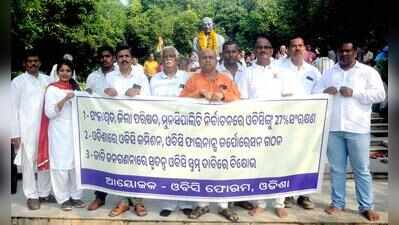
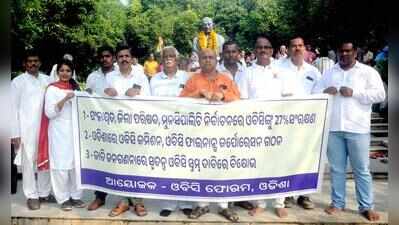
Bhubaneswar: The Odisha govt’s decision to set up a commission on backward classes’ political representation is being viewed as more than a legal step to restore quota in panchayat polls. Coming months ahead of local body elections, and following the extension of reservation benefits to socially and educationally backward classes (SEBCs) in higher and professional education, the move is seen by analysts as an attempt by the BJP govt to strengthen its outreach to backward communities and occupy a political space that has remained relatively underdeveloped in Odisha’s electoral discourse. Opposition parties, while backing OBC reservation, have questioned the timing and intent behind the exercise.What is the commission’s mandate?The commission has been formed to comply with Supreme Court’s Constitution Bench ruling in the K. Krishnamurthy & Others vs Union of India & Others case, which made reservation for backward classes in local bodies subject to the fulfilment of the mandatory “triple test”.Under the triple test, states must constitute a dedicated commission to conduct a contemporary empirical inquiry into the nature and extent of political backwardness among backward classes, determine the extent of reservation based on its findings, and ensure that the combined reservation for Scheduled Castes, Scheduled Tribes and backward classes does not exceed 50%.The commission, headed by retired Odisha High Court judge Pramath Patnaik with retired IAS officer Bijay Kumar Prusty as a member, has been given three months to ascertain the proportion of SEBC population in rural and urban local bodies through available records, surveys, reports and other data. It will also conduct an empirical inquiry into the nature and implications of political backwardness among SEBC communities and examine their representation in local bodies across Odisha.Several states have undertaken similar exercises following judicial directions. Madhya Pradesh constituted a commission in 2021 and subsequently implemented OBC reservation in panchayat elections, with the quota varying across different tiers of local bodies based on the commission’s recommendations.Maharashtra in 2022 and Gujarat in 2023 also formed commissions and introduced up to 27% OBC reservation in local body polls. Jharkhand has collected OBC-related data through a commission, while Uttar Pradesh constituted a panel earlier this year for a similar exercise.What changed ahead of 2022 panchayat electionsOdisha had provided 27% reservation for backward classes in panchayat and urban local body elections from 1997 to 2017, taking the total reservation to around 65%. However, Odisha’s move to provide reservation for backward classes in panchayat elections ran into legal hurdles ahead of the 2022 poll following two Supreme Court orders in December 2021 relating to local body polls in Maharashtra and Madhya Pradesh. The apex court reiterated that OBC reservation in local elections can be granted only after completing the mandatory “triple test” process: setting up a dedicated commission to conduct an empirical study of backwardness, determining the extent of reservation based on its recommendations, and ensuring the total quota remains within the 50% ceiling. Since these requirements had not been fulfilled, Odisha govt informed the Odisha High Court in December 2021 that OBC/BCC reservation could not be provided in the 2022 panchayat elections and revised the draft poll notification accordingly.While stating that Odisha govt is now examining ways to provide reservation for OBCs/SEBCs in the upcoming panchayat elections while complying with the triple test requirements, Panchayati Raj minister Rabi Narayan Naik informed the Odisha Assembly last month that the state was compelled to amend the Odisha Grama Panchayat Act, 1964, the Odisha Panchayat Samiti Act, 1959, and the Odisha Zilla Parishad Act, 1991, in 2021 to comply with Supreme Court’s “triple test” requirement and an Odisha High Court order in the Subhash Chandra Biswal vs State of Odisha case. The amendments capped the combined reservation for SCs, STs and OBCs at 50%, affecting the earlier 27% quota for OBCs/SEBCs. He said govt could not extend the 27% OBC/SEBC reservation in the 2022 panchayat elections after the move was challenged before the Odisha High Court on the ground that the Supreme Court-mandated triple test had not been completed. As a result, the state withdrew the proposed 27% quota.Opposition sees political messaging, questions timingWhile opposition leaders support restoring OBC reservation, they remain sceptical about the timing of the move months ahead of the panchayat and urban local body elections in April-May 2027.BJD MLA Arun Sahoo, a prominent backward class politician, questioned the necessity of another exercise when caste enumeration is scheduled as part of Census 2027. “At such a time, one fails to understand why the government has formed another commission. It appears to be a delaying and depriving tactic. They want to delay the polls using this as a pretext and deprive OBCs of their due,” he said.Senior BJD member Pratap Jena said govt should ensure reservation for backward classes and take all necessary steps sincerely to achieve that objective.Former Union minister Srikant Jena alleged that the state had already reconstituted the OBC Commission and initiated a similar exercise in 2020, but its outcome remains unclear. “Now, at the last moment, the government wants to undertake another exercise, which may not be foolproof or legally sustainable,” he said.On the other hand, Sambalpur MP and former Union minister Dharmendra Pradhan welcomed govt’s decision. Thanking chief minister Mohan Charan Majhi, Pradhan said the commission would help accurately assess the SEBC population, their representation and the issues affecting them in rural and urban self-governance institutions.Political significanceThe latest move follows a series of measures aimed at expanding reservation benefits for SEBC communities. Starting this academic year, the state govt has extended 11.25% reservation to SEBC students in professional higher educational institutions, including engineering and medical colleges. Last year, it introduced the same level of reservation in undergraduate and postgraduate courses.Though Odisha had constituted an OBC Commission in February 2020, the required empirical data for political reservation had not been compiled.Analysts view the latest development as part of a broader political effort to consolidate support among backward class communities, who are estimated to account for more than half of Odisha’s 4.5 crore population. “It is a calculated political exercise. The three-month window is too small,” said political analyst Shukadeb Naik, adding that any future quota arrangement should not affect the existing reservation for SCs and STs.