
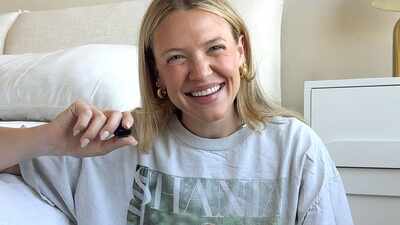
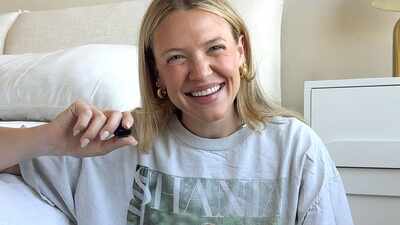
What happens when the career you spent years building begins to feel like the very thing draining the life out of you? For Hannah Jurczak, the answer was not another promotion, another company, or another attempt to climb the corporate ladder. It was to walk away. After nearly a decade climbing the corporate ladder, collecting new job titles, and finally landing a six-figure salary, for Jurczak, even the ‘success’ felt like a trap. The numbers looked great, but the reality left her drained and searching for something that actually felt like a life.For Jurczak, burnout wasn’t just a buzzword thrown around on LinkedIn. It was the thing that forced her to really stop and ask, “Am I building a life I actually want, or just running in circles?” When she realized she’d rather risk starting over than grind herself down for another few decades, she did the thing many dream about, but few actually attempt: she quit.However, Jurczak’s story isn’t the glossy Instagram version of “I quit my job and travel the world on passive income.” She’s nothing if not practical, and describes herself as something of a worrier about money. She didn’t leap without a parachute; she spent years building up savings. Even now, with her old regular paycheck long gone, her income flows in fits and starts. In fact, some months she can pay her own bills, others she dips into that nest egg.Instead of spinning her journey as entrepreneurial magic, she talks honestly about the “messy middle”: the terrain between a steady job and the not-quite-finished dream of financial independence.
Why did she actually walk away from a six-figure job?
Jurczak told PEOPLE that burnout wasn’t just on her mind; it was screaming at her every day. She kept switching jobs, hoping each move would deliver some sense of meaning or purpose, but kept hitting the same wall. Work just didn’t fulfill her. Over time, she stopped believing that one more corporate job would change anything.Jurczak also describes herself as a “seeker.” She couldn’t shake the feeling that something was missing and started thinking about how she’d feel looking back at her life decades from now. Would she regret failing at something unconventional, or regret never trying? That reflection pushed her over the edge. She’d rather risk disappointment than live with unanswered questions.Even so, she didn’t throw caution away. Before quitting, she made rules for herself, like a safety net she could actually see. She allowed herself to use up to $12,000 of her savings each year. Her real goal, though, was to build up enough side income to cover about $4,000 in monthly expenses, reducing her dependence on savings and cushioning the unpredictability.
Where does the money come from now?
Pretty much everywhere. She’s tried her hand at photography, set up an Etsy shop, flips clothes online, fills out paid internet surveys, makes social-media content — you name it, she’s probably tested it. Her presence on social media has begun to create actual income streams too, through brand deals and “creator funds.”The catch? It’s as inconsistent as gig work goes. Take the summer of 2026: in July, she made about $2,900, mostly from smaller deals and sales. In June, she cleared almost $6,000, thanks mostly to a big brand partnership. Some months, she lands a windfall; others, she’s stretching her budget and tapping the savings account. She’s open about the fact that this feast-famine cycle is both the hardest and the most freeing part: if you’re used to certainty, adjusting to volatility isn’t easy.
What were the biggest challenges?
Losing that reliable direct-deposit feeling. In her old job, she could count down to payday, knowing exactly what would appear in her account. Now, the numbers change constantly. It’s nerve-wracking, sometimes terrifying, and leaves her admitting that a lot of the “confidence” she shows online has been pure self-talk, not actual certainty.But that honest, open approach is part of why her story resonates. Jurczak has grown frustrated by how “hustle culture” is presented online: either as jumping off a cliff into the unknown with no plan, or as some kind of overnight business success. You rarely see the ordinary middle ground of people who plan, save up, and still feel lost half the time.She keeps choosing this rocky path for a simple reason: meaning. Jurczak wanted real connection, to make work that actually reaches people. She feels that now through her content, her projects, even the questions she fields from strangers online. She hasn’t unlocked a secret or hit some magic income formula. In fact, there’s still no five-year plan, no safety guaranteed.However, maybe that’s the most important part of her story. It’s not a blueprint for instant freedom; it’s just the truth about stepping off the well-lit path and hoping the uncertain one leads you somewhere better. She’s left behind salaries for side hustles, certainty for possibility, and she’s learning, every month, to live with the trade-offs. And that’s a lesson worth remembering, whether or not you ever try it yourself.