
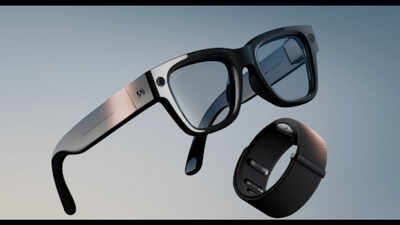
Sometimes, the smartest upgrade is a missing feature. Meta’s decision to launch AI glasses without a camera could do more to broaden their appeal than another improvement in video quality. For buyers who like the idea of connected eyewear but dislike the baggage of wearing a recording device, there is now a more comfortable proposition. Announced at Connect 2026 last week, the Ray-Ban Meta Audio glasses start at $349. Developed with EssilorLuxottica, they offer music, podcasts, calls, speech translation and access to Meta’s AI assistant, Muse. These are familiar functions, packaged in something people may already wear every day. The camera’s absence is the selling point.That makes this a sensible move. Technology companies often assume that adding capabilities automatically makes a product more desirable. Wearables complicate that equation because other people have to live with them, too. A device sitting on someone’s face affects the person across the table as much as its owner.
Taking the camera out of the conversation
Meta’s earlier glasses demonstrated the appeal of recording life without reaching for a phone. For holidays, family moments or content creation, that convenience has obvious value. But the same ease of capture also created an uncomfortable question: how does anyone nearby know whether they are becoming somebody else’s content?Reports of people filming others without consent, including women approached by men wearing the glasses, turned that concern into something tangible. The derogatory “pervert glasses” nickname reflected how quickly a product’s reputation can be shaped by its worst uses. Responsible owners were left carrying some of that reputational burden.Meta introduced safeguards, including updates designed to disable the camera when the recording indicator is tampered with. Those measures matter. But a light requires people to notice it, understand it and trust that it works. It also cannot establish whether someone has agreed to be filmed.Removing the camera offers a much simpler assurance. Buyers do not have to choose between enjoying connected eyewear and carrying a feature they may rarely use but repeatedly have to explain. There is potentially a sizeable audience for that choice: people interested in calls and music who have little desire to document their surroundings.The benefit extends beyond reassuring strangers. Someone might feel more comfortable wearing these glasses around colleagues, at a family gathering or while meeting friends. A useful wearable should slip into everyday routines. If its presence becomes a recurring conversation about surveillance, the convenience starts losing its appeal.There are limits, of course. Camera-free does not mean privacy-free. Microphones and AI services still raise questions about what information is collected, processed and retained. Nor will everyone immediately distinguish the audio model from camera-equipped versions. Meta will need clear communication, but it now has a meaningful hardware difference to explain.
A better fit for everyday use
The stronger commercial argument is that audio may be enough. Many prospective buyers could reasonably want to answer a call, hear a podcast or ask a question without taking out their phones. None of those tasks requires a camera. Removing it makes the proposition easier to understand.For people who already wear spectacles, the appeal is particularly straightforward. Adding useful audio functions to an existing habit could feel more natural than finding room for another gadget. Others may welcome an alternative to wearing earbuds. The potential audience includes people who would never describe themselves as early adopters.That brings Meta into a familiar contest with products such as Apple’s Siri-enabled AirPods: which device makes small, repeated tasks easiest? The glasses do not need to replace a smartphone to earn their place. They need to make enough everyday interactions more convenient that wearing them becomes a habit.Muse will face the same practical test. An assistant that responds reliably and saves time could strengthen the product’s appeal. One that requires repeated instructions will quickly become a feature owners ignore. Music and calls provide a useful foundation while buyers decide how much AI they actually want.At $349, Meta still has to justify the purchase. Comfort, sound quality, battery life and reliable calling will matter more than keynote promises. Removing the camera also sacrifices visual AI functions and hands-free photography. Those are worthwhile capabilities, but offering a choice recognises that buyers value them differently.Meta has made a good move because it gives people a reason to reconsider the category. For plenty of buyers, useful glasses that attract less suspicion may be the upgrade they were waiting for.