
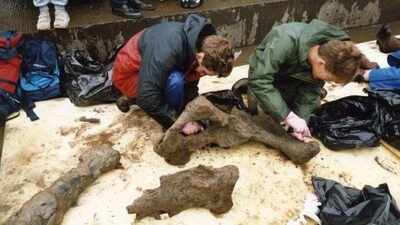
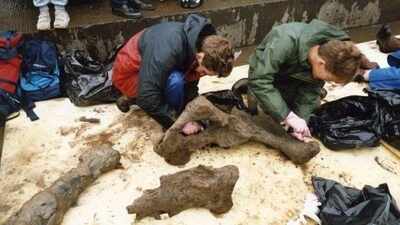
Back in the fall of 1986, Eve Roberts was just out for a walk with her dogs, but she stumbled across something far bigger than anyone could’ve expected: a discovery that basically rewrote what scientists thought they knew about the last woolly mammoths in Britain. It all started when quarry workers near Condover in Shropshire dug up a mammoth-sized bone while excavating gravel. At first, you could’ve mistaken the thing for a shire horse, or even a circus elephant. No one at the site had any idea it would shake up Ice Age research.If it hadn’t been for Eve Roberts, the whole thing might’ve ended there. She and her husband, Glyn, happened to be walking nearby, and she couldn’t help noticing how huge the bones were. Something about them struck her: they weren’t ordinary. So she called the Shropshire Museum Service. That single phone call kicked off a chain of events that turned a regular dig into one of the most important Ice Age discoveries in the UK.The bone was impossible to ignore. Quarry workers had already dug up several strange-looking remains and thought they were just odd bones from big animals, but nothing special. Roberts and her husband looked closer and realized these bones were enormous, way out of the ordinary.The museum responded, and soon experts were at the scene. Palaeontologist Russell Coope came to investigate, though he was skeptical at first. He’d been tricked before by supposed “prehistoric monsters” that turned out to be nothing more than shire horse remains. But this time, he saw something different: a huge femur. For a moment, even Coope wondered if it was from a circus elephant. But once he started examining it in detail, the evidence was clear: these were the bones of a woolly mammoth.As per the BBC, what followed was a full excavation that unearthed hundreds of bones, including the nearly complete skeleton of an adult mammoth and several remains from younger animals. Adrian Lister, who later became a mammoth specialist, joined the team. Years afterward, he pointed out how Roberts’ curiosity was crucial; without her phone call, the bones probably would’ve just been left behind or destroyed by quarry machinery.The real surprise was the dating of the bones. Until Condover, scientists believed mammoths had disappeared from Britain about 18,000 to 19,000 years ago. The bones from this dig were much younger: radiocarbon tests put them at around 14,000 years old. At the time, the original scientific publication clocked them at about 12,800 radiocarbon years before present; dating conventions have changed since then, but later museum records peg them at roughly 14,000-14,500 years old. That meant mammoths survived in Britain thousands of years longer than anyone had thought.This discovery also hinted that the Ice Age’s end wasn’t just a simple case of mammoths disappearing as the world warmed up. The 1987 Nature study said the Condover mammoths were the youngest dated mammoth remains known from Britain, showing that these massive animals had made a comeback in the region during the late Ice Age after an earlier retreat.Another big question was how these mammoths died. The bones were found in what geologists call a “kettle hole”: a depression formed when large blocks of glacial ice got buried and later melted away. The hole could fill with water, vegetation, and sticky mud. Scientists think mammoths, probably lured by nutritious plants near the site, ended up trapped in the soft ground. The adult found was a male, about 30 to 32 years old, while several younger mammoths were also recovered. Later research showed they didn’t die together, nor were they necessarily part of the same herd or family.That detail makes Condover especially fascinating. It’s not just the story of one unlucky mammoth family; instead, it looks like a place where mammoths repeatedly got stuck: a landscape that posed a recurring danger.The discovery quickly became a local, as well as national, event. Volunteers poured in to help excavate and clean the bones. The story even got the attention of ‘Blue Peter’, the BBC kids’ show. The adult mammoth skeleton is generally considered Britain’s most complete, and museums like Shropshire Museums and the British Museum have called the Condover mammoths internationally significant, noting how they changed our understanding of mammoths’ timeline in the region.At present, most of the bones now live at the Ludlow Library and Museum Collection Centre, with some on display at Shrewsbury Museum.In the end, it’s not just the mammoth itself that stands out four decades later; it’s the simple fact that this discovery made it to the world because someone like Eve Roberts stopped, looked, and decided the bones were worth reporting — and that did mean something massive to science. Her story of bumping into something so defining speaks to the fact that sometimes, the biggest shifts in knowledge start with nothing but ordinary curiosity.