
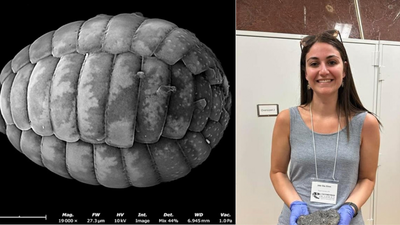
A scientist turned an $80 motel room into a makeshift laboratory during a research trip to North Carolina, where an ordinary water sample led to the discovery of two previously undescribed species of microscopic amoebae. Julia Van Etten, an evolutionary biologist who joined the University of Maryland as an assistant professor in 2026, was visiting the Outer Banks when she collected water from a roadside marsh and examined it under a hobby-grade microscope. The cells she spotted belonged to the rare photosynthetic amoeba genus Paulinella. Further investigation showed that they represented two distinct species, later named Paulinella marae and Paulinella murrayi. Their discovery, published in the Journal of Phycology in September 2026, expands the known diversity of photosynthetic Paulinella species from four to six.
A roadside water sample revealed something unexpected
Van Etten’s discovery began during a family trip to North Carolina’s Outer Banks. While passing a roadside marsh, she collected a water sample and brought it back to her accommodation. The University of Maryland said she routinely samples ponds, puddles and other ordinary bodies of water as part of her microscopy work, rather than restricting her searches to specialised research sites.Back in her room, Van Etten examined the sample using a $300 hobby-grade microscope and a $198 camera she had brought for her Couch Microscopy project, which combines microscopy with science communication. She spotted two tiny cells that she had never seen before. Each was only about 15 micrometres long, but their appearance suggested that they belonged to two different, undescribed species of Paulinella.The discovery eventually prompted a larger investigation involving several researchers. The scientific work was based on samples from Roanoke Sound in Nags Head, North Carolina, an area the researchers had been visiting since 2021.
The motel became an improvised research base
The unusual fieldwork continued in a motel room in Nags Head, where Van Etten and other scientists examined samples collected from the surrounding brackish environment. The low-cost setup was a far cry from a conventional laboratory, but it allowed the researchers to work directly with freshly collected material.The research team included Andrew Willoughby, a postdoctoral researcher at Duke University, and John Burns of Bigelow Laboratory for Ocean Sciences, among others. The researchers examined individual cells and compared their physical characteristics before moving on to more detailed laboratory and genomic analyses.Some of the methods were remarkably improvised. The published research says individual cells were isolated using pulled Pasteur pipettes, ordinary micropipettes and tools made by supergluing toothbrush bristles onto coloured pencils. The researchers then placed selected cells into different preparations for culturing, genomic analysis and scanning electron microscopy.The improvised equipment helped the team isolate exceptionally rare cells. The researchers noted that Paulinella was so uncommon in their samples that they generally did not encounter more than one cell in an individual drop of water.
Two new species emerged from the samples
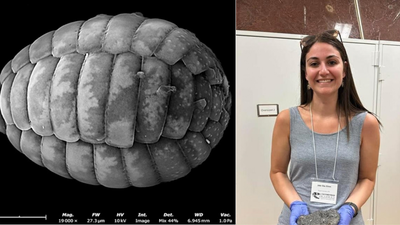
The researchers eventually determined that the two distinct forms represented separate species. They named them Paulinella marae and Paulinella murrayi. The two species differ in physical characteristics including their size and the arrangement and orientation of their silica scales.P. marae has an elongated shell-like structure measuring approximately 15 to 19.1 micrometres in length, while the researchers also documented differences in how its scales overlap. The cells were found in brackish water with salinity ranging from about 10 to 14 at the North Carolina site.The researchers observed both species at the same location over several years, although they remained rare. Attempts to establish a long-term axenic culture were unsuccessful, although some cells survived and divided for periods of up to about a month in filtered ambient water and culture medium.The discovery brings the number of known photosynthetic Paulinella species from four to six. The researchers say observations from hobby microscopists and naturalists also suggest that these organisms may be much more widely distributed than their limited scientific records indicate.
Why are these tiny amoebae important to evolution
The scientific importance of the discovery goes beyond finding two species new to science. Paulinella provides researchers with an unusually recent example of primary endosymbiosis, an evolutionary process in which one organism incorporates another organism and eventually develops a permanent biological relationship with it.Photosynthetic Paulinella acquired a photosynthetic organelle from a cyanobacterial endosymbiont roughly 100 million years ago. This makes the group particularly useful for studying how an acquired organism can gradually become integrated into the biology of its host. The University of Maryland describes this process as analogous to the much older primary endosymbiotic event associated with the evolution of algae and land plants more than a billion years ago.Because the Paulinella transition is comparatively recent, researchers can investigate aspects of organelle evolution that are difficult to reconstruct in much older systems. Van Etten’s research focuses on horizontal processes, including the movement of DNA between organisms and the ways such transfers can influence evolution.
Genomes offer clues to how the cells evolved
The team did not rely only on what the organisms looked like. Researchers analysed their chromatophore and mitochondrial genomes and found broadly conserved gene content alongside structural differences, including genome rearrangements and inversion events. Their phylogenetic analyses also produced differences between evolutionary trees based on nuclear and organelle data.The researchers said these discrepancies could be related to factors including substitution saturation, limited taxon sampling and different evolutionary signals among genetic regions. That means the two organisms could provide new material for investigating how different parts of a cell evolve after major evolutionary transitions.The researchers also argue that photosynthetic Paulinella may be globally distributed but substantially under-sampled. Their conclusion is based partly on observations collected over multiple years and partly on records from hobbyists and naturalists. The study highlights how combining traditional field observation, microscopy and modern genomic methods can reveal organisms that have remained largely overlooked.The findings were published on September 4, 2026, in the Journal of Phycology in a paper titled “Crawling under the radar: Two novel Paulinella species expand knowledge about the ecology and evolution of a primary plastid-containing amoeba lineage.” The researchers say the North Carolina site could serve as a useful location for future studies of Paulinella ecology, population genetics and evolution.