
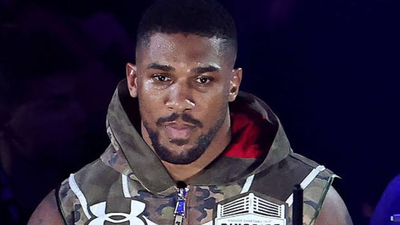
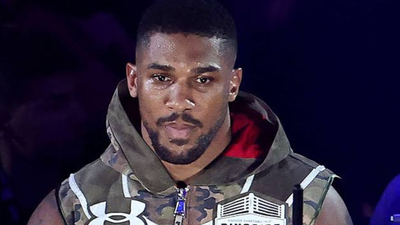
Anthony Joshua’s rise from a troubled teenager in Watford to an Olympic gold medallist and two-time unified heavyweight champion is closely tied to the role his mother, Yeta Odusanya, played in his life. Joshua spent two weeks on remand in Reading Prison at 18 after what he described as “fighting and other crazy stuff” and faced the possibility of a much longer prison sentence. After his release, an electronic tag and strict routine became part of his life. Boxing then gave him a new direction, while his family stayed at the centre of it.
What happened to Anthony Joshua when he was sent to prison at 18
Joshua’s early life was not the clean path that his later boxing career might suggest. Born in Watford to Nigerian parents, he became involved in trouble as a teenager and spent two weeks on remand at Reading Prison when he was 18. He later said he had been there for “fighting and other crazy stuff” and recalled that he could have been facing a sentence of up to 10 years.That period became a major turning point. After leaving prison, Joshua was required to wear an electronic tag and follow a curfew. Instead of having the freedom he once had, he had to be home at a set time each evening.Joshua later explained that being on the tag gave him time to think about where his life was heading. In an interview with James Corden, he said he was home by 7pm every night, started going to college and became focused on getting stronger.His cousin eventually encouraged him to visit Finchley Boxing Club. Joshua had only started boxing at 18, much later than many fighters who go on to reach the top of the sport. But the gym gave him something his life had been missing: a routine.“I found myself at a boxing gym and realised I couldn’t fight in the Queensbury rules,” Joshua said. “I could street fight. I couldn’t really fight the way a professional boxer would.”That difference mattered. He had to learn how to control the aggression that had once caused problems for him and turn it into something useful inside the ring.
How did Anthony Joshua’s 2011 arrest affect his boxing career
Joshua’s problems did not end when he began training. In 2011, he was stopped by police for speeding in Colindale, north London, and cannabis was found in his car. He was charged with possession with intent to supply a Class B drug and was suspended from the Great Britain boxing squad.The case could have badly damaged his Olympic hopes. Instead, Joshua pleaded guilty and received a 12-month community order and 100 hours of unpaid work rather than a prison sentence. The experience also forced him to take greater responsibility for his choices.Joshua has spoken openly about how removing distractions helped his boxing. In a BBC interview, he said stopping smoking allowed him to make progress as an athlete.His Olympic dream survived. At the London 2012 Games, Joshua won super-heavyweight gold for Great Britain. Two years later, he turned professional.From there, his career moved quickly. He won his first world heavyweight title by beating Charles Martin in 2016 and added further major victories, including his famous 2017 win over Wladimir Klitschko at Wembley Stadium.The contrast was striking. Just a few years earlier, Joshua had been dealing with the consequences of his actions. Now he was standing in front of 90,000 people as one of boxing’s biggest names.
Why did Anthony Joshua stop Yeta Odusanya from watching his fights
Joshua’s relationship with his mother has been one of the most talked-about parts of his life outside boxing. During the build-up to his 2017 fight with Wladimir Klitschko, he revealed that Yeta would not be at Wembley.Joshua said his father would attend, but he did not want his mother watching him fight because of the physical danger involved.“My old man will be there but I don’t really let my mum come to my fights,” Joshua told Sky Sports. “I’ve banned her. It’s not a place where you want to see your kid, I don’t think, at a fight.”He also said his mother would not watch the bout on television and would instead learn the result from a phone call.The decision was not about keeping her away from his career. Joshua had explained that his mother found boxing difficult to watch and that he wanted to spare her that stress.That part of their relationship gives another side to a fighter whose public image is built around taking punishment. Inside the ring, Joshua accepts the physical risk. For his mother, however, he has repeatedly said he would rather she did not have to watch it happen.
How did Anthony Joshua keep his family close after becoming a champion
Joshua’s success also changed the family’s financial situation, but he did not immediately leave behind the home and community where he grew up. After winning Olympic gold, he was still living with his mother in a council flat in Golders Green.By 2017, reports said Joshua had bought the ex-council flat for his mother. The home was close to Finchley Amateur Boxing Club, the gym where his boxing journey had started.That connection to home was still clear even after Joshua became a multimillionaire. In a 2017 interview with The Guardian, he said he continued to live with his mother and spoke about family as a central part of his life.Years later, Joshua again described that family bond while speaking to BBC Sport. “I still live with my mum,” he said. “Family is the most important thing.”His journey therefore cannot be reduced to the belts, knockout wins or huge stadium crowds. The important part of the story happened much earlier, when a teenager with serious problems found himself with another chance.Joshua had already seen where his choices could lead. Prison had given him a warning, the electronic tag forced him into a routine, and Finchley Boxing Club gave him a place to build something different.The Olympic gold medal and world titles came later. So did the money and fame.For Joshua, the more lasting change was learning how to turn the energy that once caused trouble into a career, while keeping the people closest to him at the centre of his life.