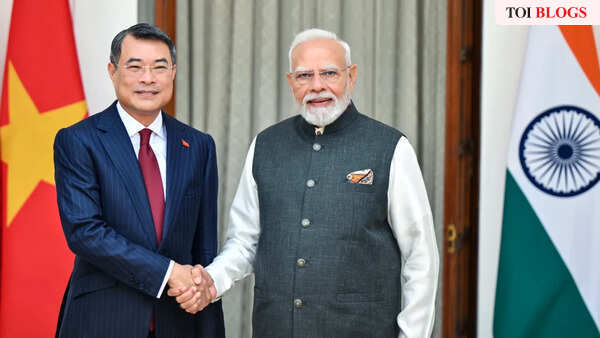
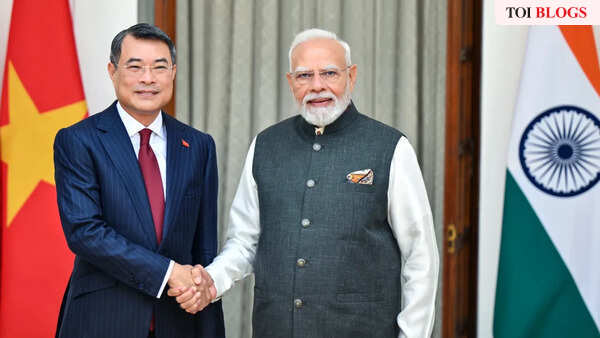
The highly successful 18th Brics Summit under PM Modi’s chairmanship, provided India with an important opportunity not only to advance Brics agenda but also to pursue a series of significant bilateral meetings with its trusted and key partners. The pattern of meetings showed that India was also using the Brics platform to reinforce its Indo-Pacific and Act East priorities alongside its Global South diplomacy, and to buttress its strategic capabilities.While in the above context, the meetings with Vietnam, Malaysia and the Philippines were particularly relevant, PM Modi’s meeting with Vietnamese PM Le Minh Hung on the 12th September occupied a special place. It demonstrated the growing depth of India-Vietnam relations and, more importantly, the determination of both sides to operationalise the Enhanced Comprehensive Strategic Partnership, established only a few months earlier.In May 2026, General Secretary of the Communist Party of Vietnam and President of Vietnam To Lam visited India, during which the bilateral relationship was elevated to an Enhanced Comprehensive Strategic Partnership. That visit opened a new chapter in the relationship by providing a broader framework for cooperation. The Modi-Hung meeting, coming within four months of that landmark visit, was therefore important in translating the political understanding reached in May into concrete programmes and mechanisms. In between, India’s MoS Pabitra Margherita called on the Vietnamese PM and thanked him for his guidance on advancing bilateral cooperation between the two nations.The convergence of interests and shared vision on several regional and international issues, with high-level of trust in each other has kept the trajectory of bilateral relationship going up. Perhaps with no other country India has exchanged so many high-level visits in recent months.PM Modi welcomed Vietnam’s participation as a Brics Partner Country and observed that its participation contributed to enhancing the stature of the 18th Brics Summit. The Vietnamese side, in turn, expressed its appreciation for India’s leadership of Brics and for PM Modi’s Voice of Global South initiative. Significantly, the New Delhi Declaration emphasises that the developing countries must act as rule-shaper, rather than a rule-taker in global governance.Vietnam also affirmed its readiness to work with India in advancing Brics initiatives in areas such as innovation, digital transformation, clean energy and sustainable development. These areas are increasingly acquiring strategic significance.Vietnam’s significance in India’s strategic calculus extends well beyond Brics. PM Modi stressed that Vietnam is an important pillar of India’s Act East Policy and an important partner in India’s broader engagement with Southeast Asia. This makes the relationship strategically important not only bilaterally but also in the wider Asean and Indo-Pacific context.Defence and security cooperation emerged as an important pillar of the discussions. The two sides agreed to strengthen cooperation in the defence industry, military trade and training, while also moving towards convening the first meeting of the Foreign Affairs-Defence Dialogue mechanism at an early date. The proposed 2+2 mechanism, involving the foreign and defence establishments of the two countries, will provide an institutionalised framework for discussing strategic and security issues. Importantly, it will facilitate regular consultations on defence cooperation, maritime security, regional developments and emerging security challenges.This is particularly relevant because India and Vietnam share a strong interest in maintaining a stable, peaceful and rules-based Indo-Pacific. Vietnam’s strategic location in Southeast Asia and India’s growing role in the Indo-Pacific provide a natural basis for greater maritime cooperation.The two leaders expressed determination to step up measures to achieve the target of US$25 billion in bilateral trade at an early date and facilitate market access for products from both countries, particularly pharmaceuticals, agricultural products, fisheries and livestock products.While reviewing the progress in bilateral relationship, they welcomed the significant progress made in Vietnam-India ties. They noted that the 2024-2028 Action Programme and the outcomes of Party General Secretary and President Lam’s visit were being actively implemented, and agreed to maintain the current strong momentum and high level of political trust.Significantly, Hung proposed four specific and strategically important proposals for consideration. First, he proposed that the two sides establish economic corridors and supply chains to enhance connectivity between their economies, consider launching negotiations on a bilateral free trade agreement (FTA), and work actively with Asean member states to accelerate the completion of the review of the Asean-India Trade in Goods Agreement (AITIGA). Economic corridors and resilient supply chains can help connect India’s manufacturing capabilities with Vietnam’s position as an important production hub in Southeast Asia.Second, while emphasising the importance of connectivity by road, rail, air and sea, the Vietnamese leader proposed to study ways to advance railway connectivity projects, establish a South Asia-Southeast Asia connectivity corridor and strengthen links between the two countries’ seaports in connection with the Eurasian maritime route.Third, Hung suggestion in science and technology was strategically important. He recommended that the two sides develop a Vietnam-India technology connectivity strategy, focusing on key areas such as artificial intelligence (AI) and 5G/6G mobile technologies. This constitutes an important field in the current environment.Fourth, Hung proposed stepping up cultural and sports exchanges as well as yoga activities and Buddhist exchanges in 2027 to mark the 55th anniversary of diplomatic relations.PM Modi agreed with Hung’s proposals and affirmed India’s commitment to promote bilateral cooperation between the two countries, further deepening and strengthening strategic relations. Vietnam’s PM emphasised that Vietnam supports India playing a greater role in multilateral institutions, is ready to assist India in strengthening cooperation with Asean, and hopes that India will continue to strongly support Asean’s stance on the South China Sea/East Sea (SCS/ES).While the Vietnamese leader invited PM Modi to pay an early return visit to Vietnam, the host accepted the invitation and said the two sides would arrange a suitable time for the visit.Thus, the Modi-Hung meeting represents a significant step from strategic intent to strategic implementation. The elevation of the relationship in May provided the political framework; the September meeting began to give that framework operational substance. The latter was an important step towards making the Enhanced Comprehensive Strategic Partnership a functioning strategic framework rather than simply a diplomatic designation.
Disclaimer: Views expressed above are the author’s own.