
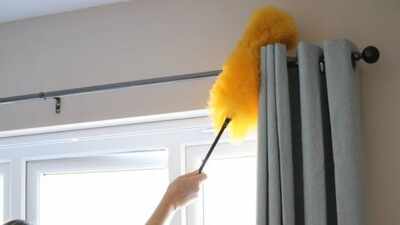
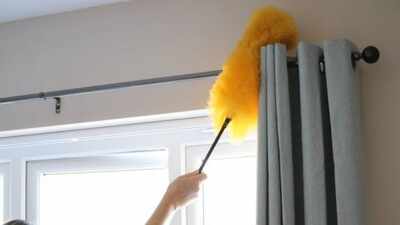
Curtains quietly rank among the dustiest surfaces in any home, yet they’re also one of the most avoided cleaning tasks, mostly because taking down heavy drapes, washing them, and rehanging everything feels like an entire afternoon’s project. The good news is that a full wash isn’t actually necessary most of the time. A handful of simple, affordable techniques can genuinely refresh curtains while they’re still hanging, no ladder-and-laundry marathon required. Here’s how to do it properly.
Start with a proper vacuum
This is the single most important step, and it’s worth doing regularly rather than saving for a deep clean. Fit your vacuum with a soft upholstery or brush attachment, and work methodically from the top of the curtain downward, moving in long, even strokes rather than quick swipes
Follow up with a lint roller
For delicate fabrics, or for pet hair and fine dust that a vacuum alone doesn’t fully lift, a simple adhesive lint roller works as a gentler finishing step. It’s particularly useful on sheer or lightweight curtains, where a vacuum’s suction, even on a low setting, can occasionally feel too aggressive. Running the roller over stubborn spots after vacuuming catches whatever the brush attachment left behind, without any risk of tugging at delicate fibres.
Steam away dust, odours, and wrinkles
Once the loose surface dust is gone, a handheld garment steamer does genuinely impressive work refreshing what’s left. Macqueen notes that steaming is one of the easiest ways to freshen curtains without removing them, since the heat lifts embedded dust, helps neutralise odours, and smooths out wrinkles all in one pass. Fill the steamer with distilled water to avoid mineral spotting on the fabric, hold the nozzle several inches away rather than pressing it directly against the curtain, and work top to bottom, pulling back if you notice the fabric getting too damp.
The old-fashioned shake and beat method
Sometimes the simplest option is also genuinely effective. Grabbing the bottom edge of a curtain and giving it a firm shake near an open window or balcony sends a surprising amount of loose dust flying, and doing this outward toward open air means that dust actually leaves the room instead of just resettling somewhere else. For heavier, thicker curtains that don’t shake loose as easily, a gentle tap with a broom handle or mop across the fabric helps dislodge dust that’s settled more deeply into the weave.
Spot-clean stains carefully
For an actual stain rather than general dust, resist the urge to scrub. Dab the area gently with a damp microfiber cloth and a small amount of mild detergent, working from the outer edge of the stain inward toward the centre to avoid spreading it further, and always test on a hidden hem first to make sure the fabric and any dye react well. Blotting rather than rubbing protects the fibres from additional damage while still lifting the mark.
How often you should still do a full wash
None of these in-place methods fully replace an actual wash forever, they’re maintenance between deeper cleans, not a permanent substitute. Most experts recommend properly washing or professionally cleaning curtains every three to six months, depending on how much dust and everyday grime a room accumulates. Keeping up with weekly vacuuming in between, along with an occasional steam or shake, stretches out that gap considerably and keeps curtains looking genuinely fresh in the meantime.
Fresh curtains, no ladder marathon required
Between vacuuming, steaming, shaking, and the occasional careful spot-clean, most everyday curtain grime never actually needs a full wash to deal with. Building even one or two of these habits into a regular cleaning routine keeps dust from building up to the point where taking curtains down feels unavoidable in the first place.
Disclaimer:
This article is intended for general informational purposes only. Always check the fabric care label on your curtains before vacuuming, steaming, or spot-cleaning, and test any cleaning method on a small, hidden area first, particularly for delicate or antique fabrics.