
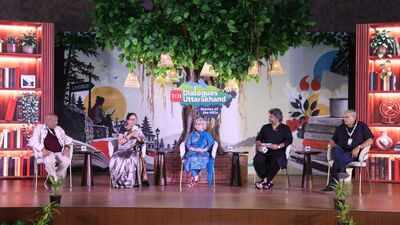
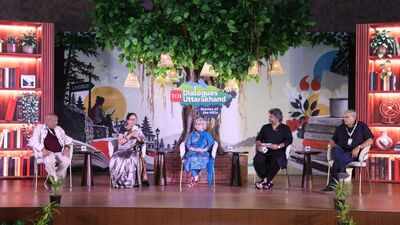
Uttarakhand is often written about through its landscapes, but its most compelling stories are rooted in the people, the traditions and the memories created by those landscapes. At Panel 3 of TOI Dialogs Uttarakhand: ‘Stories from the Hills’, ‘The Storytellers of Uttarakhand’, a panel of writers and cultural chroniclers discussed what it takes to record the hills. The discussion, held at Hyatt Dehradun on September 15, 2026, was attended by author, photographer and historian Ganesh Saili, Almora Literature Festival chairperson Dr Vasudha Pant, author and historian Dr Roshen Dalal and anthropologist and heritage writer Lokesh Ohri. Author Akshat Gupta moderated the conversation and started it by asking why each speaker had chosen to spend a lifetime recording Uttarakhand rather than simply living in it.For Ganesh Saili, the answer was deeply personal. Born and raised in the hills, he said he had remained emotionally attached to the mountains throughout his life. The landscape was not a subject he had selected from a distance. It was the place where his family, memories and experiences had unfolded.“I am stuck to the hills,” Saili said, explaining that writing about Uttarakhand came naturally because it was the world he knew best. He compared his relationship with the mountains to his close friend Ruskin Bond’s lifelong commitment to a particular theme. Bond, he observed, had stayed close to nostalgia throughout his writing career. Saili said that when he attempted to write about other subjects, he struggled, but the hills continued to provide him with material and meaning.Dr Vasudha Pant offered a different perspective. She clarified that she did not consider herself a writer, but described her work as a contribution to documenting the interiors of the hills. Her primary concern has been the environment and the challenge of encouraging people to care about it.Pant said that environmental issues can sometimes feel abstract or distant. One way to bring people closer to them is through culture, literature and history. These subjects create emotional connections and unite communities. By telling the stories of a place, she argued, it becomes easier to help people understand why its forests, rivers and traditions deserve protection.For Dr Roshen Dalal, the mountains themselves seemed almost like living beings. Born in Mussoorie and also connected to Uttarakhand, she has written about history, religion and fiction, but said the Himalayas remain her greatest source of fascination.The mountains did not always exist, she explained. The region was once covered by an ocean, and the Himalayas gradually rose through geological processes. To Dalal, this immense history gives the mountains a life of their own. They emerge, grow and may eventually decline, particularly as human activity continues to damage them. That sense of fragility strengthens her desire to explore the early history of the Himalayas and encourage greater care for the region. The mountains are mysterious, ancient and constantly changing, she said, but their future now depends partly on human choices.Lokesh Ohri brought the conversation back to walking and observation. Born in Dehradun, he began walking through the mountains and gradually understood that nature and culture could not be separated.In the plains, people often treat school education and environmental knowledge as different subjects. Spirituality and religion are also discussed separately. In the Himalayas, Ohri said, those divisions become difficult to maintain. Nature itself is experienced as divine, and the environment is woven into cultural and religious life. He also pointed to Uttarakhand’s identity as Devbhoomi, or the land of the gods, and asked why sacred places such as Kedarnath and Badrinath were established in the mountains. The answer, he suggested, lies partly in their distance from the pollution and pressures of the plains. The mountains offered a place where the gods could rest, protected by cleaner air and a closer relationship with nature.Ohri has spent his life documenting this relationship between environment, culture and indigenous knowledge across Uttarakhand and the Himalayas. In a world facing climate change and global warming, he believes ancestral ideas about nature deserve to be heard again.Steering the conversation ahead, Saili further reflected on the poetic quality of traditional Garhwali songs and old verses. Their words, he said, come directly from the heart. Perhaps, he suggested, the mountains gave his close friend, Ruskin Bond, that poetic sensibility, and Bond returned the gift through his writing.The panel’s central message was that Uttarakhand cannot be understood through scenery alone. Its forests, rivers and mountains are connected to songs, faith, memory, history and daily life. The storytellers of the hills are therefore doing more than preserving the past. They are helping communities imagine why the region must be protected in the future.From Saili’s nostalgia and Pant’s environmental work to Dalal’s geological curiosity and Ohri’s cultural anthropology, each speaker offered a different way of listening to the mountains. Together, they showed that storytelling can become a form of conservation, especially when it helps people see nature not as a resource separate from society, but as part of who they are.To know more about TOI Dialogues Uttarakhand: Stories of the Hills, CLICK HERE.