
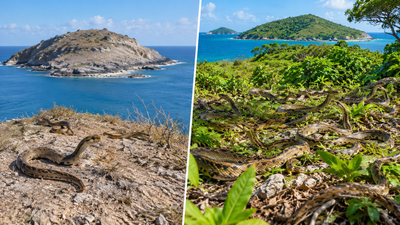
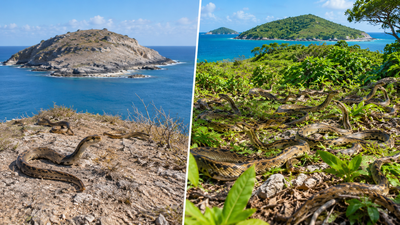
In 1995, the Antiguan racer was perilously close to disappearing from the wild. Just 51 of these rare Caribbean snakes were estimated to survive, all confined to tiny Great Bird Island off the coast of Antigua. The species had little room to recover. Yet what followed became an extraordinary conservation turnaround. Over the next 21 years, researchers and conservation groups removed invasive mammals, carefully moved snakes to other islands and monitored their progress. By 2016, the population had climbed to more than 1,100 individuals, showing how targeted conservation can pull a species back from the brink.
Removing black rats doubled the rare snake population
According to the research published on ResearchGate titled ‘ Successful reintroduction of the Critically Endangered Antiguan racer Alsophis antiguae to offshore islands in Antigua, West Indies’, one of the ways was to remove Black rats from Great Bird Island. A consortium involving Antiguan and international conservation organisations carried out the eradication in 1995. The result was striking: the racer population promptly doubled, and within two years it had more than doubled from its original level.But protecting the surviving snakes on one small island was not considered enough. According to the study, the conservation team recognised that Great Bird Island had limited space and that further population growth would eventually be constrained. A 10-year plan was therefore developed to establish racers on other offshore islands, with an initial goal of increasing the global population to at least 500 individuals.
86 rare snakes were moved to three islands
Rabbit, Green and York were selected because they offered suitable habitat, prey and opportunities to control invasive mammals. Before they were released, conservationists had to remove rats and mongooses, since these animals could prey on the racers or reduce the lizards the snakes depend on.The first transfer took place in November 1999, when researchers moved 10 wild racers from Great Bird Island to Rabbit Island. Further releases followed on Green Island in 2002 and on York Island from 2008. Researchers eventually translocated 86 racers to the three islands between 1999 and 2012. According to the researchers, the released snakes adapted well, with no deaths recorded during the translocation or radiotelemetry studies.
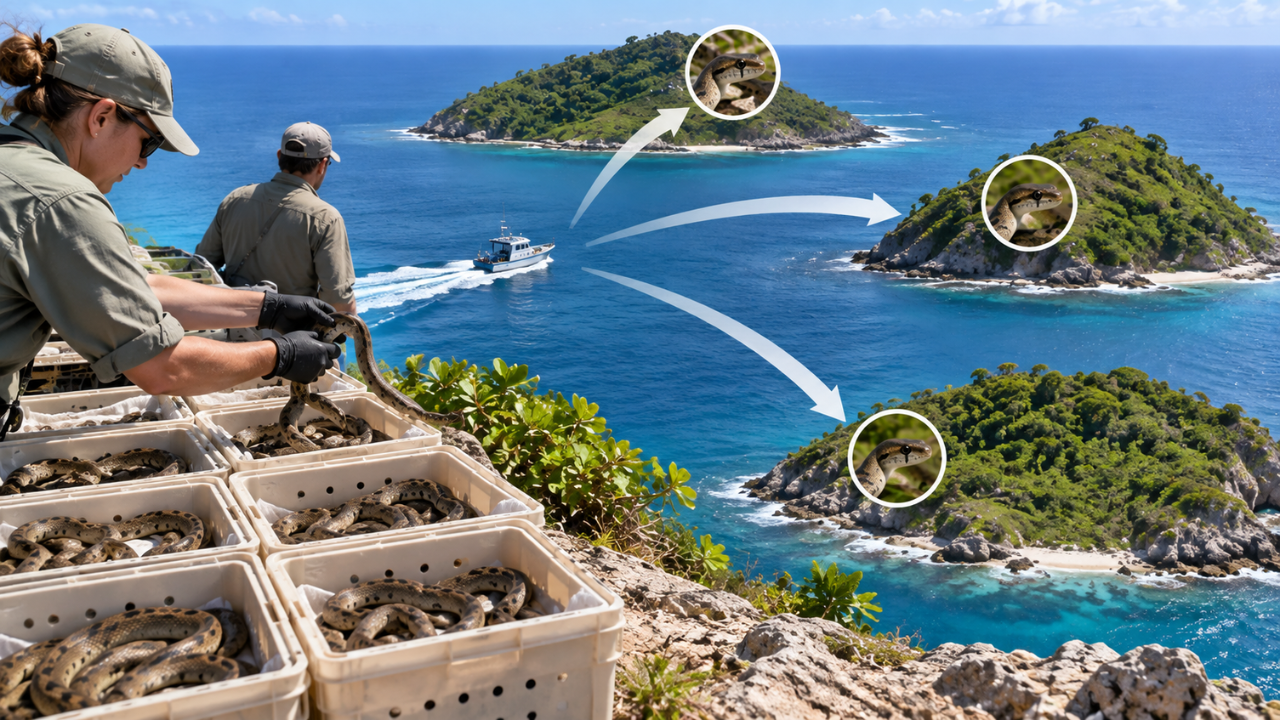
Image AI generated
New generations showed the reintroduction was working
The success of the transfers became clear when the relocated snakes began reproducing. According to the study, unmarked racers, meaning snakes that had not been part of the original translocated groups, were observed on all three reintroduction islands within three years of the first releases. This confirmed that the snakes were breeding and that new generations were becoming established away from their original stronghold.The researchers also found signs that the new islands could provide better conditions for growth. According to the study, translocated racers showed accelerated growth on Rabbit, Green and York islands, potentially because they faced less competition for resources than on the relatively crowded Great Bird Island. One female released on Green Island was recaptured seven years later in excellent condition, while the study also recorded that the oldest known racers reached at least 16 years of age.
Rare snake population topped 1,100 by 2016
The figures eventually transformed the story from one of near extinction into one of the Caribbean’s notable reptile conservation successes. According to the researchers’ estimates, the total Antiguan racer population peaked at 1,135 individuals in 2015 before dipping slightly to an estimated 1,108 in 2016. The four island populations together occupied about 63 hectares, compared with just 8.4 hectares on Great Bird Island in 1995.Field research, fundraising and a public education campaign were all important parts of the programme. Conservationists worked to change negative attitudes towards snakes, explaining that Antiguan racers are harmless and highlighting their environmental role. Yet the researchers warned that the species still depended on protection from invasive mammals and damaging development, while additional reintroduction sites would be needed to spread the risk. The result is remarkable: from an estimated 51 snakes on a tiny 8.4-hectare island in 1995 to more than 1,100 across four islands by 2016.