
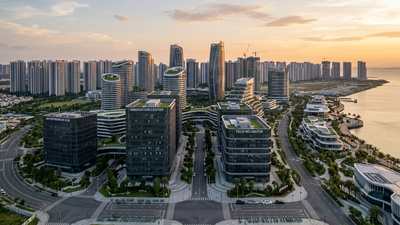
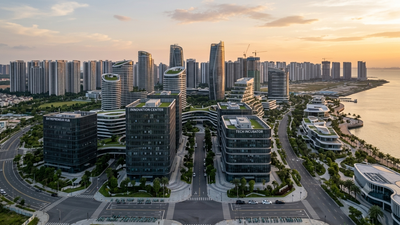
Forest City was meant to become a futuristic metropolis near Singapore, but its empty towers and quiet streets earned it a very different reputation. That unusual setting later attracted a group of technology entrepreneurs who saw the underused development as an opportunity to test a new way of living and working. In 2024, Network School arrived with a community built around technology, startups and the ideas of Balaji Srinivasan’s The Network State. Participants lived, worked and learned together inside the development. Yet the experiment faced practical problems, including living conditions, licensing issues and scrutiny from Malaysian authorities. Less than two years after it began, Network School was ordered to cease operations.
How Forest City’s ghost-town reputation helped attract a new technology community
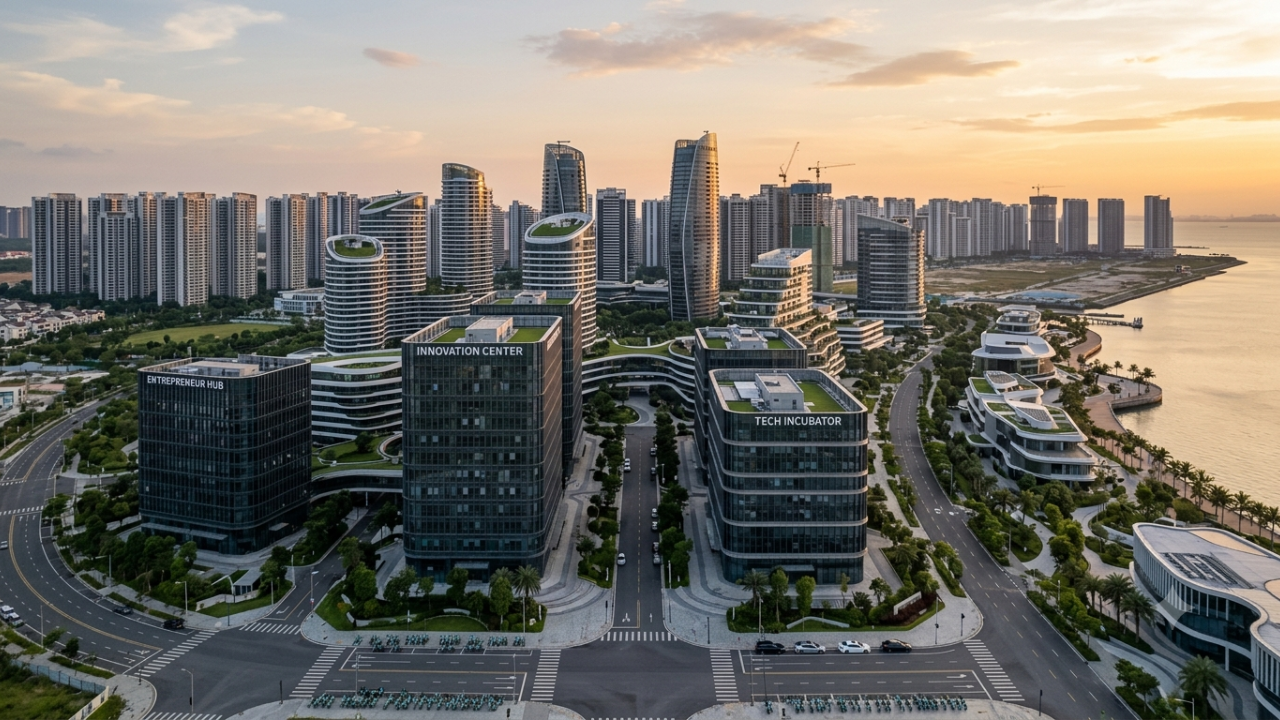
Forest City was conceived as an enormous mixed-use development in Johor, close to the Singapore border. The project included high-rise residential buildings, hotels, retail areas and recreational facilities, with plans originally aimed at accommodating hundreds of thousands of people. According to the BBC, around $100 billion has been associated with the development over the years.Large parts of the development remained underoccupied, giving Forest City its reputation as a ghost town. The Covid-19 pandemic made the situation harder, while wider problems affecting China’s property sector added to the difficulties facing the project. Streets and apartment blocks existed, but there were not enough people using them to create the ordinary bustle associated with a major urban centre.
Srinivasan’s Network State idea became a real-world experiment in Forest City
Srinivasan had been developing his thinking about alternative communities for years before arriving in Forest City.His 2022 book, The Network State, proposed a model in which people could first gather digitally around shared interests and beliefs, build businesses and financial relationships, acquire physical territory and eventually seek some form of political recognition.Srinivasan, a former Coinbase chief technology officer who had also worked in venture capital and co-founded genomics company Counsyl, had spent much of his career around technology and startups. The school was not simply intended as a conventional educational programme. It combined accommodation, work space, classes, fitness and communal activities, giving participants the chance to live together while developing companies and pursuing projects.According to Fortune, the first programme began in Forest City in 2024. Participants reportedly paid about $1,500 a month, with accommodation, food, classes and access to facilities included.
Why Forest City attracted technology workers
Forest City itself was hardly the main attraction for everyone who arrived. The appeal was the possibility of spending months around other people working on technology businesses, investing, engineering or internet-based projects. Instead of travelling between conferences and temporary coworking spaces, residents could live in one place with a ready-made professional network around them.The development had modern buildings and leisure facilities, while its location in Johor put Singapore within relatively easy reach. The surroundings were very different from the crowded technology centres usually associated with startups.For someone working remotely, a half-empty city could be useful. Residents described a routine built around shared meals, exercise, work and classes. The programme also attracted people interested in Srinivasan’s broader ideas about technology, community and governance. Reports have described participants arriving from different countries, including digital nomads and young technology workers looking for a concentrated environment in which to build projects.
Life inside the Network School
Some residents complained about mold in accommodation, something Srinivasan attributed in part to the humid local climate. Others found that Forest City lacked the restaurants, nightlife and variety of activities they might have expected from a major city. There were also complaints about the imbalance between men and women among participants.A group can work well online while remaining relatively loose. Living together exposes different problems. People have to share physical spaces, deal with maintenance and rules, and decide what happens when the surrounding town does not provide everything they want.The Network School could provide its own meals, activities and social environment. It could not easily manufacture an entire city around itself.
What made Forest City such an unusual test
Starting a new community usually requires expensive property, infrastructure and a large amount of planning. Network School did not have to build a city from scratch. It arrived at a place where towers, roads, hotels and amenities had already been constructed.The problem Forest City was facing was almost the reverse. That gave Srinivasan an unusually large experiment space. A community of technology workers could occupy part of an underused development without having to solve the enormous construction costs normally involved in establishing a new urban district.The arrangement also made the project’s ambitions easier to observe. The Network School was not an abstract online community. People actually lived together, worked together and tried to form relationships around a shared set of ideas.
Inside Forest City’s short-lived tech community
Network School remained tiny compared with the scale of Forest City. The development had been conceived for a population in the hundreds of thousands, while the school was dealing with hundreds of participants at most. Its presence therefore did not transform Forest City into a functioning metropolis.For a period, an otherwise underpopulated collection of towers became a meeting point for people interested in startups, cryptocurrency, artificial intelligence, digital communities and alternative forms of organisation. It offered something that conventional technology campuses generally cannot: the chance to live with the professional network rather than commute to it.A community can be highly active internally while remaining almost completely disconnected from the life around it. The Network School had its own routines and culture, but Forest City still had to operate according to Malaysian regulations and the commercial realities of the wider development.