
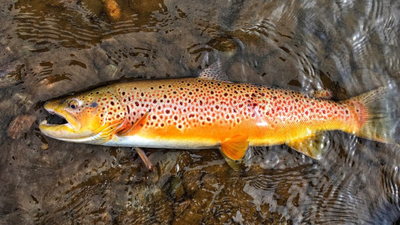
More than 160 years after Tasmania introduced British brown trout to create a major recreational fishery, conservation workers are building artificial barriers and clearing entire waterways to save a tiny native fish from extinction. The Swan galaxias (Galaxias fontanus), a small, scaleless freshwater fish found only in eastern Tasmania, has been reduced to an estimated 6,000 individuals. According to ABC News, the species now survives mainly in small, isolated headwater streams where natural barriers such as waterfalls stop predatory trout from moving upstream. To protect the endangered fish, conservation teams are creating trout-free areas by building physical barriers and moving small groups of Swan galaxias into safe, isolated catchments.
An acclimatisation project that backfired on native fauna
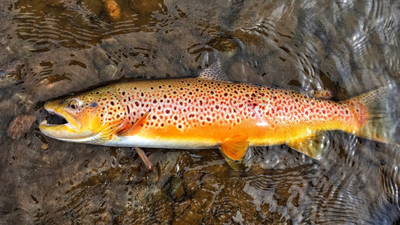
In 1864, acclimatisation societies successfully brought European brown trout (Salmo trutta) eggs from England to Tasmania aboard the vessel Norfolk. Releasing the trout into Tasmanian rivers proved highly successful for recreational fishing and helped make the island state a major destination for fly fishing. However, environmental records from Tasmania’s Department of Natural Resources and Environment show the heavy cost to native aquatic species. Brown trout quickly spread through freshwater systems across the island, feeding on smaller native galaxias and competing with them for food and habitat. The Swan galaxias grows to only 10 to 13 centimetres long. It was completely lost from the lower and middle sections of its former river habitat. According to species assessment data on the Tasmanian government’s Threatened Species Link portal, the fish was pushed into small, separated headwater streams in the Swan and Macquarie River catchments.
Creating trout-free refuges in headwater streams
Swan galaxias cannot jump as well as invasive salmonid fish, so they cannot return to parts of streams controlled by trout. Natural barriers such as Hardings Falls have helped some native populations survive. But events such as droughts and flash floods can damage these isolated refuges and put the species at risk of disappearing completely. According to ABC News, fisheries officers and conservation scientists from the Inland Fisheries Service and natural resource management groups have spent years studying stream networks and building specially designed fish barriers. These structures stop brown trout from moving upstream into important spawning areas while allowing native galaxias to breed safely. Where trout have crossed the barriers, field teams use targeted electrofishing to remove the invasive fish. Once a section of stream is confirmed to be free of trout, small groups of Swan galaxias are carefully moved from healthy populations to create new safety populations. Nine translocated populations have now been established across eastern Tasmania, including at Upper Blue Tier Creek, Rocka Rivulet and Green Tier Creek.
Balancing angling tradition with species recovery
The effort to protect the Swan galaxias shows the huge challenge of managing Tasmania’s freshwater ecosystems. Recreational trout fishing remains an important part of the state’s culture and economy, bringing millions of dollars in regional tourism each year, according to species information from Inland Fisheries Service Tasmania. Fisheries managers stress that the conservation programme is not aimed at established fishing waters. Instead, recovery efforts focus on small upper tributaries and headwater streams that have little or no value for sport fishing but are extremely important for native wildlife. As monitoring continues across eastern Tasmania, conservationists see these trout-free sanctuaries as the strongest defence against losing the Swan galaxias forever.