
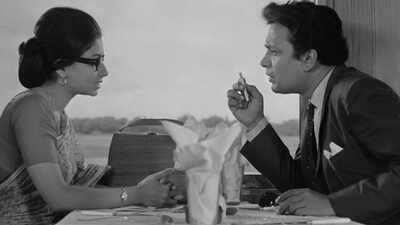
After sitting through two hours of a 59-year-old film in black and white, inside a cinema hall that is even older than the film itself, the first thing Anay did was send me a selfie from outside the theatre, along with a text:“I didn’t know UK was more like Superman. Maybe cooler, even. Definitely better fits.”Before I could respond, another text popped up: “Maaan, UK got better face card than Cavill!”At that point, I decided to call my cousin instead of texting him back. After all, it was I who had urged him to go watch ‘Nayak’ on the big screen when it was re-released, in a 2K restoration with English subtitles, in 2025.When my barely 21-year-old cousin came home to visit and our conversation inevitably turned to ‘Nayak’, I learnt that he had no idea Bengal had produced a superstar like Uttam Kumar.His precise question: “Are you guys gatekeeping good stuff from us?”
Do millennials and Gen Z still watch Uttam Kumar?
It is usual, perhaps even expected, to raise this question on any milestone occasion involving an icon as legendary as Uttam Kumar, let alone his birth centenary. Given that this year’s celebrations have gone from a ‘Mann Ki Baat’ segment to the laying of a foundation stone in New Town for a film centre, it may seem as though the Mahanayak has passed the test of time and remains alive and well in the national memory.But what about the two things that are supposed to immortalise an artist after he is gone: the medium and the audience?“I wouldn’t say that I’m a fangirl of Uttam Kumar, but there’s definitely something about his films because I keep going back to them, almost like a weekend ritual,” says Ishita, a 19-year-old engineering student with a keen interest in films. Not all her friends understand her habit of binge-watching old black-and-white Bengali cinema, she admits, but for her, the films are keepsakes of her childhood: memories of growing up in a joint family where watching a movie together was a monthly ritual, before moving away for higher studies.Uttam Kumar, in that memory, is less a distant cinematic legend than a familiar presence: her mother’s favourite ‘hero’.Sruti, a late millennial whose reading appetite and watchlist often compete with each other, is slightly more selective about her Bengali leading men. She prefers Soumitra Chatterjee to Uttam Kumar.“I see the appeal, the aura, the grandeur — everything. But somehow I’m more drawn to Soumitra Chatterjee than Uttam Kumar, probably because my exposure to old Bangla films mostly started with Satyajit Ray’s works.”Although ‘Nayak’, for her, remains, first and foremost, a Ray film, she admits, “No one, probably not even Soumitra, could have done ‘Nayak’ better than Mahanayak himself did.”Ritwika, a zillennial by internet nomenclature, believes Uttam Kumar is perhaps the most handsome star to have emerged from Bengali cinema.“Have you seen that man’s eyes? His smile? Those curls of his hair? It might sound like I’m crushing on him, but would you blame me?”
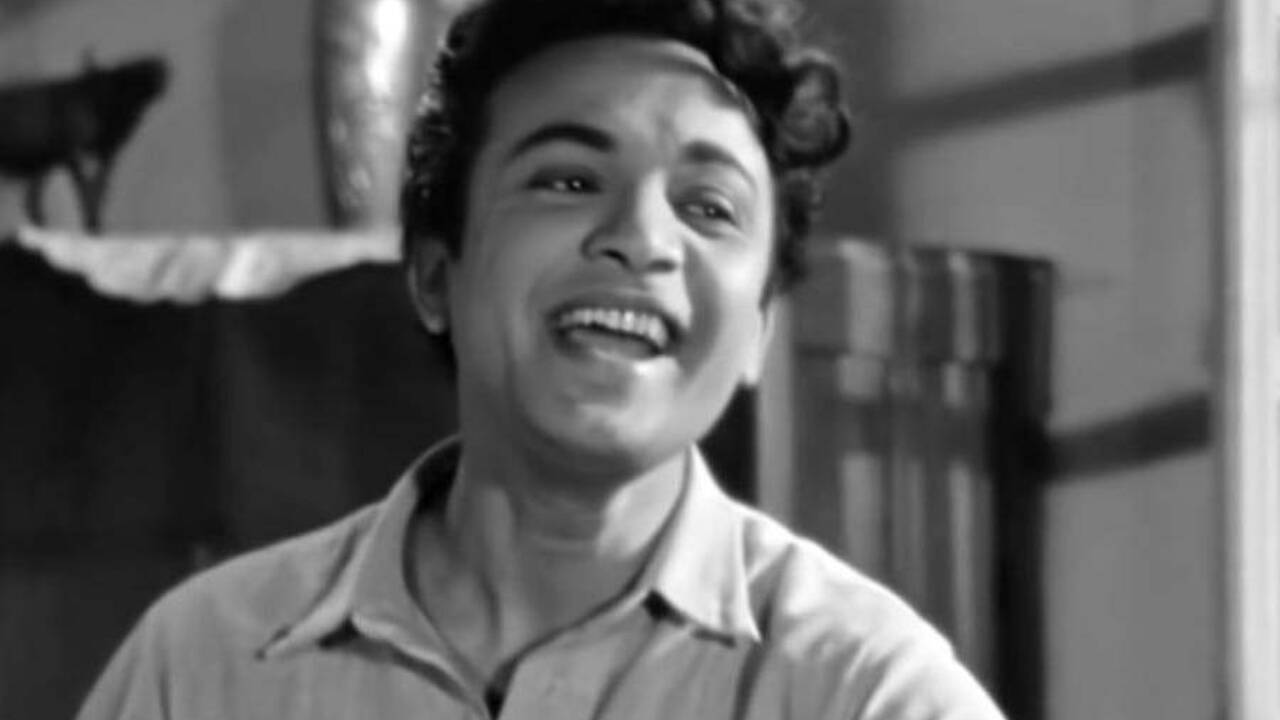
A scene from ‘Deya Neya’.
She also, perhaps, identifies something more contemporary in him.“I’m so done watching men on screen with nothing but pack abs and not an iota of the tenderness that Uttam Kumar had in his presence. Forget the looks; that’s out of our control. But spending hours in the gym instead of finessing your craft and coming up with a stone-faced appearance on screen doesn’t cut it. I’d rather go back to the heartthrob who had that face, those acting chops, as well as the superstardom.”If anything, today’s youth’s ‘attraction’ towards Uttam Kumar may have moved beyond nostalgia. So, the question is no longer simply whether they remember him. It is what they look for when they discover him.
Generation gap or generational star?
For a generation that moved from afternoon television movie marathons in the family drawing room to streaming content on the go, even the word ‘matinee’ carries little cultural weight. Rediscovering Uttam Kumar, the original ‘matinee idol’, can therefore feel less like inheritance and more like an Easter egg hunt.Rahul Dev Bose, the Bengali television and film actor seen in ‘Khakee: The Bengal Chapter’ and ‘Padatik’ (not to be confused with the Hindi film actor Rahul Bose), plays the Mahanayak in a stage production. He remembers a different route to his discovery of Uttam Kumar.“I was introduced to Uttam Kumar, as well as his contemporaries, by my parents. Back in those days, watching movies together was kind of a cultural bonding exercise.”For millennials growing up before the age of ubiquitous streaming, cinema travelled largely by word of mouth, through family gatherings, conversations over tea, television reruns and the ritual of watching something together.“That’s how the inheritance was passed on from my parents’ generation to mine,” Bose says.For better or for worse, that mechanism has weakened. Social life itself has changed, and with it, the ways in which one generation introduces another to its cultural touchstones.“That’s not to say that Gen Z or Gen Alpha are not watching Uttam Kumar films. I think the nature of relevance, or reverence, for that matter, has changed with generations.”Gourab Chatterjee, Uttam Kumar’s grandson and an actor in his own right, sees something slightly different at work: not inheritance, but discovery.“We’re in the age of globalisation where, thanks to social media, OTT platforms, etc., we’re exposed to global cinema to a great extent. Millennials and Gen Z are developing their taste, their palate, for cinema based on what’s happening across the world. And there’s no denying that the kind of cinema Bengal produced in my Dadu’s time was way ahead of its time.”That, he believes, is precisely why Uttam Kumar’s films continue to travel across generations. They are deeply rooted in Bengal without being trapped by it.Ankur, a hotel management graduate who unwinds to either indie music or Uttam Kumar films, describes him in a more indulgent metaphor: “Uttam Kumar is like the Bordeaux that only gets finer with time.”For him, the appeal is not merely the romance or the face.“Keeping my personal weakness for Sata Bose, I genuinely don’t think Bengali cinema has managed to cultivate such a personality who embodies class, wears a coat of aristocracy without the in-your-face brand of arrogance, and has a truly universal appeal.”
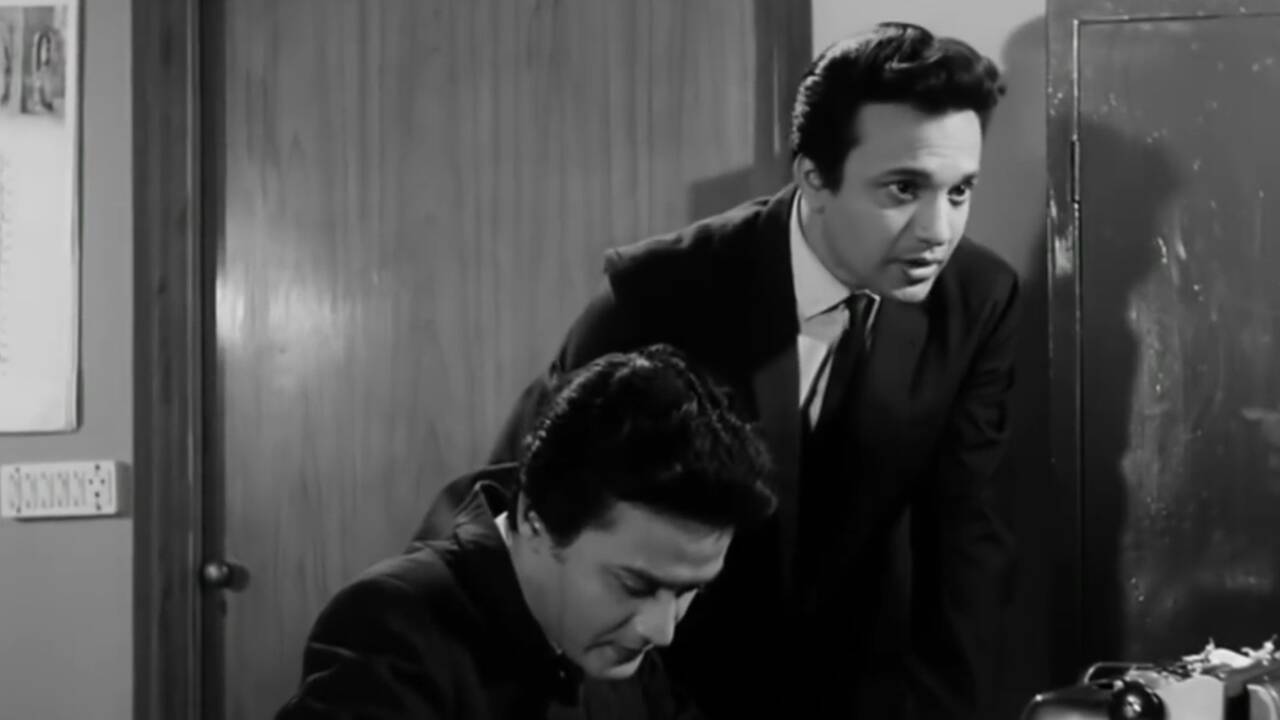
A scene from ‘Chowringhee’.
There is also the comfort of familiarity. Uttam Kumar films, Ankur says, remain among the few he can watch with his family without worrying about awkwardness or emotional overload.“It’s pure joy to be able to go back to the cinema that really helps you relax!”Adwitia, a late millennial who identifies with Gen Z “in her heart”, works in criminal law and regularly deals with a bunch of Gen Alpha students. She returns to old Bengali films for a slightly different reason: simplicity.“Cinema today is much more than just a medium of entertainment,” she says, pointing to the political opinions, social messages and complicated intersections of art, culture and conscience that increasingly accompany contemporary cinema.“I’m not a big fan of Uttam Kumar as an individual actor, or I watch his films because they are his films; but I do go back to that era of films because of the unadulterated joy they bring.”Perhaps that is the first clue to wanting to turn back the clock. Uttam Kumar may not be a generational obsession like he was for Gen X or even early millennials. For the generations that came after, the Mahanayak remains a generational refuge.
Beyond Mahanayak: The man who made ‘soft boy’ mainstream
For a star of his stature, an onscreen image can be as much a burden as a legacy. Uttam Kumar is no exception to the populist perception that has largely sorted him into two boxes: the ‘Nayak’ persona, where the grandeur of the star is negotiated against the isolation of the man, and the romantic hero who became the object of generations of female fantasy.But it is perhaps the second image that has acquired an unexpectedly contemporary currency.“Uttam Kumar’s characters made a safe space for his heroines, even before safe space was a well-articulated concept,” says Labonyo, a psychology student with a soft spot for old Bengali songs, particularly those by Hemanta Mukhopadhyay.What she sees in him is a version of masculinity that contemporary cinema often seems to have misplaced.“I don’t think male protagonists of today understand the desirability of men who are more tender than tough. Men whose first instinct is softness, instead of a show of strength.”For Labonyo, Uttam Kumar remains a benchmark not because he was simply ‘good-looking’, but because he was able to combine tender masculinity with charm and a sprinkle of mischief.“He’s gentle, sophisticated without being a snob, respectable while still being easygoing. I’d say he’s the kind of guy you could bring home to your parents and they’d be happier than you are!”Saikat, a millennial with a penchant for old-school romance, is a diligent attendee of the Uttam Kumar lover-boy club.“Even today, a handsome Bengali man’s greatest badge of honour is him being compared with Uttam Kumar, in terms of looking good. When a couple is so visibly in love, we still call them an ‘Uttam-Suchitra Juti’.”
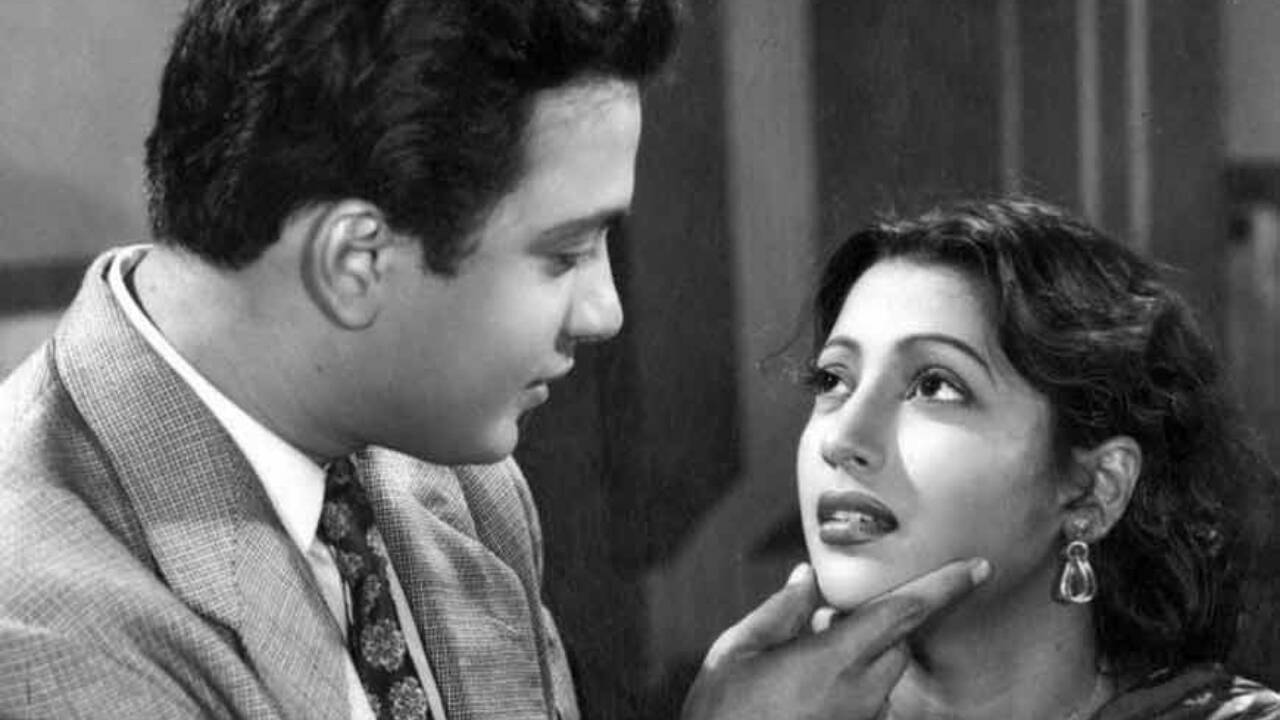
A scene from ‘Sagarika’.
Saikat also affirms the timelessness of Uttam Kumar as THE cultural icon. “The stories that his films told decades ago may not find circumstantial relevance today, but the genre of romance that he portrayed… that’s timeless!”Debotri Ghosh, an early millennial, film reviewer, and ardent Uttam Kumar admirer, sees a parallel between her generation’s discovery of the Bengali icon and its relationship with another global star: Shah Rukh Khan.“Our generation did not get to see Uttam Kumar alive and kicking. But we grew up watching Shah Rukh Khan as our generation’s romantic hero. Those of us who loved Shah Rukh Khan’s lover-boy era became suckers for the kind of romance that makes space for women instead of caging them. So when we discovered Uttam Kumar, it seemed like these two men belonged to the same club,” Ghosh says. “There was no generation gap or disconnect between the stars of two eras. Rather, it was their eternal soft masculinity that resonated with us and is still making a mark with generations to come.”In a way, it reads like a curious afterlife for a star whose image was once simply described as that of the quintessential middle-class Bengali romantic hero. In an age of loud, aggressive and hyper-defined masculinity, a softness from another era has become somewhat radical.“Today, throttling a motorbike can earn whistles in the halls, but the ‘Saptapadi’ scene never goes out of style,” Ghosh says.So what exactly makes that romantic-hero avatar so enduring, almost half a century after his death?For Turni Dhar, whose house has more photos, paintings, film posters and portraits of Uttam Kumar than it has walls, the answer is simpler: ease.“Even now, I might be having a bad day; one ‘Nayika Sangbad’ rewatch and I’m left feeling much, much better.”Dhar technically belongs to Gen X, but her social and professional circles put her in regular interaction with millennials and Gen Z. Over the years, she has watched the definition of love evolve and the younger generation grow more practical about it: more open about desire, more willing to leave relationships that no longer work, less invested in the old idea of first love inevitably culminating in marriage.And yet, she says, they still gravitate towards the emotional world of Uttam Kumar’s films.Perhaps because it offers something contemporary life rarely does: a window to turn down all the hustle, rush and chaos, even if only for a while.“I think it’s also a form of respite, the way Uttam Kumar films once provided an escape from the harsh realities of the post-Partition era.”That is where the appeal extends beyond romance and enters a plethora of humane emotions that we crave to stay in touch with in today’s world, which is increasingly running out of them: “It’s what Gen Z calls ‘touching grass’!”“Uttam Kumar is the kind of package that comes with charm, wit, compassion, a great sense of humour and impeccable comic timing that I don’t think anyone has managed to achieve in the years since,” she concludes.
What’s relevance without restoration?
There is, however, a problem with the very question being asked.The populist image of Uttam Kumar largely revolves around the romantic hero and the ‘Nayak’ persona. Sayandeb Chowdhury, author of ‘Uttam Kumar: A Life in Cinema’, believes that reducing the phenomenon that Uttam Kumar is to those two boxes may itself be one reason we keep asking whether he remains relevant.“The fact that we’re still discussing the relevance today of someone who stopped existing in the flesh nearly half a century ago speaks for the kind of impact and legacy he’s had,” he says.The more urgent question, Chowdhury argues, is not whether millennials and Gen Z care about Uttam Kumar or the relevance of his works. It is whether Bengal has done enough to ensure that they can actually encounter him enough to determine the answer themselves.“A chunk of his films, from the period when he was at the peak of his career, success and popularity, hasn’t been restored. Many of his films, what we call ‘classics’ today, don’t have clean prints. Even a film like ‘Chowringhee’ doesn’t have a properly restored, clear print available on mainstream or legal platforms. Can you imagine!”Chowdhury’s tentative count suggests that around a quarter of Uttam Kumar’s body of work may be missing from libraries and archives.“If the audience doesn’t have access to his entire body of work, beyond a select few popular picks, what exactly is the tangible way to measure the extent of Uttam Kumar’s relevance today? YouTube views?”The question becomes even more uncomfortable when placed against Uttam Kumar’s stature. He was the first recipient of the National Film Award for Best Actor, and the first actor to win it in the same year for two films, ‘Antony Firingee’ and ‘Chiriyakhana’. Yet the scholarship around him remains disproportionately thin.“We absolutely fail to fathom the magnitude of artistry and stardom Uttam Kumar has had,” Chowdhury says. “The phenomenon he’s been is something that should be studied academically. That’s how cultural legacy survives. Instead, the conversation often circles back to familiar trivia: the salons he frequented, the food he liked,” Chowdhury sighs.“Dissecting only the handful like Ray, Ghatak, and Sen is not enough,” he says. “When it comes to Uttam Kumar, there’s not enough work on his artistry, his life, his body of work beyond the same old monotony.”
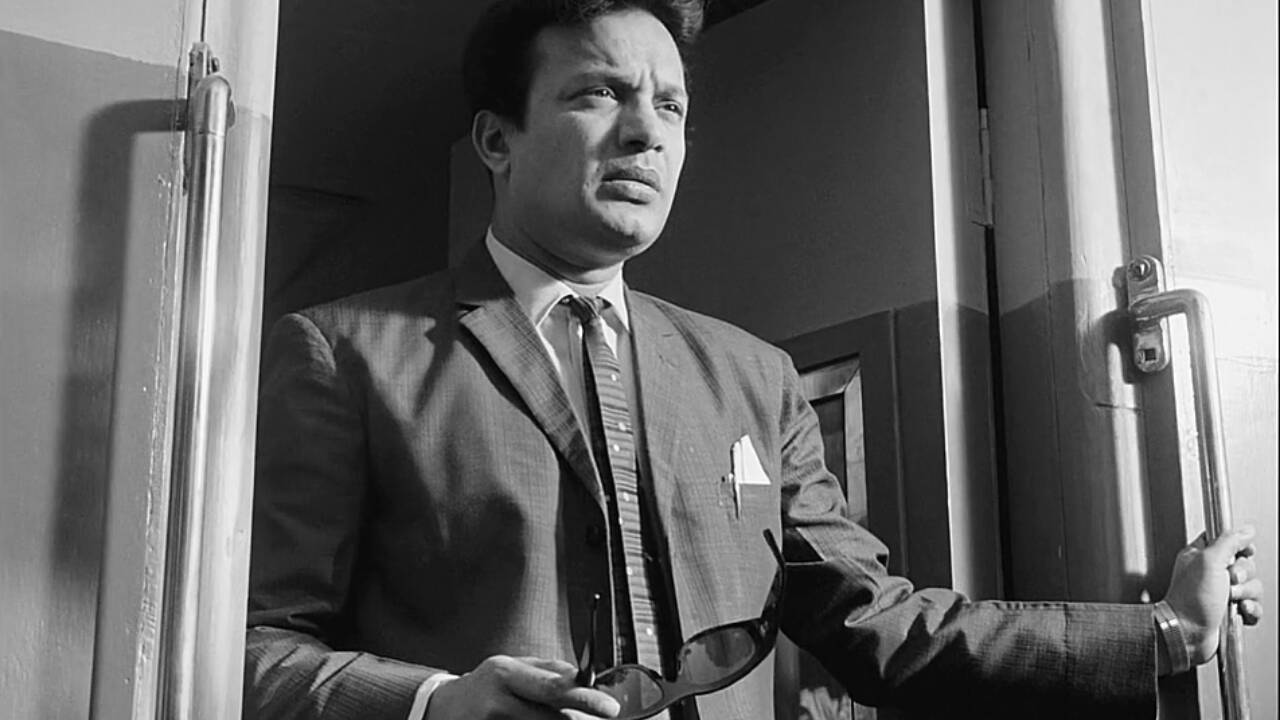
A scene from ‘Nayak’.
Gourab Chatterjee echoes Chowdhury’s concern.The cacophony of celebration surrounding the centenary, he says, means little if the work itself continues to deteriorate.“The failure to protect his work is a collective responsibility of our industry. So many of his film reels, I’ve heard from my elders in the family, have been wasted away due to a lack of preservation. I’m not sure if they’re salvageable anymore.”And if the work disappears, what exactly are we celebrating?“What’s the point of celebrating if the reason for celebration is wasting away?”
The new inheritance: Reimagined, rather than rediscovered
Perhaps Gen Z and the generations that come after are not simply inheriting Uttam Kumar. Perhaps they are reconstructing him.Every generation finds a way to remember the greats who came before it and carry some part of their legacy forward. Ghosh believes millennials and Gen Z have done precisely that with Uttam Kumar, but not necessarily because anyone consciously decided to preserve him.“Why we go back to Uttam Kumar, even after so many decades, I think, has less to do with making a conscious decision to keep his work and the conversations around the same alive, and more with the lack of cultural opulence that has followed Bengali cinema after him.”It is not that Bengal stopped producing good cinema, she says. Rather, there have been sporadic peaks instead of the sustained cultural abundance associated with Uttam Kumar’s era.“Because we feel the void to some extent, that makes us turn back time.”And Uttam Kumar was never really alone in that memory. His was also the era of Soumitra Chatterjee, Chhabi Biswas, Anil Chatterjee, Utpal Dutt and others.The younger generation, meanwhile, is finding its own route into that past.“Gen Z has its own language and its own methods of discovering things,” Ghosh says.That language happens to be digital. Reels, memes, carousels and cinema pages have become unlikely archival tools, giving young audiences a way into artists they may never have encountered through conventional cultural channels.“Reels, memes, and just a simple carousel with a thoughtful caption are encouraging them to rediscover Uttam Kumar, as well as other yesteryear artists, on their own.”But Chowdhury wants the conversation to return to where it began: access.“With the kind of technology we have nowadays, I don’t particularly believe that all is lost already. But I do think that it indeed is the need of the hour.”Technology can restore what neglect has damaged over the years. It cannot, however, compensate for institutional indifference.For decades, he says, mainstream media and cultural institutions have failed to keep asking why Uttam Kumar’s films are not being restored and why his legacy has been treated as though it were self-sustaining. “So instead, we’re making do with barely mediocre reimaginings of his works in the name of homage, tribute, and whatnot, like some quick fix.”The metaphor he uses is deliberately Bengali, and perhaps more pointed for it.“A community has to remember that relevance is not merely an annual sports day to celebrate, and then bunk PT classes throughout the year, and dudher swad gholey metano is not the way to preserve or cherish cultural identity and memory.” Satisfying a craving for milk with buttermilk, in other words: the substitute that only advertises what is missing.Maybe that is where the answer to the centenary question lies.It is not one of appetite or relevance, or reverence even. Rather, it is one of access and availability.When the latter are left behind in some vanishing cabinet, can we expect the former aspects to thrive?