
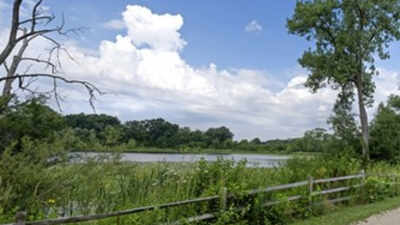
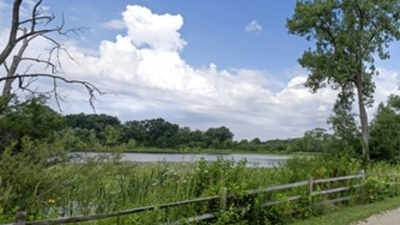
What if a landscape could act like a giant sponge, soaking up stormwater, filtering pollution and creating space for wildlife all at once? Sounds impossible? Well, that is the goal behind a major five-year restoration project planned at Raven Glen Forest Preserve in Antioch, Illinois. According to a report by Lake County Forest Preserve, the project will restore 421 acres of wetlands, prairies and woodlands, while reshaping the landscape to better manage stormwater and improve the health of the surrounding watershed. It has been reported tat the work is expected to begin this fall or winter and will focus on land east of Savage Road and west of Route 45. The U.S. Army Corps of Engineers’ Chicago District is leading the project in partnership with the Lake County Forest Preserves. For the uninitiated, the Raven Glen work is part of a much larger federal initiative focused on restoring ecosystems and reducing flooding risks along 67 miles of the Des Plaines River in Lake and Cook counties. The broader watershed effort is backed by $11 million secured by U.S. Sen. Dick Durbin. At Raven Glen, crews will concentrate on Hastings Creek and wetlands at the southern end of the preserve.
Turning farmland back into wetlands
According to the report, the area has a long agricultural history. It operated as a dairy farm until the late 1990s, with its farmstead regarded as state-of-the-art during the 1950s and 1960s. But farming had altered the natural flow of water. Underground drainage tiles were installed to move water away from fields, while Hastings Creek was modified to support agricultural operations. The restoration will reverse many of those changes. Crews will disable the drainage tiles, reshape sections of the land and reconnect Hastings Creek with its floodplain. They will also restore the creek’s natural curves and introduce shallow, rocky sections known as riffles.
A natural defense against flooding
The restored wetlands and floodplain will be able to hold stormwater for longer periods and release it more gradually. That could reduce pressure on downstream areas while improving water quality throughout the Upper Des Plaines River Watershed. The project will also remove invasive vegetation and introduce native seeds and seedlings. The work is designed to rebuild a variety of habitats, including marshes, meadows, prairies and woodlands.
Expanding a protected wildlife landscape
Raven Glen covers 604 acres and is known for its rolling terrain, wetlands and oak-hickory groves. Its connection to the 501-acre Ethel’s Woods Forest Preserve through a pedestrian tunnel beneath Route 45 creates an expansive stretch of protected habitat. The restoration could strengthen that connected landscape, providing better conditions for wildlife while improving its ability to absorb and manage water.
Trails to remain open
Despite the scale of the work, visitors will still be able to access Raven Glen during construction. The preserve and its trails are expected to remain open, although brief temporary closures may be necessary for visitor safety. By restoring the land’s natural ability to store water, filter runoff and support native ecosystems, the project aims to make Raven Glen more resilient for both people and wildlife, turning a landscape once engineered for farming back toward the natural systems that shaped it.